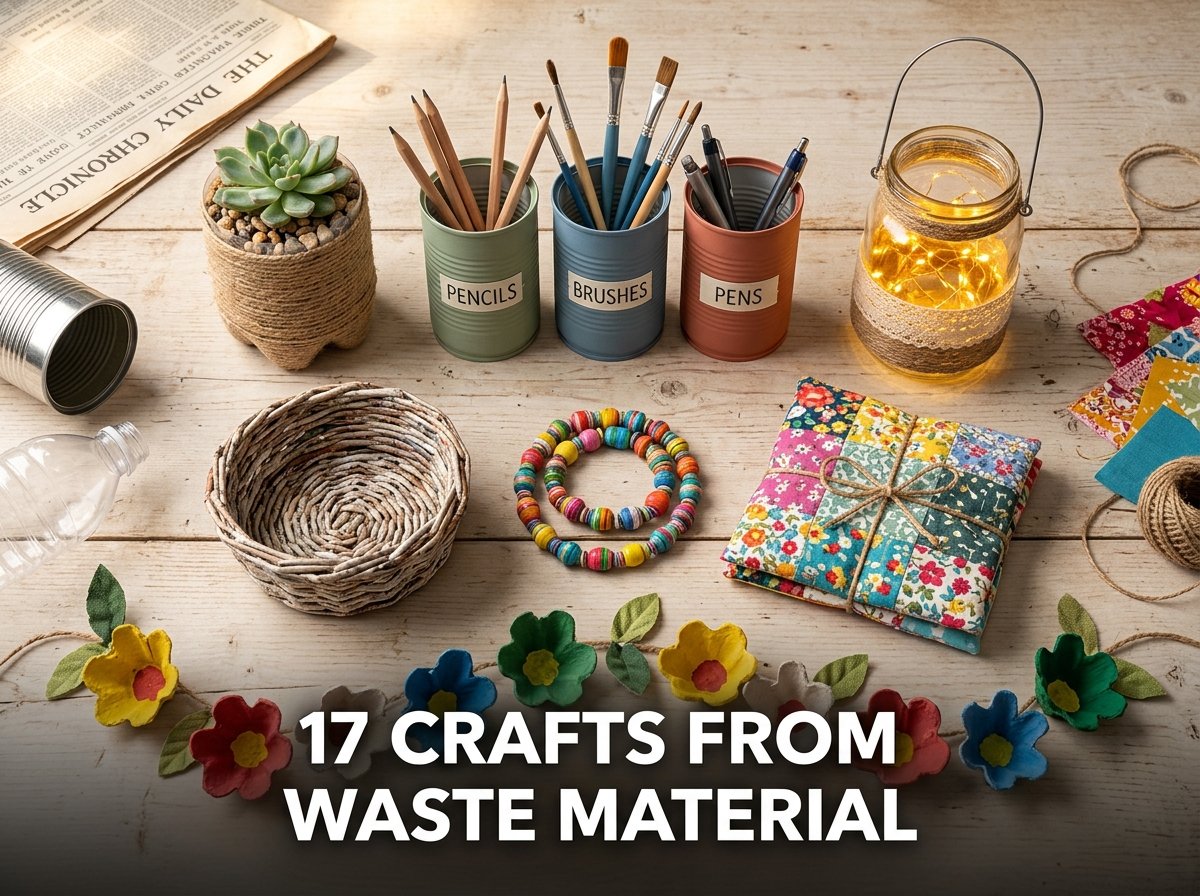
17 Craft From Waste Material
I pulled a plastic bottle from my recycling bin one afternoon with no specific plan. Twenty minutes later it was a small planter sitting on my kitchen windowsill holding a succulent. Three days after that, I turned two tin cans into pen holders, a stack of old newspapers into a small storage basket, and a cardboard box into a desk organizer. My recycling bin has never been so productive.
If you want craft from waste material ideas, all 17 projects here use items already available in any home: plastic bottles, cardboard boxes, glass jars, tin cans, old newspapers, fabric scraps, and paper waste. Every project costs zero to 3 dollars in additional materials.
These crafts suit kids for school projects, adults for home decoration and organization, and teachers looking for classroom upcycling activities. I selected each one because the construction steps are short, the waste material is commonly available, and the finished result looks designed rather than discarded.
Most projects complete in under 60 minutes. Several qualify as simple craft from waste material ideas that children finish in under 30 minutes without adult help.
Each section states the waste material used, the additional materials needed, and the approximate build time so you know exactly what is required before starting.
1. Plastic Bottle Planter
A plastic bottle planter converts a clean 1.5-liter or 2-liter plastic bottle into a small container for growing herbs, succulents, or small flowering plants. I made 4 of these from empty water bottles and placed them on my kitchen windowsill. Each one cost zero dollars in materials and holds a small basil plant that I harvest weekly. The bottles have been in use for 14 months without any structural failure or root leakage through the cut edges.
Plastic bottle planters are one of the most practical craft from waste material projects because the primary material costs nothing and the finished item performs a daily functional purpose.
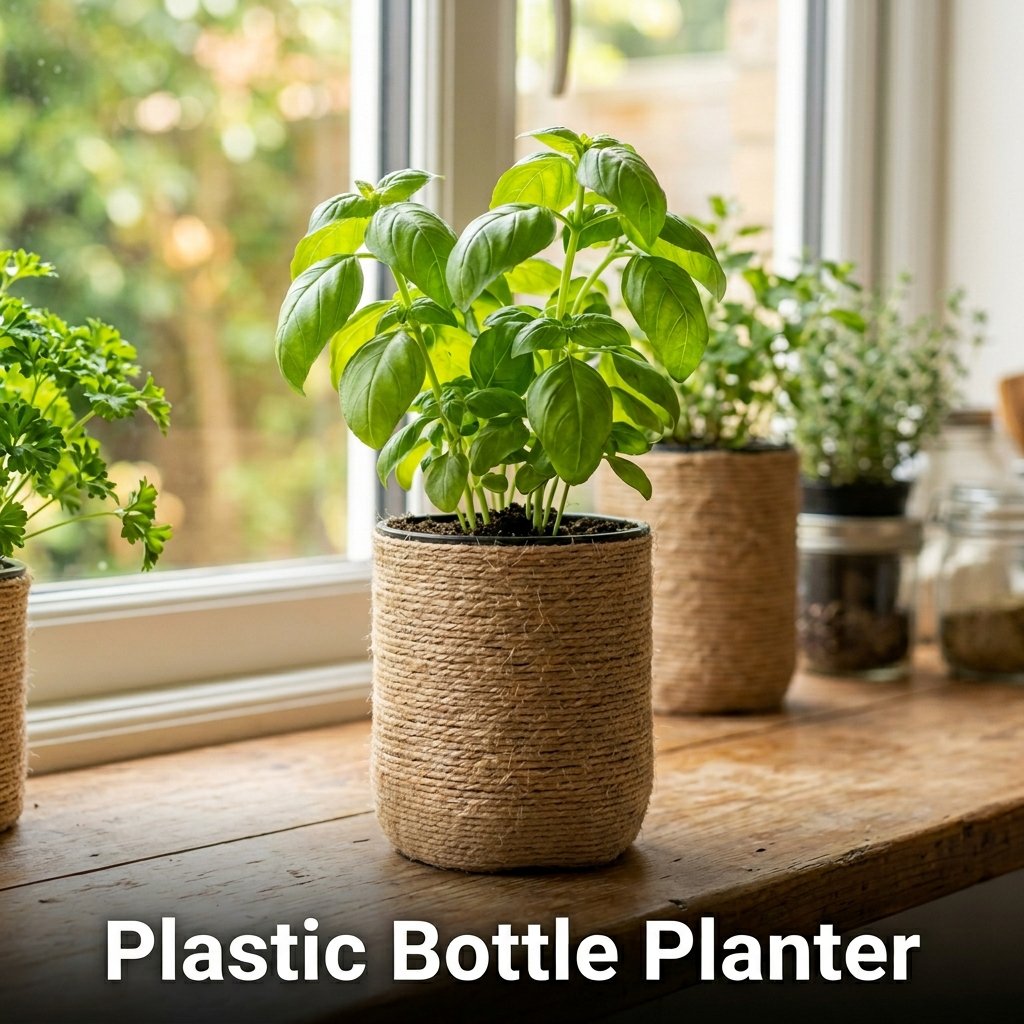
Cutting and Preparing a Bottle Planter
Cut a 1.5-liter plastic bottle horizontally at a point 12 cm from the base using a craft knife or sharp scissors. The lower section becomes the planting container. Pierce 5 drainage holes at 5 mm diameter through the base of the lower section using a heated skewer or a sharp nail, spacing the holes evenly across the base area. These drainage holes prevent waterlogging, which causes root rot in most plant varieties within 2 to 4 weeks of planting in an undrained container.
Decorating a Plastic Bottle Planter
Wrap the exterior of the bottle section with natural jute twine, applying a thin line of craft glue around the bottle every 5 rows to secure the twine. Alternatively, apply acrylic paint directly to the plastic surface after sanding lightly with 80-grit sandpaper for better paint adhesion. The sanding step scratches the smooth plastic surface and gives the paint a textured surface to grip. Apply 2 coats of acrylic paint and seal with clear outdoor varnish for planters placed on an outdoor balcony or windowsill in direct sunlight.
2. Cardboard Box Storage Organizer
A cardboard box storage organizer converts a medium-sized cardboard delivery box into a divided desk or shelf organizer by cutting and reassembling the internal cardboard panels into a grid of storage compartments. I built one from a single cereal box in 30 minutes for my desk. It holds pens, scissors, tape, phone chargers, and paper clips in 6 separate compartments and reduced the visible clutter on my desk surface by removing 4 separate loose containers.
Cardboard box crafts are the most widely available craft from waste material category because cardboard boxes arrive with every online purchase and stack up in every home without a second use.
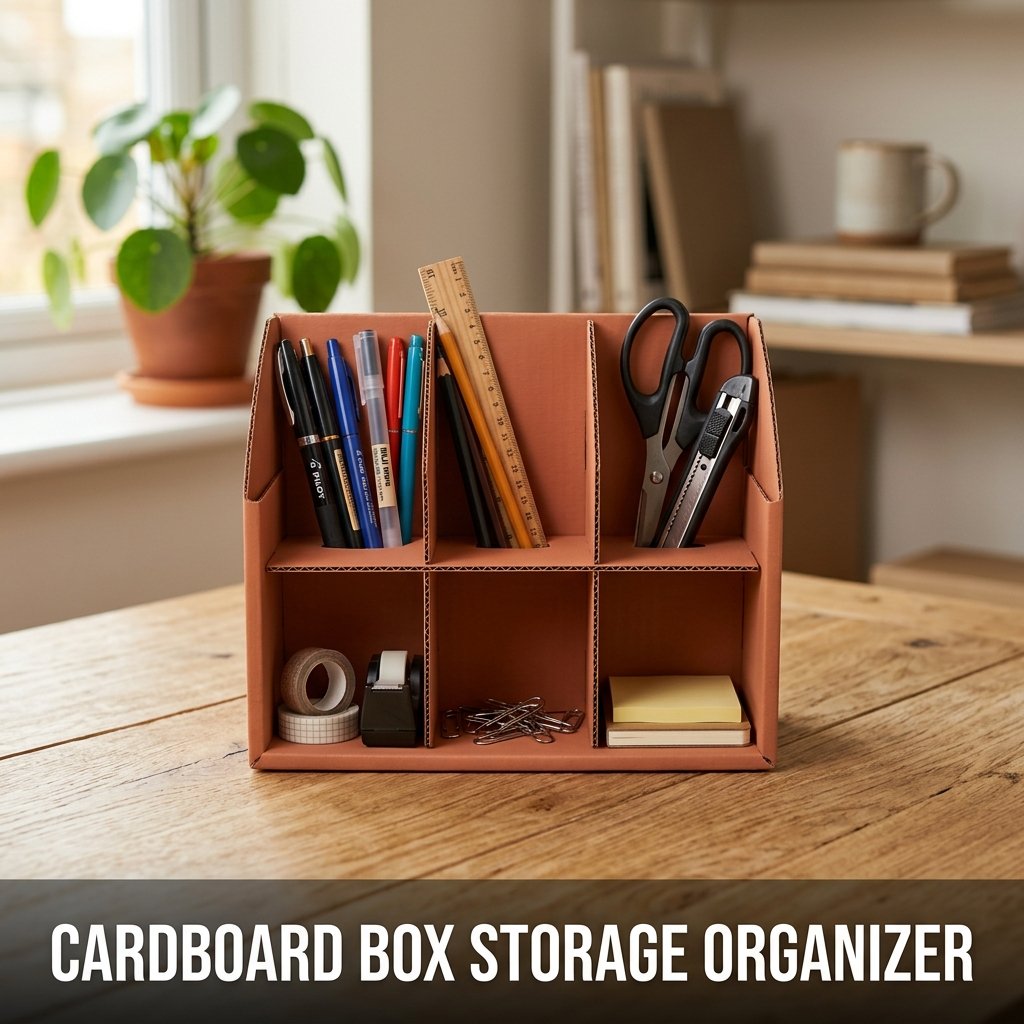
Cutting the Cardboard Dividers
Cut 3 strips of cardboard from the box flaps at the same height as the box interior, typically 8 to 12 cm. Cut a slot halfway down the center of each strip from the top edge downward. Cut matching slots halfway up the center of 2 additional strips from the bottom edge upward. Slide the top-slotted strips into the bottom-slotted strips at right angles to produce interlocking T-junction dividers inside the box. This slot-join method creates a stable grid without any glue.
Covering a Cardboard Organizer
Cover the exterior of the assembled organizer with decorative paper, gift wrap, or washi tape for a finished appearance that suits a desk or shelf display. Apply craft glue to the cardboard surface before pressing the paper flat. Alternatively, paint the full exterior with chalk paint in a single color for a coordinated desk accessory look. Apply a clear varnish coat over any painted surface to prevent the cardboard from absorbing moisture from the environment, which causes warping over time at high humidity levels.
3. Newspaper Basket
A newspaper basket weaves rolled newspaper tubes into a woven structure to produce a lightweight storage basket for small household items. I made one from 40 pages of a single newspaper in 90 minutes. The finished basket measures 20 x 15 x 10 cm and holds fruit on my kitchen counter. It has remained structurally stable for 8 months without any tube slippage or base collapse under the weight of daily use.
Newspaper crafts are among the most popular craft from waste material ideas for school projects because newspapers are freely available, the rolling technique requires no tools, and the finished basket demonstrates a clear transformation from flat paper to a 3-dimensional functional object.
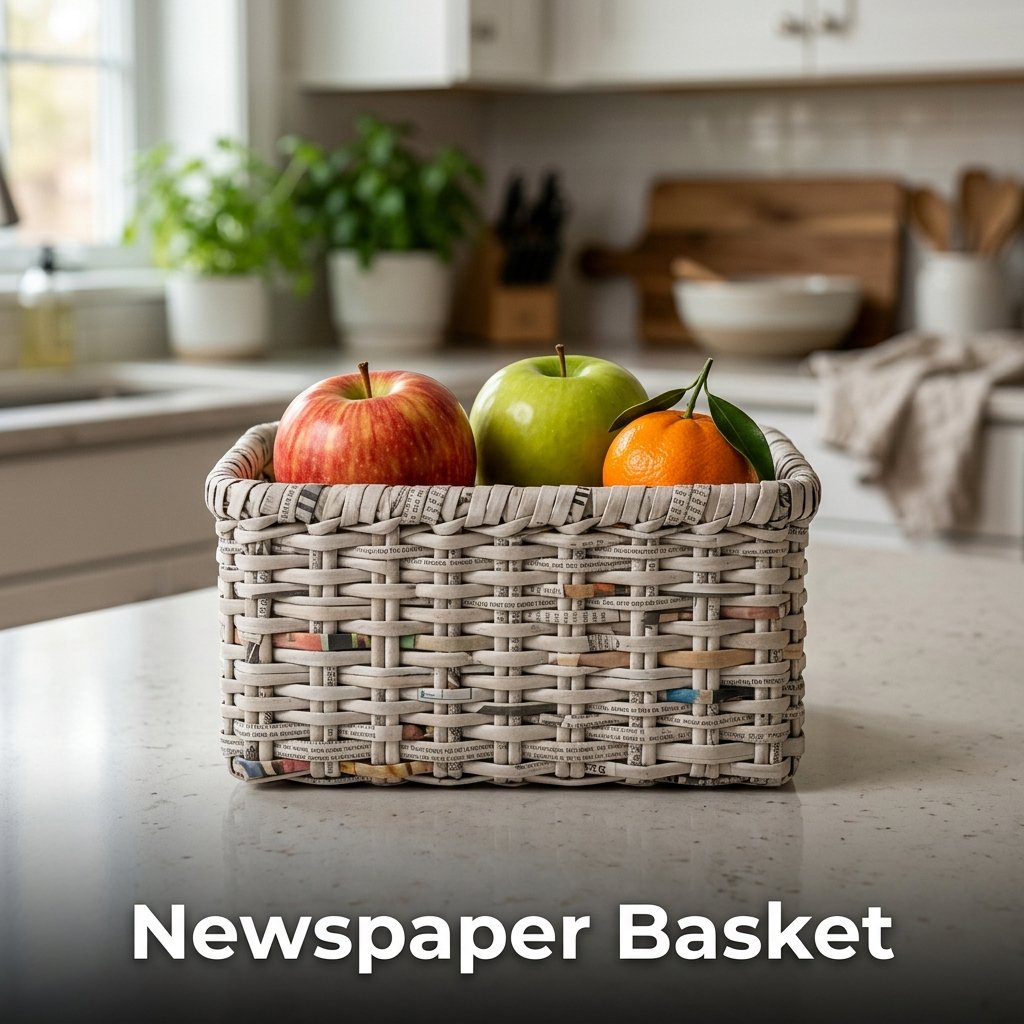
Rolling Newspaper Tubes for Weaving
Cut a full newspaper page in half lengthwise to produce 2 strips at approximately 30 x 58 cm each. Place a thin wooden skewer diagonally across one short corner of the strip. Roll the paper tightly around the skewer from corner to corner, maintaining even tension throughout the roll. Slide the skewer out after completing the roll. Apply a small dot of glue to the final corner to secure the tube end. A standard basket uses 40 to 50 tubes rolled at the same diameter for consistent weaving tension.
Weaving the Newspaper Basket Base
Lay 5 tubes horizontally and 5 tubes vertically in an over-under weave pattern to produce a 10 x 10 cm woven base. Glue all crossing points on the base with a small dot of PVA glue. Allow 20 minutes of drying time. Bend all outer tube ends upward at 90 degrees to begin the basket walls. Weave additional horizontal tubes around the upright tubes in a continuous over-under pattern, adding new tubes by overlapping and gluing the ends. Build the walls to a height of 8 to 10 cm before folding the upright tube ends inward and gluing them to secure the top rim.
4. Tin Can Pen Holder
A tin can pen holder converts a clean food tin into a desk organizer for pens, pencils, scissors, and stationery using paint and basic decoration materials. I converted 3 identical tomato sauce tins into a coordinated desk pen holder set in 45 minutes. The set holds every writing instrument and small tool on my desk in one group without occupying more than 20 cm of desk width. The total additional material cost was 2 dollars in spray paint.
Tin can crafts are one of the most reliable craft from waste material categories for school projects and home decoration because tin cans are structurally rigid, take paint well after light sanding, and produce a durable finished item at zero base material cost.
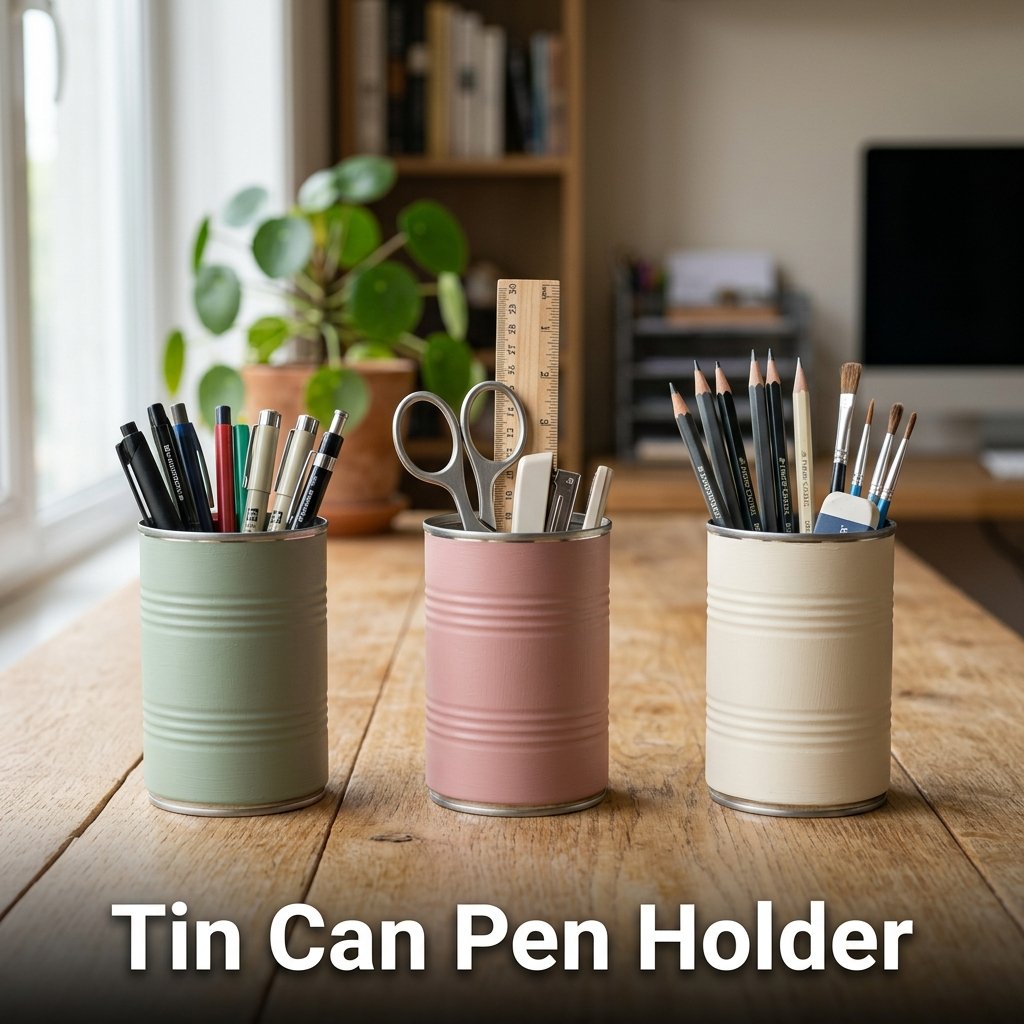
Preparing a Tin Can for Decoration
Remove the lid completely and check the interior rim for sharp edges. File any sharp points with a metal file or cover them with a strip of strong adhesive tape folded over the inner rim. Wash the tin with warm soapy water and dry completely. Sand the exterior lightly with 80-grit sandpaper to remove the label and roughen the surface for paint adhesion. Wipe away any sanding dust with a damp cloth before applying any paint or adhesive decoration to the tin surface.
Decorating a Tin Can Pen Holder
Apply 2 coats of chalk paint or spray paint to the sanded tin exterior. Allow each coat to dry for 20 minutes. Wrap natural jute twine around the painted tin from the base to the top rim, securing the twine with craft glue at 5-row intervals, for a textured rustic finish over the painted surface. Alternatively, apply torn strips of colorful magazine paper using the decoupage technique: brush diluted PVA glue onto the tin surface, press paper strips flat, and apply 3 final coats of undiluted PVA glue over the fully dried decoupage surface.
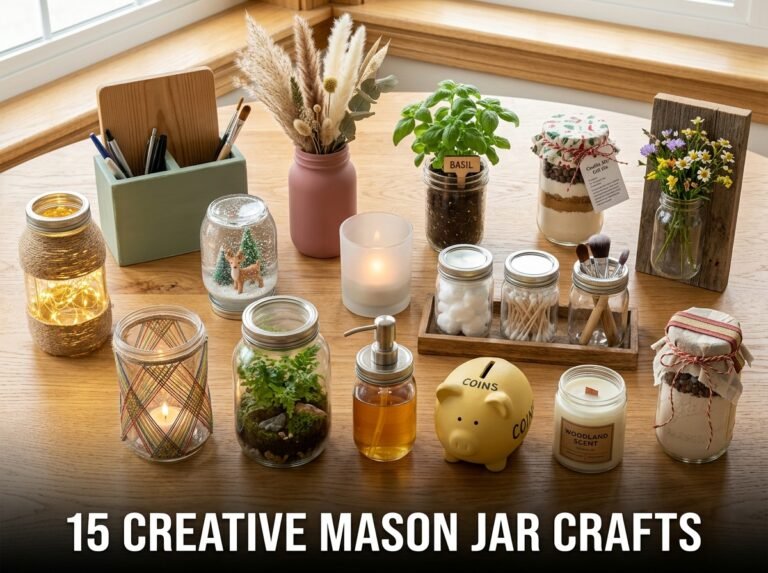
5. Glass Jar Lantern
A glass jar lantern decorates a clean glass food jar with tissue paper and PVA glue to produce a translucent lantern that glows when an LED tea light is placed inside. I made 6 of these from empty pasta sauce jars using tissue paper from gift wrapping. The total additional material cost was zero. The finished lanterns sit on my dining table and produce warm colored light during evening meals without any fire risk because LED tea lights generate no heat.
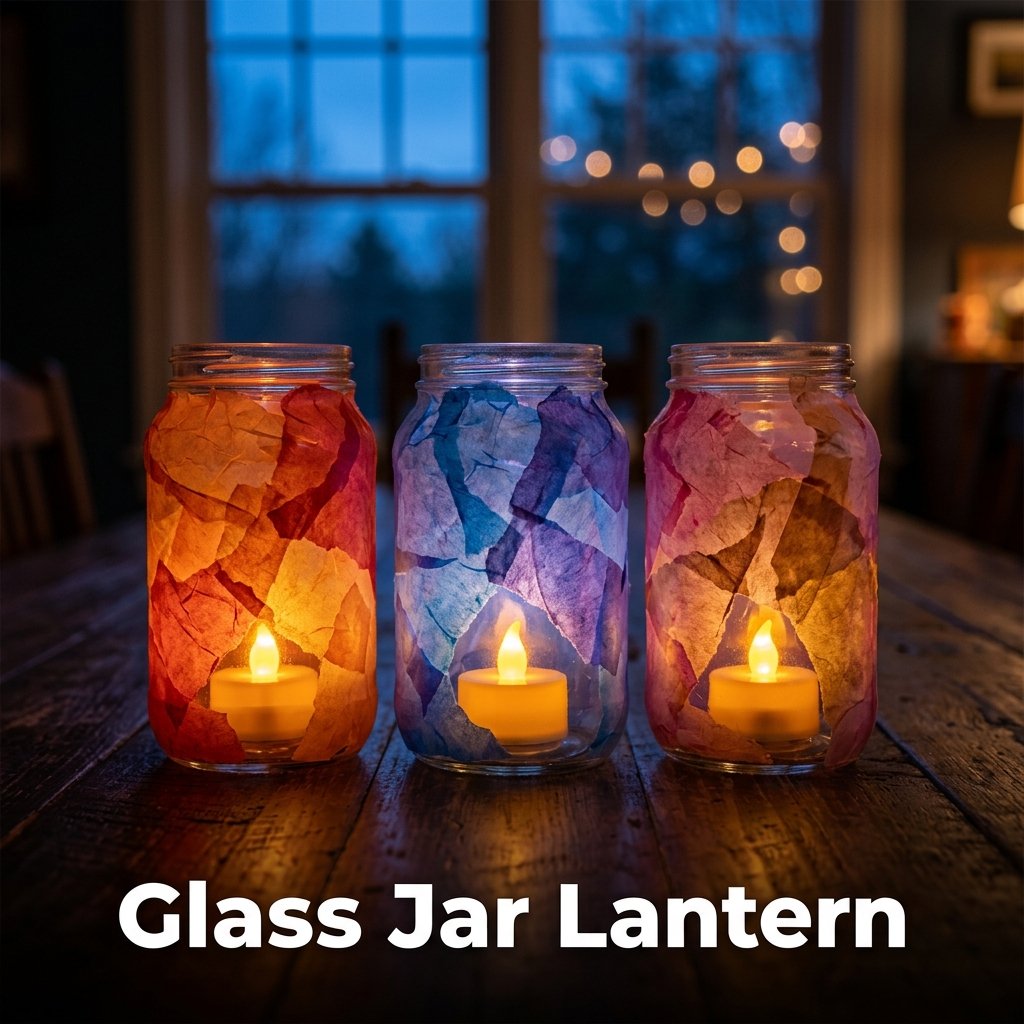
Applying Tissue Paper to a Glass Jar
Tear tissue paper into irregular pieces at 4 to 6 cm each. Mix PVA glue with water at a 2:1 ratio. Brush the diluted glue onto a small section of the jar exterior. Press a tissue paper piece onto the wet glue and smooth it flat with the brush. Overlap pieces by 5 mm across the full jar exterior. Apply 2 complete layers of tissue paper to produce an even color coverage. Allow 2 hours of drying time before placing an LED tea light inside the finished lantern.
Color Combinations for a Glass Jar Lantern
Warm color combinations including orange, red, and yellow tissue paper produce an autumn or fire aesthetic when the LED light glows through the overlapping layers. Cool combinations including blue, purple, and white produce a calm, winter aesthetic. Overlapping two different color pieces at their edges produces a third mixed color at the overlap zone without requiring any additional tissue paper colors. A set of 3 jars in coordinating color combinations displays more effectively as a table centerpiece than 3 jars in identical colors.
6. Fabric Scrap Tote Bag
A fabric scrap tote bag sews together leftover fabric pieces into a usable shopping or carry bag using a sewing machine or hand stitching. I made one from 8 fabric scraps left over from previous sewing projects. The finished bag measures 15 x 16 inches and carries groceries, library books, and daily items without any seam strain after 6 months of weekly use. The total additional material cost was 1.50 dollars in thread and a 30-minute build time using a sewing machine.
Fabric scrap crafts represent the most resource-efficient craft from waste material approach for makers who sew regularly, because the scraps from every project accumulate and build a fabric supply for future projects at zero cost.
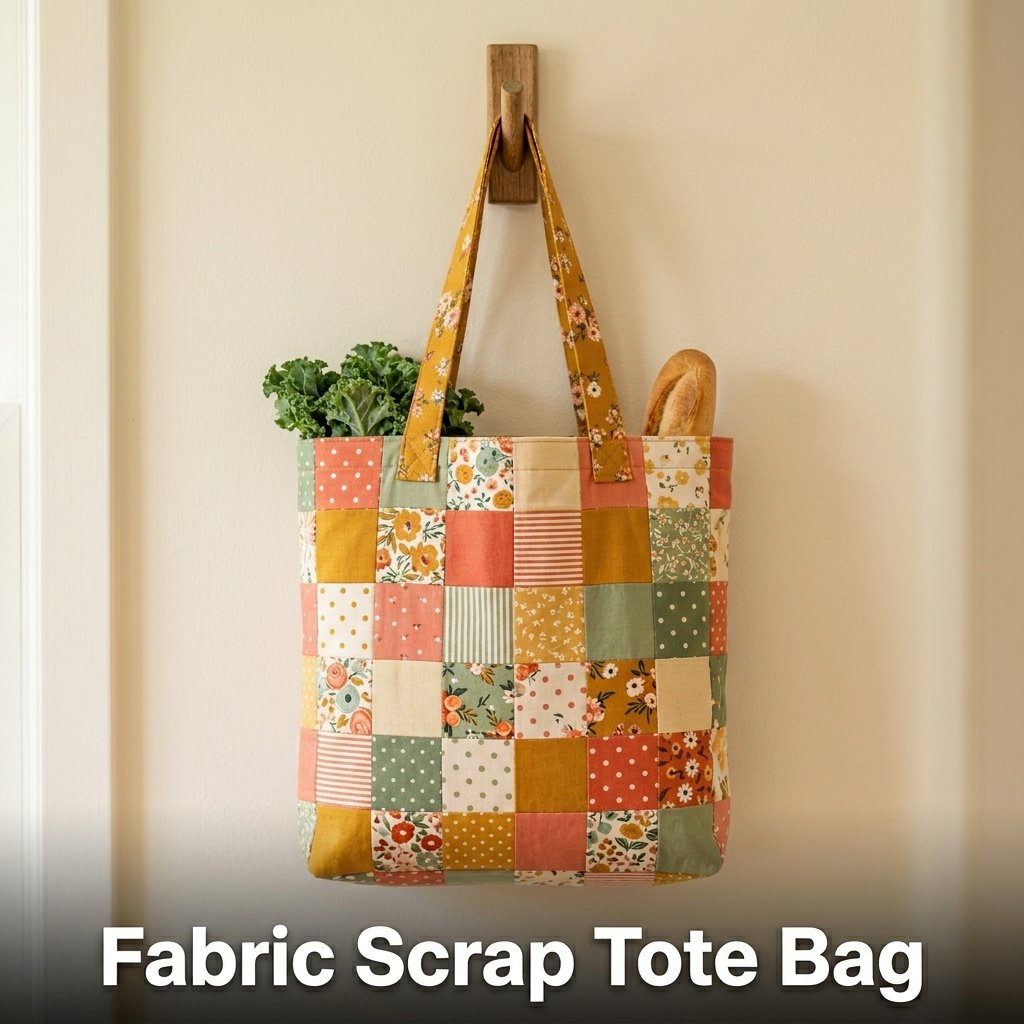
Cutting and Joining Fabric Scraps Into Panels
Cut all fabric scraps into uniform rectangles at 6 x 6 cm each. Sew the rectangles together in rows of 6 pieces with 1 cm seam allowances to produce patchwork panels. Join the rows together to build a panel at 16 x 17 inches for the tote body. Use 2 identical panels for the front and back of the bag. Press all seams open with an iron after each joining step to produce flat, even panel surfaces for the final bag assembly.
Assembling the Fabric Scrap Tote
Cut 2 handle strips at 3 x 22 inches from the largest fabric scrap available. Fold each strip lengthwise with right sides together, sew a 1 cm seam along the length, turn right side out, and press flat. Topstitch along both long edges at 3 mm for neat handles. Attach one handle to the top edge of each panel. Place both panels with right sides together and sew the side and base seams with a 1.5 cm allowance. Box the corners at 2 inches each to create a flat base. Turn right side out and press the top edge flat.
7. Magazine Paper Beads
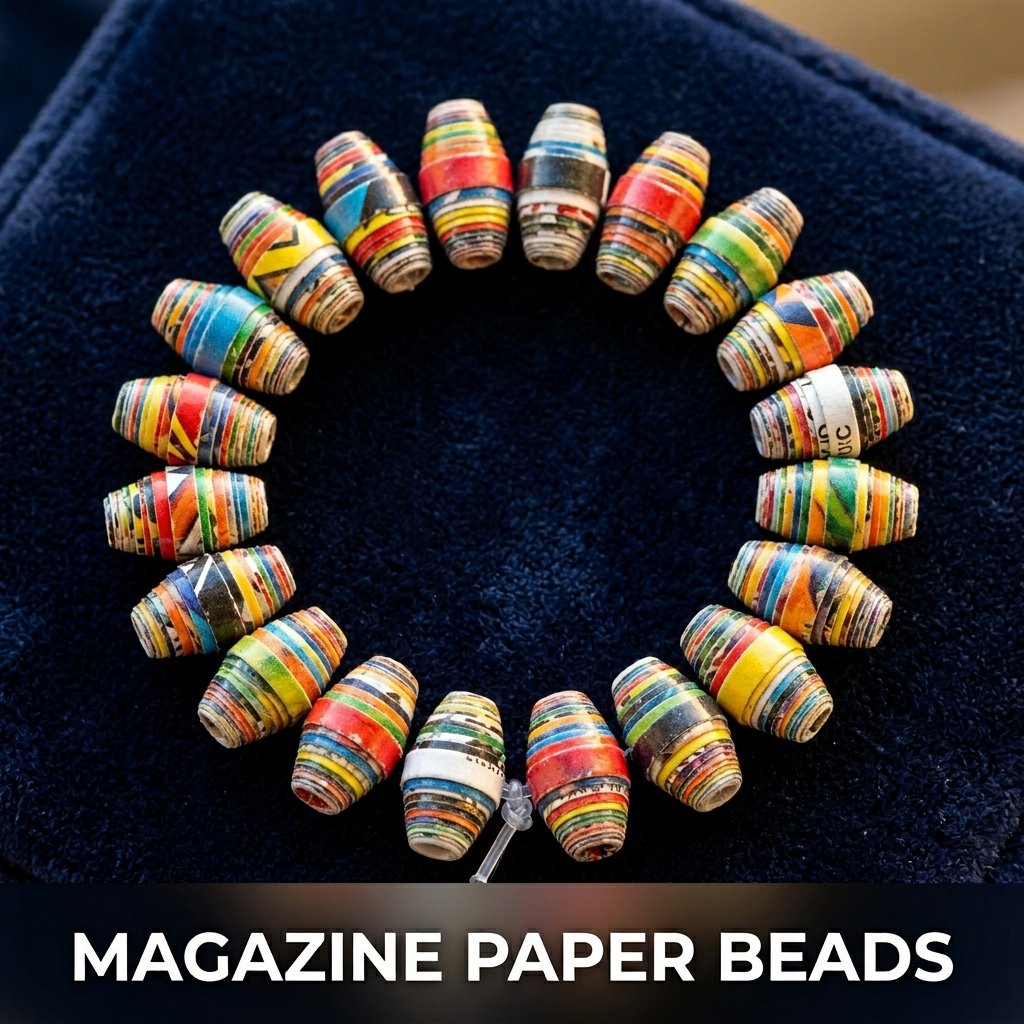
Magazine paper beads roll strips of colorful magazine pages into lightweight cylindrical beads that string onto elastic or cord as bracelets, necklaces, and bookmarks. I made my first bracelet from 18 magazine strips in 40 minutes and it cost zero dollars in primary materials because every strip came from a magazine already in the recycling pile. The finished bracelet uses the printed colors of the magazine pages as the bead decoration without any additional paint or varnish.
Magazine paper beads are one of the most colorful craft from waste material ideas for kids because the printed magazine pages produce multi-colored beads without any painting step, which reduces the material requirements and mess of the craft activity significantly.
Rolling a Magazine Paper Bead
Cut a long triangular strip from a colorful magazine page at 30 cm long, 2 cm wide at the base, and tapering to a point at the tip. Apply a thin line of PVA glue along the full length of the strip on the plain back side. Starting at the wide base end, roll the strip tightly and evenly around a toothpick from the base toward the pointed tip. Press the pointed tip firmly against the finished bead and hold for 20 seconds. Slide the bead off the toothpick while the glue remains slightly wet to prevent the bead from bonding permanently to the toothpick surface.
Sealing and Stringing Magazine Beads
Apply 3 coats of clear nail polish or PVA glue over each finished bead, allowing each coat to dry fully between applications. The sealant prevents the paper from softening during contact with skin moisture during wear. String sealed beads onto 0.5 mm elastic cord for a bracelet or 0.8 mm beading wire for a necklace. Tie the elastic with a surgeon’s knot for a secure closure that does not loosen during repeated stretching. One standard magazine page cut into 20 triangular strips produces 20 finished beads for a complete bracelet.
8. Cardboard Tube Pencil Holder
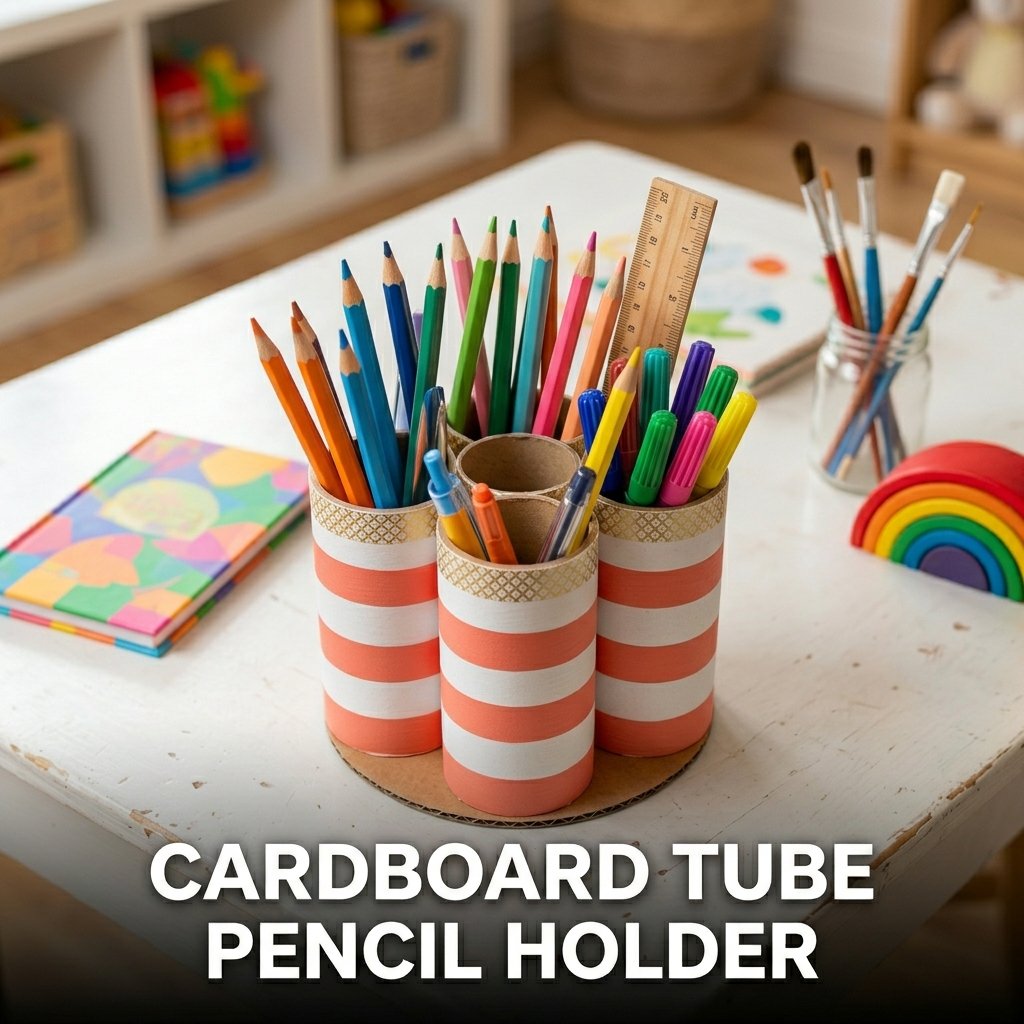
A cardboard tube pencil holder groups 5 to 7 toilet paper rolls glued together and decorated to produce a multi-compartment desktop pencil holder for pens, brushes, rulers, and scissors. I made one from 6 toilet paper rolls in 20 minutes for my daughter’s desk. She uses it daily and has repainted it twice in different colors over the past year, which extended the original craft into a recurring repainting activity each time.
Cardboard tube crafts are the most accessible craft from waste material category for children because toilet paper rolls accumulate in every household and the construction requires only glue and paint with no cutting steps for the primary structure.
Assembling the Toilet Paper Roll Holder
Arrange 6 toilet paper rolls in a cluster: 1 center roll surrounded by 5 outer rolls. Apply craft glue along all touching side surfaces between adjacent rolls. Hold the assembled cluster together with rubber bands wrapped around the full group and allow 30 minutes of drying time before removing the bands. The dried glue holds all rolls in the cluster arrangement permanently. Cut a cardboard circle at the same diameter as the assembled cluster base and glue it to the bottom of the cluster to produce a solid, stable base.
Painting and Finishing the Pencil Holder
Apply 2 coats of white chalk paint over all rolls and the base in the assembled cluster. Allow each coat to dry for 20 minutes between applications. Apply a second color in a different shade to alternate rolls for a two-tone striped result. Apply patterned washi tape around the top rim of each roll for a quick decorative finish that requires no drying time. Seal all painted surfaces with a coat of clear PVA glue diluted to 50% concentration applied with a flat brush to protect the paint from wear during daily desk use.
9. Old Newspaper Wall Art
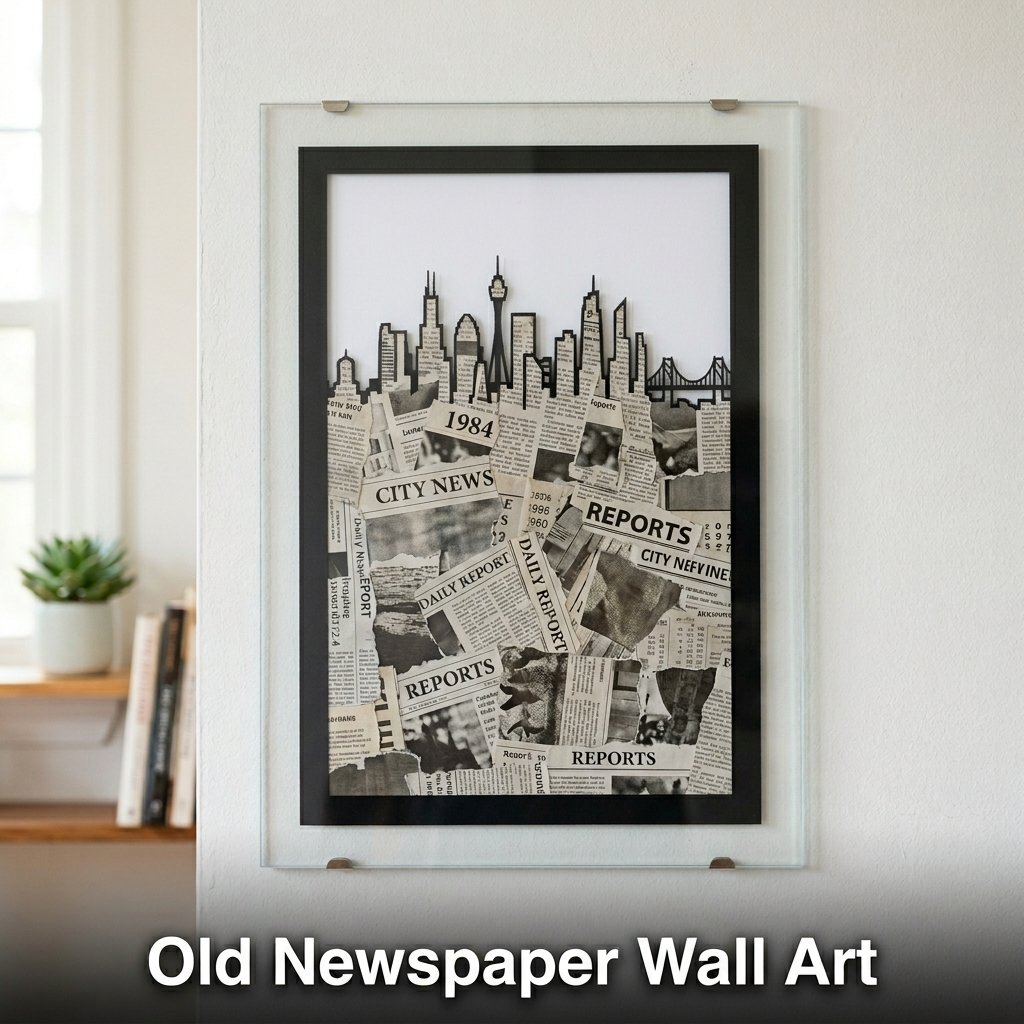
Old newspaper wall art uses torn or cut newspaper pages assembled into a framed collage or shaped design to produce decorative artwork from printed paper waste. I made a city skyline silhouette from newspaper cutouts mounted on a 20 x 30 cm black cardstock background. The finished piece framed in a clip frame looked like a purchased print rather than a recycled newspaper craft. Total additional material cost was 1 dollar for the clip frame.
Newspaper wall art is one of the most visually sophisticated craft from waste material ideas for adults because the printed text and image texture of the newspaper pages creates a surface detail that plain paper or paint cannot replicate.
Making a Newspaper Silhouette Collage
Draw or print a simple silhouette shape on cardstock: a tree, cityscape, bird, or floral outline works well at A4 size. Cut the silhouette shape out cleanly to produce a paper template. Tear newspaper pages into small pieces at 3 to 5 cm each. Apply craft glue to the back of each torn piece and press them onto the cardstock inside the silhouette outline, overlapping the pieces by 5 mm. Fill the entire silhouette shape with newspaper pieces. Allow 1 hour of drying time before mounting on a contrasting colored background for display.
Framing Newspaper Wall Art
Mount the finished newspaper collage on black or dark navy cardstock cut 2 cm larger on all sides than the collage piece. This border creates a mat effect that frames the collage without requiring a purchased mat board. Place both layers in a clip frame or standard photo frame at the appropriate size. The dark background produces maximum contrast with the newsprint texture of the collage, which makes the silhouette shape read clearly from a viewing distance of 1 meter or more.
10. Plastic Bottle Bird Feeder
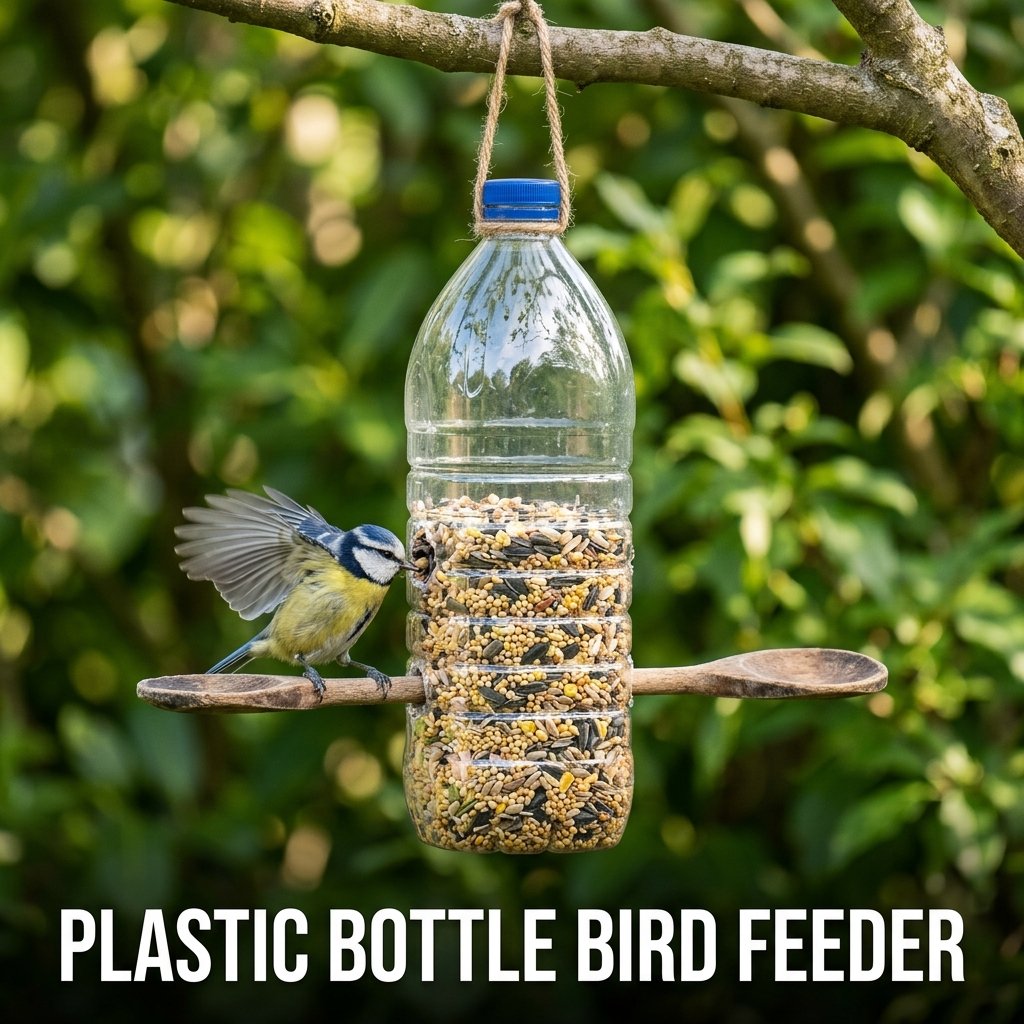
A plastic bottle bird feeder converts a clean 2-liter plastic bottle into a hanging bird seed dispenser using wooden spoons or dowel rods as perches and a hanging cord attached to the bottle neck. I made one for my garden using a large water bottle, 2 wooden spoons, and jute twine. It has attracted 4 different bird species to my garden over 6 months of use and required only a weekly seed refill to maintain activity.
Plastic bottle bird feeders are one of the most environmentally practical craft from waste material ideas because the finished item directly benefits local wildlife while preventing the plastic bottle from entering a landfill or recycling stream.
Cutting the Feeder Holes and Perches
Mark 2 pairs of holes on opposite sides of the bottle: each pair consists of a small 1 cm seed hole at the top and a 1 cm perch hole 3 cm below it. Cut the seed holes using a sharp craft knife or heated skewer. The seed hole diameter of 1 cm allows small seeds to trickle out as birds feed without allowing large quantities to spill when the bottle sways in wind. Push a wooden spoon handle through each lower perch hole so the spoon bowl extends outward as the perch platform on one side.
Filling and Hanging the Bird Feeder
Fill the bottle with wild bird seed mix through the open top before screwing the lid back on. Tie a 60 cm length of strong jute twine in a loop around the bottle neck just below the lid for the hanging attachment. Hang from a garden branch or hook at a height of 1.5 to 2 meters above the ground. This height keeps the feeder accessible to birds while remaining out of reach of ground-based predators. Refill the seed through the top lid weekly and rinse the bottle with clean water monthly to prevent mold growth inside the plastic container.
11. Old T-Shirt Tote Bag
An old t-shirt tote bag converts a discarded adult-size cotton t-shirt into a no-sew reusable shopping bag by cutting away the sleeves, neckline, and base fringe in a specific sequence. I made one from a faded t-shirt in 15 minutes with no sewing machine and no glue. The finished bag carries a full week of grocery shopping without any seam failure and folds into a compact bundle that fits in a jacket pocket for unexpected store trips.
No-sew t-shirt bags are the simplest craft from waste material idea for adults because the only tool required is a pair of fabric scissors and the entire process takes under 15 minutes from start to finished bag.
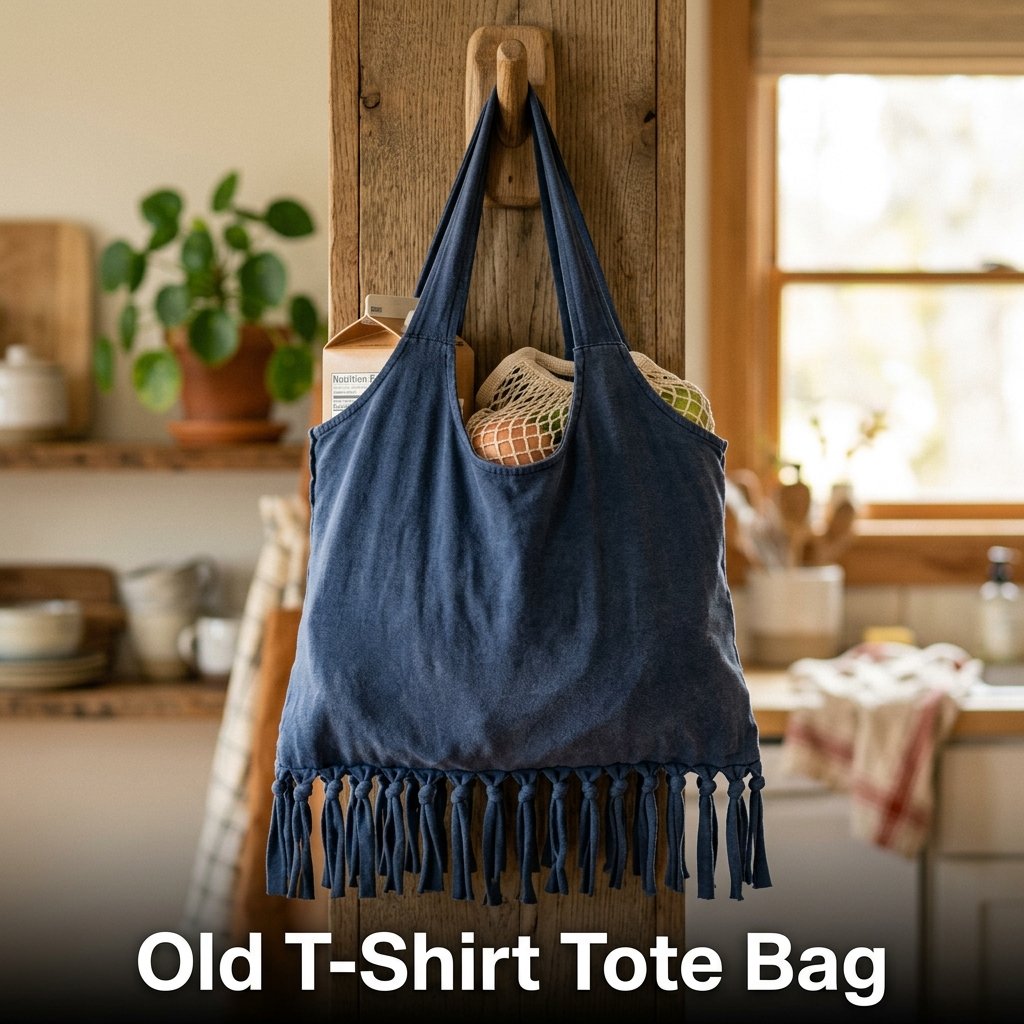
Cutting the T-Shirt Bag
Lay the t-shirt flat on a cutting surface. Cut off both sleeves along the sleeve seam lines. Cut a deeper U-shaped neckline 5 cm below the original neckline on both the front and back panels to produce the bag handles. Turn the t-shirt inside out. Cut 2 cm fringe strips along the base of the shirt at 1 cm intervals from the bottom hem upward to a depth of 8 cm, cutting through both front and back layers simultaneously to produce matching fringe strips on both sides.
Tying the No-Sew Base
Tie each front fringe strip to its matching back fringe strip using a double knot, working from one side edge of the shirt base to the other. All double-knotted fringe pairs seal the base opening of the bag without any stitching. Turn the bag right side out after tying all knots. The tied fringe sits inside the bag base and holds the contents above the knot level. The finished bag stretches to accommodate bulky items and washes in the machine at 40 degrees without losing its knotted base structure.
12. Egg Carton Flower Decoration
An egg carton flower decoration cuts individual egg cup sections from a cardboard egg carton and paints them to produce small flower shapes for wall art, gift wrapping decoration, and garland making. I made a garland of 30 egg carton flowers in 60 minutes using 5 standard 12-egg cartons. The finished garland stretched 2 meters and cost zero dollars in base materials. It decorated a birthday party table and generated more comments than any purchased decoration at the same event.
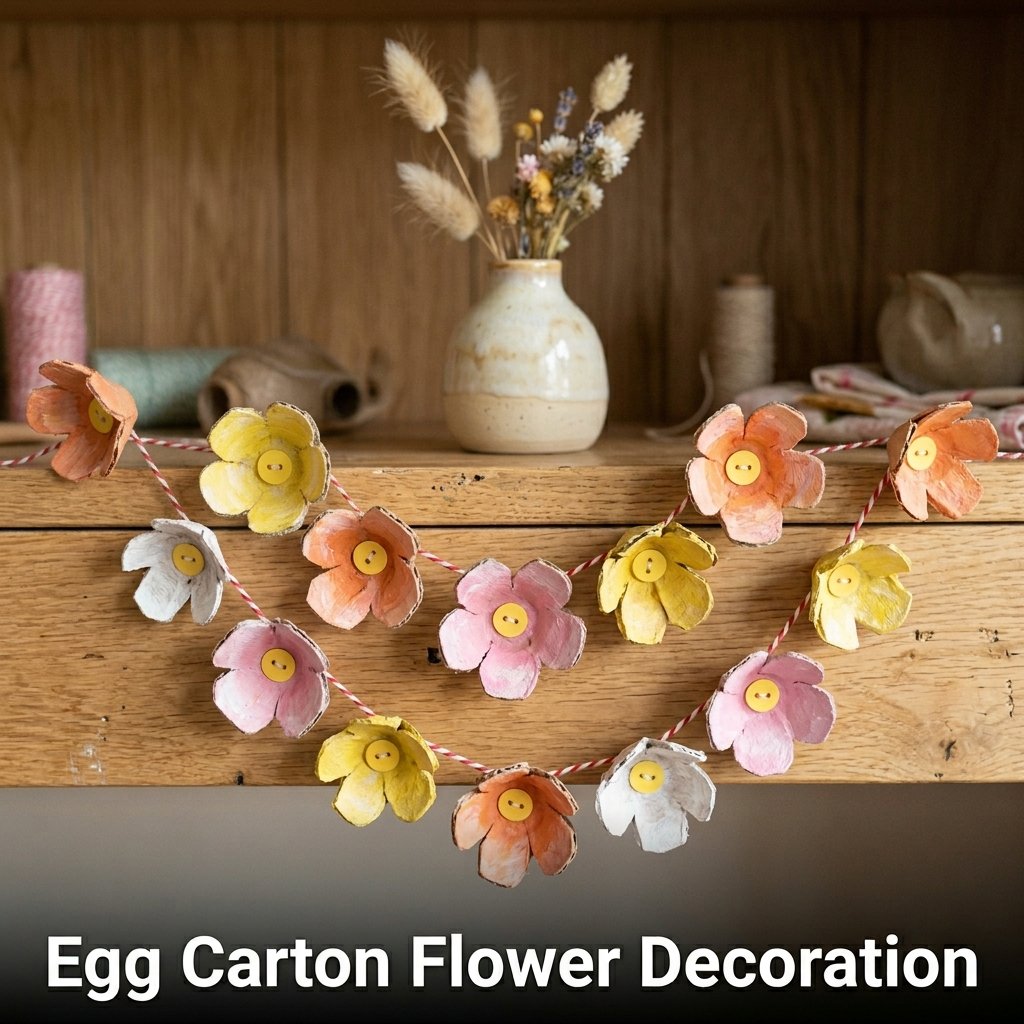
Cutting and Shaping Egg Carton Flowers
Cut each egg cup section individually from the cardboard egg carton using scissors, producing small cup-shaped pieces at 3 to 4 cm diameter. Cut 4 to 6 petal slits down the sides of each cup from the rim toward the base, stopping 5 mm from the bottom. Bend each cut petal section outward and downward to create a flat flower shape. Press the petals flat between two books for 10 minutes to train the cardboard into a flat flower position. Pierce a small hole through the base center of each flower for stringing or attaching to a display surface.
Painting and Finishing Egg Carton Flowers
Apply acrylic craft paint to each flower shape using a flat brush. Pink, yellow, orange, and white produce the most natural flower color results. Apply 2 coats per flower with 15 minutes of drying time between coats. Glue a small yellow button or yellow paper circle to the center of each flower after the paint dries completely. Thread all finished flowers onto a length of baker’s twine through the center holes for a garland. Alternatively, glue flowers to a canvas board in a flat arrangement as a piece of wall art using strong craft adhesive.
13. Cardboard Tube Kaleidoscope
A cardboard tube kaleidoscope uses 3 toilet paper rolls taped together in a triangle arrangement with reflective material inside to produce a working optical toy from waste materials. I made one with a group of children aged 7 to 10 during a school project session. Every child finished in 45 minutes and the finished toys produced real kaleidoscope patterns when held up to light. The additional material cost was 1 dollar per toy for small pieces of reflective card.
Cardboard tube kaleidoscopes are one of the most educationally engaging craft from waste material ideas for school projects because the finished toy demonstrates optical reflection principles while using entirely recycled base materials.
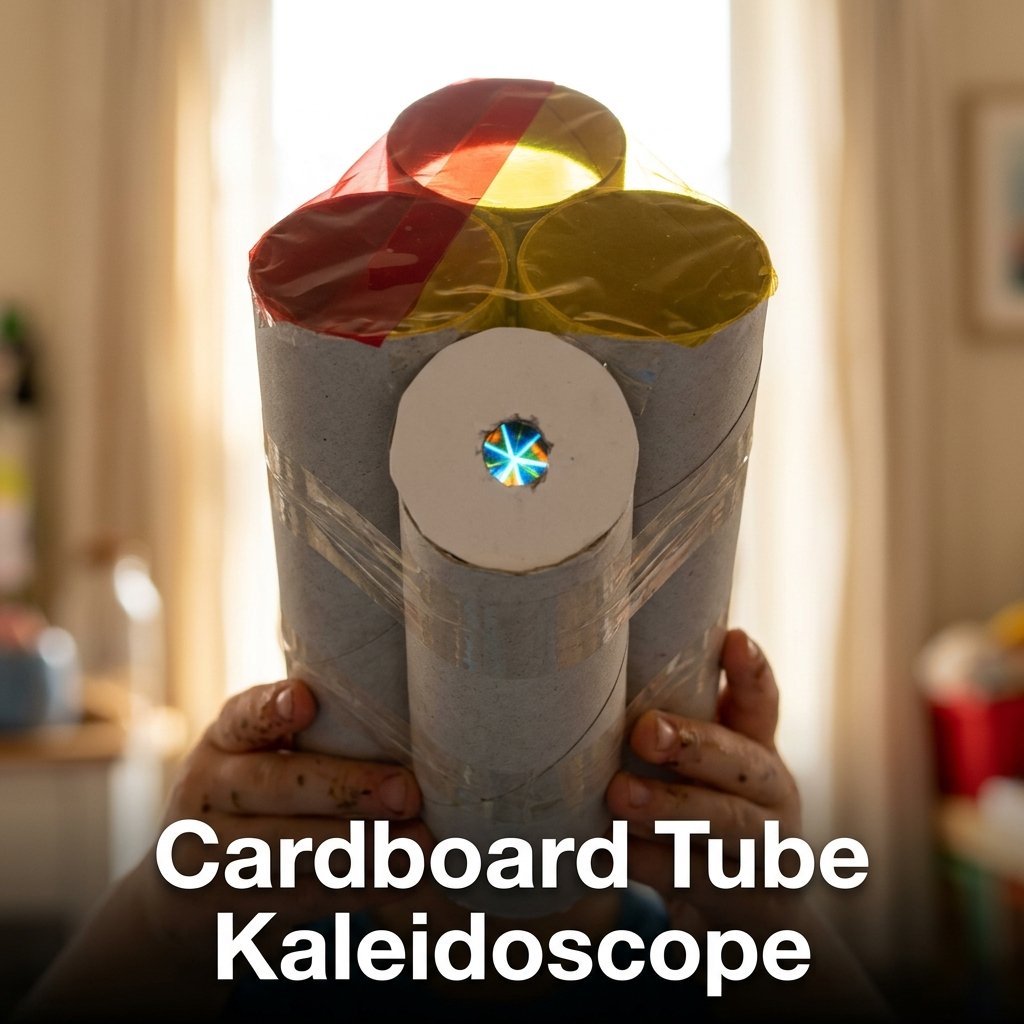
Assembling the Kaleidoscope Body
Tape 3 toilet paper rolls together in a tight triangular arrangement using strong adhesive tape wrapped around the exterior of all 3 rolls at the center point and at both end positions. Cut 3 strips of reflective card or silver metallic card at 4 x 10 cm each. Slide one strip inside each roll with the reflective surface facing inward toward the center of the triangular arrangement. The 3 inward-facing reflective surfaces produce the mirror-reflection effect that creates the kaleidoscope pattern visible through the viewing end.
Adding the Viewing and Light Ends
Cut a circle of translucent colored plastic from a food package at the diameter of the roll cluster for the light-entry end. Tape it across the base of all 3 rolls at the open entry end. Cut a circle of cardstock at the same diameter with a single 5 mm viewing hole cut in the center. Tape this cardstock circle across the top viewing end of the roll cluster. Hold the light entry end toward a window and look through the 5 mm viewing hole to see the reflected light pattern produced by the 3 internal reflective strips.
14. Old CD Mosaic Picture Frame
An old CD mosaic picture frame breaks scratched or unusable CDs into irregular pieces and arranges them on a plain cardboard frame to produce a mirrored mosaic surface. I collected 12 scratched CDs from a drawer where they had sat unused for 6 years. I broke them into mosaic pieces wearing safety glasses, arranged the pieces on a plain cardboard frame, and grouted the surface with white tile grout. The finished frame reflected light from every angle and displayed a photograph for 2 years on my wall without any piece detachment.
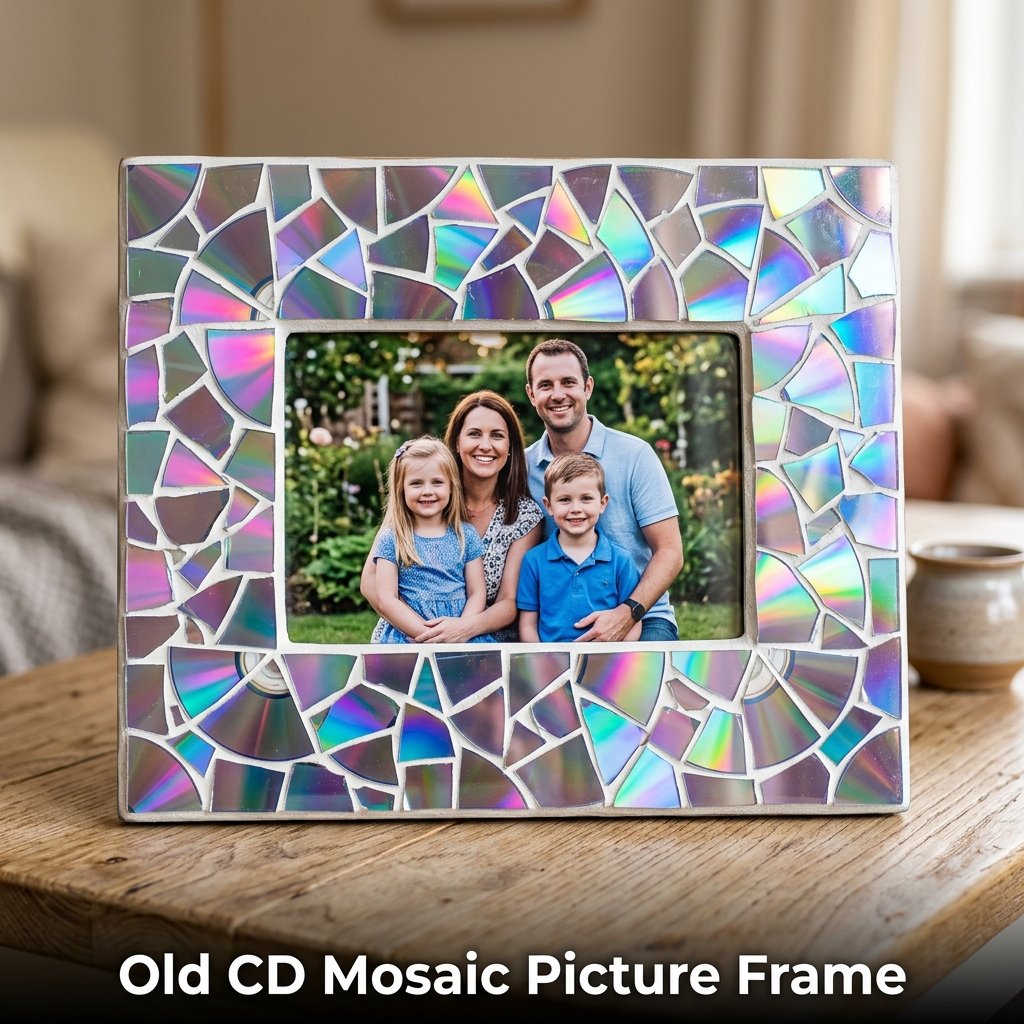
Breaking CDs Safely for Mosaic Use
Wear safety glasses and protective gloves before breaking CDs. Place each CD inside a folded cloth to contain flying fragments. Apply firm pressure to the CD surface using pliers until the disc fractures into irregular pieces. The iridescent coating on both surfaces of the CD reflects light differently from each angle, which produces the characteristic mosaic shimmer on the finished frame. Collect all fragments including small pieces because variety in fragment size produces a more detailed mosaic surface than large uniform pieces alone.
Gluing and Grouting a CD Mosaic Frame
Apply tile adhesive or strong craft glue to the back of each CD piece and press it onto the cardboard frame surface. Leave 2 to 3 mm gaps between pieces for grouting. Allow 2 hours of drying time before applying grout. Press white tile grout into all gaps using a gloved finger, working the grout into every gap completely. Wipe the excess grout from the CD surfaces immediately with a damp cloth before it dries on the reflective face of each piece. Allow the grout to cure for 4 hours before displaying the framed photograph.
15. Fabric Scrap Patchwork Cushion Cover
A fabric scrap patchwork cushion cover sews leftover fabric pieces into a decorative cover for a standard 45 x 45 cm cushion insert using the same construction method as a full patchwork quilt but scaled to a single cushion size. I made one from 32 fabric scraps left over from previous projects in 2 hours. The finished cover sits on my sofa and has been washed 15 times without any seam separation or color fading across the patchwork surface.
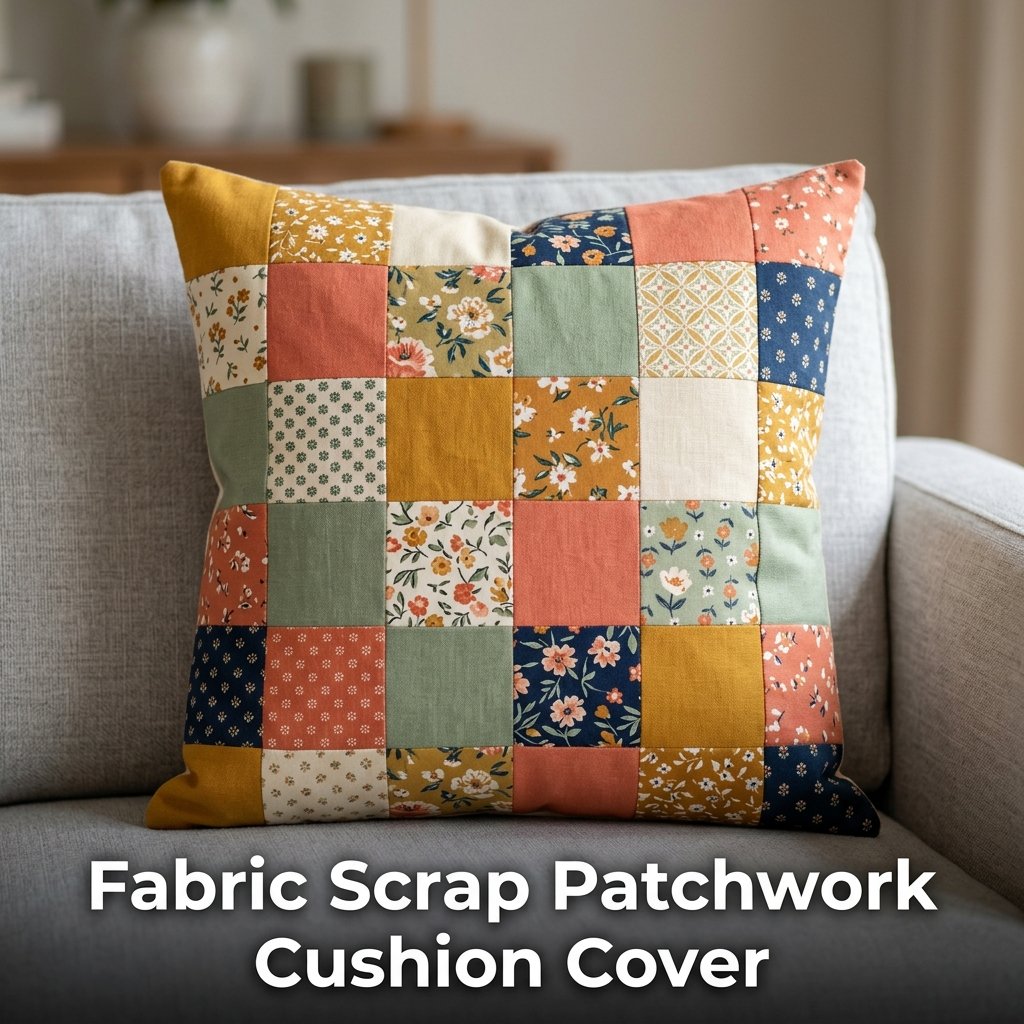
Cutting Scraps Into a Patchwork Panel
Cut all fabric scraps into uniform squares at 8 x 8 cm each. Arrange 32 squares in a 4 x 8 grid on a flat surface, mixing colors and patterns for a balanced distribution across the full panel. Sew the squares in each row together with 1 cm seam allowances. Press all seams open with an iron after each row joins. Sew all 8 rows together to produce a front panel at 30 x 62 cm, which trims to 46 x 46 cm after seam allowances are applied at the outer edges.
Assembling an Envelope-Back Cushion Cover
Cut 2 back panels at 46 x 33 cm from a single fabric scrap large enough for the purpose or from 2 smaller scraps joined at a central seam. Hem one long edge on each back panel by folding 1 cm to the wrong side twice and stitching. Place both back panels on the front patchwork panel with right sides together and hemmed edges overlapping at the center. Pin all outer edges. Sew a 1.5 cm seam around all 4 sides. Clip the corners and turn right side out through the envelope back opening.
16. Newspaper Seed Starter Pots
Newspaper seed starter pots roll sheets of newspaper around a cylindrical mold to produce small biodegradable planting pots for starting seeds indoors before transplanting to a garden. I made 30 of these in 20 minutes using a standard glass as the mold. Each pot holds one seed and the entire pot plants directly in garden soil without removing the seedling, as the newspaper decomposes in the soil within 4 to 6 weeks after planting. Total additional material cost was zero.
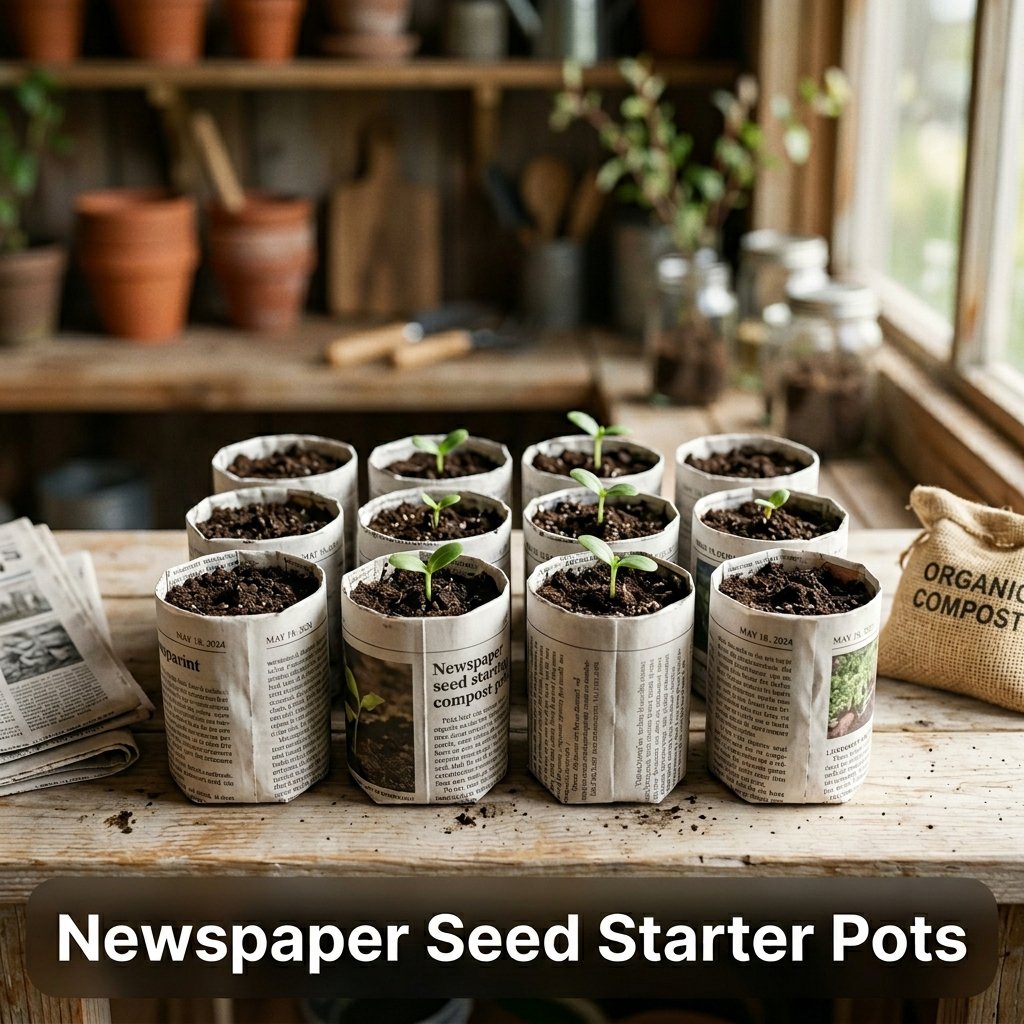
Rolling a Newspaper Seed Pot
Cut a newspaper sheet to 30 x 20 cm. Roll the sheet tightly around a glass or round bottle with 6 cm of newspaper extending below the base of the glass. Fold the extending newspaper inward across the glass base, creasing it flat against the base to form the pot bottom. Slide the formed pot off the glass. The friction of the rolled layers holds the pot shape without any glue or tape. Fill immediately with seed-starting compost and plant one seed per pot according to the seed packet depth instructions.
Using Newspaper Pots for School Projects
Newspaper seed starter pots make one of the most educational craft from waste material ideas for school projects because the activity combines recycling, biology, and craft skills in a single project. Each student makes 3 to 5 pots in one session, plants a fast-germinating seed such as cress or radish, and observes germination within 5 to 7 days. The class monitors seedling growth for 2 to 3 weeks before transplanting the pots directly into a school garden bed. The newspaper decomposes in the soil within 6 weeks, leaving no waste residue.
17. Old Jeans Organizer
An old jeans organizer cuts the back pocket sections from a discarded pair of denim jeans and mounts them on a wooden board or directly on a wall to produce a multi-pocket storage system for small household items. I cut 4 pockets from a pair of jeans I had owned for 8 years and mounted them on a 40 x 30 cm pine board. The finished organizer holds my keys, phone, charging cables, sunglasses, and small tools in individual pockets beside my front door. It has been in daily use for 22 months.
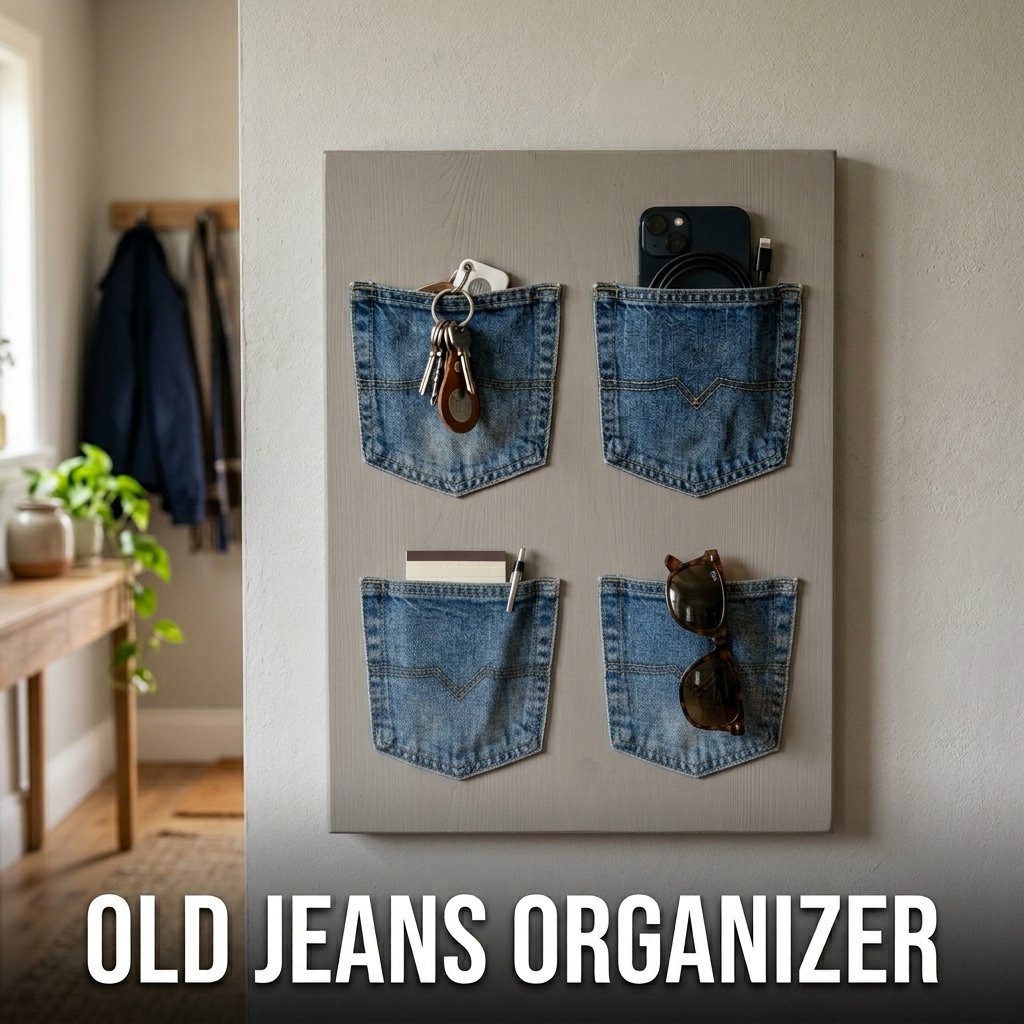
Cutting Pockets From Old Jeans
Cut each back pocket from the jeans using sharp fabric scissors, leaving a 2 cm border of denim fabric around all 3 sewn pocket edges. This border provides the attachment surface for mounting without cutting into the pocket seam stitching that holds the pocket structure together. Cut 2 back pockets and 2 front pockets from a single pair of jeans to produce 4 separate pocket units. Trim all cut borders to an even 1.5 cm width using a ruler and fabric marker before mounting.
Mounting Pockets on a Display Board
Sand a 40 x 30 cm pine board with 180-grit sandpaper. Apply a coat of chalk paint or wood stain and allow 1 hour of drying time. Position all 4 pockets on the board in a 2 x 2 grid arrangement, spacing them 3 cm apart. Attach each pocket to the board by stapling the border fabric to the wood surface using a staple gun at 2 cm intervals along the top and side borders. Leave the pocket opening at the top unstapled. Mount the finished board on a wall using 2 screws driven into wall anchors at the board’s top corners.
FAQ
What are the easiest crafts from waste material for kids?
The easiest crafts from waste material for kids are cardboard tube pencil holders, egg carton flowers, newspaper seed pots, magazine paper beads, and plastic bottle planters. All 5 use waste materials available in every home: toilet paper rolls, egg cartons, newspapers, magazines, and plastic bottles. None of the 5 projects requires specialist tools beyond scissors and craft glue. Children aged 5 and above complete all 5 projects independently. Children aged 3 to 4 complete them with light adult guidance on cutting steps. Each project finishes in under 45 minutes and produces a functional or decorative finished item.
What waste materials work best for school projects?
The waste materials that work best for school projects are cardboard boxes, toilet paper rolls, plastic bottles, newspaper pages, and egg cartons. Cardboard boxes suit organizer and building construction projects. Toilet paper rolls suit tube animal, kaleidoscope, and pencil holder projects. Plastic bottles suit planter and bird feeder projects. Newspaper pages suit basket weaving, mosaic, and seed pot projects. Egg cartons suit flower and mosaic tile projects. All 5 materials are free to collect, structurally stable enough for classroom handling, and produce finished results that demonstrate clear material transformation from a waste item to a functional or decorative object.
How do I make a craft from waste material easy and beautiful?
To make a craft from waste material easy and beautiful, apply 3 finishing steps to any basic waste material project: a base coat of white acrylic paint, 2 coats of a single accent color, and a clear varnish or PVA sealant topcoat. The white base coat covers all printed labels and uneven surfaces on plastic, tin, and cardboard materials. The accent color produces a clean, consistent surface across the full item. The sealant topcoat protects the paint and adds a polished appearance. These 3 steps apply to plastic bottle planters, tin can holders, cardboard organizers, and newspaper basket crafts equally.
What craft from waste material ideas work for adults?
Six craft from waste material ideas suit adults specifically: glass jar lanterns, old jeans organizers, CD mosaic picture frames, fabric scrap patchwork cushion covers, old t-shirt tote bags, and newspaper wall art silhouettes. All 6 produce home decoration or organization items with a finished appearance that suits adult home aesthetics. Glass jar lanterns suit dining table displays. Jeans organizers suit entryway storage. CD mosaic frames suit gallery wall arrangements. Patchwork cushion covers suit sofa or bedroom display. T-shirt tote bags suit daily shopping use. Newspaper silhouette art suits framed wall display in living rooms and home offices.
Can craft from waste material ideas be used for zero-cost school projects?
Craft from waste material projects complete at zero cost when all required materials come entirely from household waste items. Zero-cost school projects include newspaper seed starter pots using newspaper and compost, cardboard tube kaleidoscopes using toilet paper rolls and silver card scraps, egg carton flower garlands using egg cartons and paint scraps, paper bag puppets using paper bags and marker pens, and plastic bottle planters using bottles and soil. All 5 projects use materials that schools and households generate routinely and would otherwise discard. Teachers collect these materials over 2 to 4 weeks before a scheduled project session to build sufficient supply for a full class group.