Top 10 Fun Daycare Crafts Materials for Kids
I once watched a four-year-old turn a cardboard toilet roll into a rocket ship using nothing but paint, stickers, and absolute confidence. She held it up and announced she was flying to the moon. That moment told me everything I needed to know about the power of the right craft materials in a daycare setting.
Daycare crafts materials are the physical supplies used by children in daycare and preschool settings to create art, build objects, and complete hands-on learning activities. I have worked with children between ages two and ten, and I can tell you that the right materials make the difference between a smooth, productive craft session and a sticky, frustrated mess on the table.
The best daycare craft supplies are non-toxic, washable, and easy for small hands to hold and use. I noticed early on that children between three and five years old work best with large crayons, soft clay, and pre-cut shapes rather than scissors and fine-tip markers.
Most of the materials on this list cost under $20 per item and are available at any general or educational supply store. Teachers, caregivers, and parents all use these same supplies for both structured preschool craft sessions and free creative time at home.
1. Colored Paper
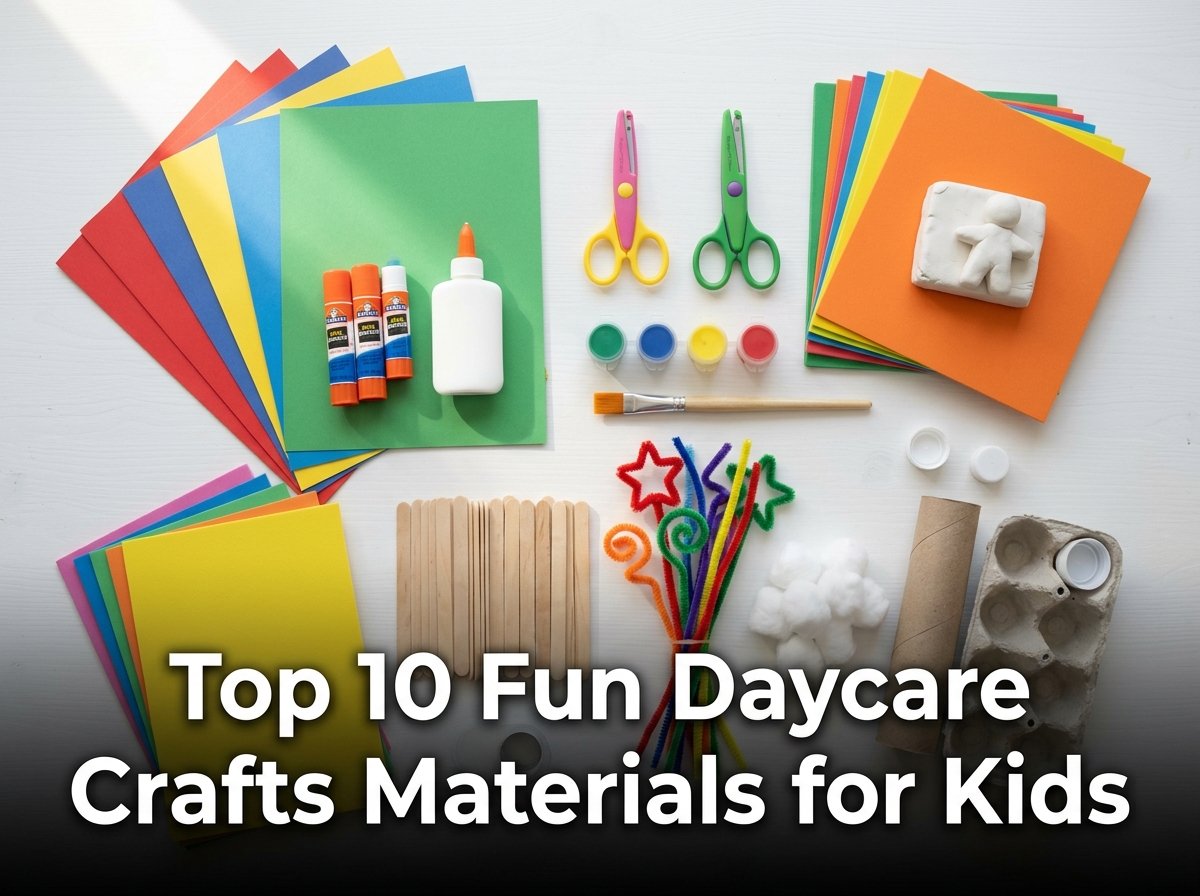
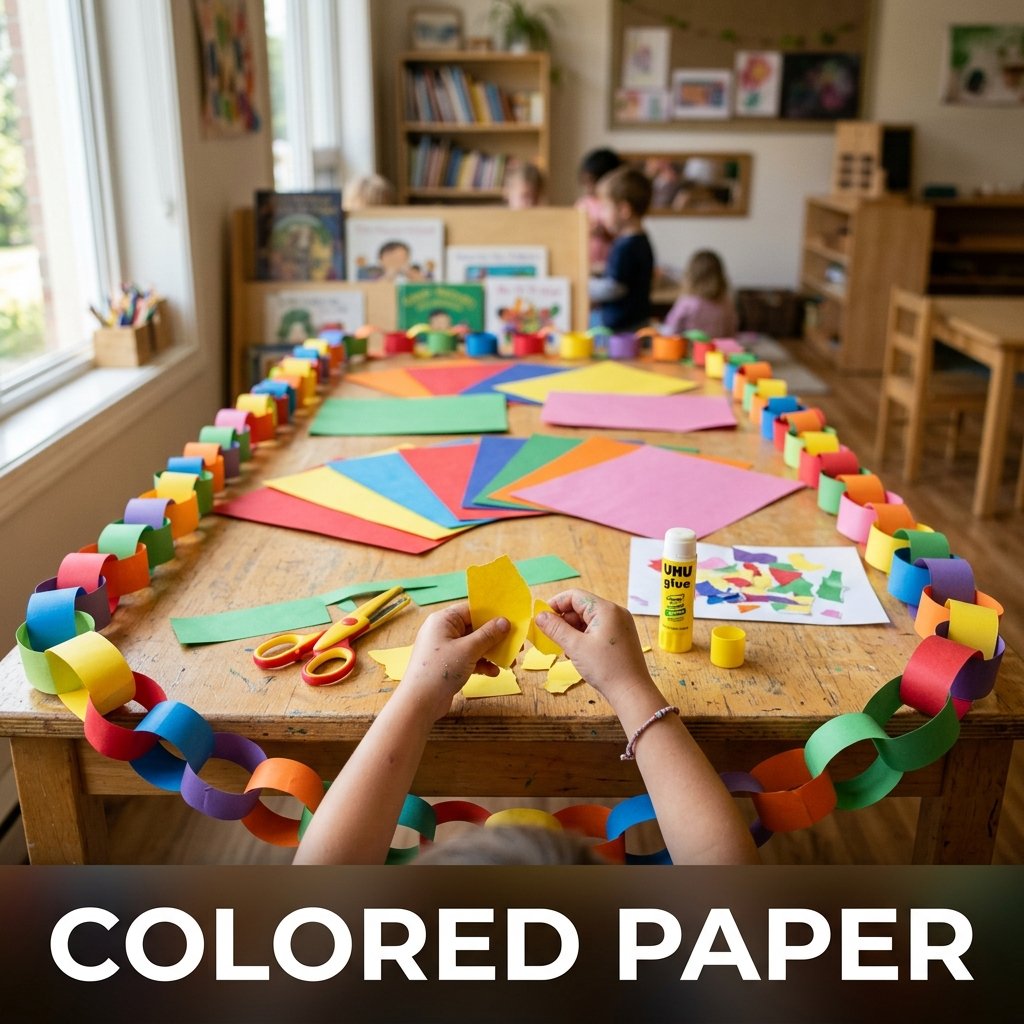
Colored paper is the most widely used daycare crafts material across preschool and early childhood settings worldwide. I use colored paper in nearly every single craft session I run because it works for cutting, folding, tearing, gluing, and drawing all at once. A single pack of 50 sheets in assorted colors costs between $3 and $8 and supports dozens of different craft activities. Colored paper suits children from age two upward and requires no preparation before use.
Why Colored Paper Works for Toddlers and Preschoolers
Colored paper improves fine motor skills in toddlers and preschoolers because tearing, folding, and cutting paper all require controlled hand and finger movements. I give toddlers under three years old pre-torn pieces to glue rather than asking them to cut. Children aged three to five begin using safety scissors on colored paper with adult supervision. A single sheet of colored paper produces paper chains, greeting cards, folded shapes, collages, and seasonal decorations. Paper crafts for preschoolers also develop color recognition when children sort sheets by color before starting a project.
Best Types of Colored Paper for Daycare Craft Projects
Standard 80gsm colored copy paper and heavier 160gsm cardstock are the two most useful paper weights for daycare craft projects. I use 80gsm paper for projects involving folding, tearing, and light cutting because it is easy for small hands to manage. I use cardstock for projects that need to stand upright or hold glued items, such as greeting cards, learning charts, and decorative wall displays. Avoid paper below 70gsm for daycare use because it tears too easily during gluing and produces uneven edges that frustrate younger children.
2. Non-Toxic Glue
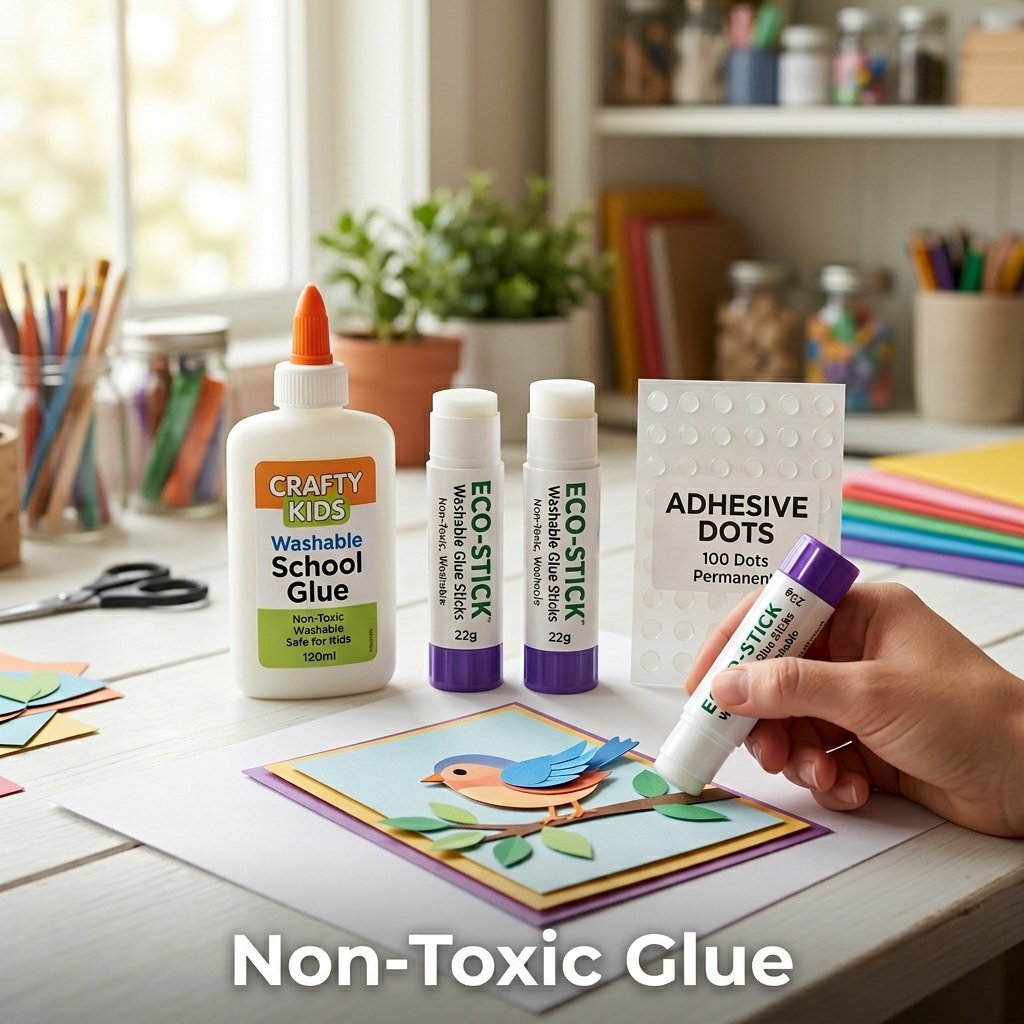
Non-toxic glue is the second most important material on any daycare crafts materials list because nearly every craft project requires adhesion of some kind. I keep three types of glue available in my craft area at all times: washable white glue, glue sticks, and non-toxic glue dots. Each type suits a different age group and project requirement. The combined cost of all three types for a full school term runs to approximately $15 for a group of ten children.
Which Glue Type Works Best for Each Age Group
Glue sticks work best for children aged two to four because they apply without dripping and require less hand control than liquid glue bottles. I give glue sticks to toddlers and younger preschoolers for paper and foam sheet projects. Children aged four and above manage washable white glue in small bottles with a pointed tip, which gives more precise application. I never give large-opening glue bottles to children under five because the result is always a glue lake in the center of the craft, not a usable adhesive layer. Glue dots suit detail work on finished crafts.
How to Store Glue Safely in a Daycare Setting
Non-toxic glue stores safely at room temperature in a sealed container placed out of direct sunlight and at least 1.2 meters above floor level when not in use. I store all glue in a lidded plastic box on a shelf that children cannot reach independently. After each session, I wipe all glue bottle tips clean before replacing the caps to prevent blockages. Dried glue in the tip is the single most common reason glue bottles stop working mid-session. I check all glue bottle caps at the start of each week and replace any bottle that shows hardened residue around the opening.
3. Safety Scissors
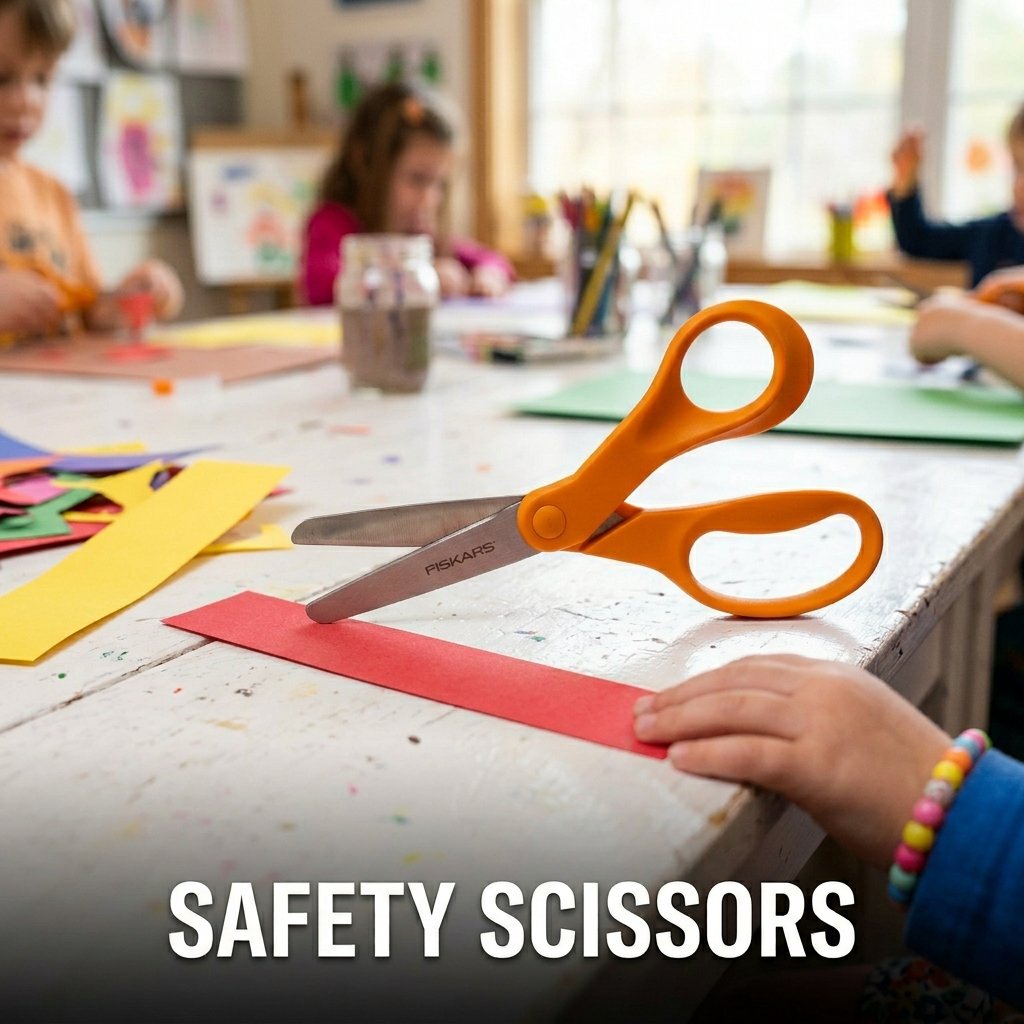
Safety scissors are a required daycare crafts material for any group of children aged three years and above. I introduced safety scissors to a group of three-year-olds and spent the first two sessions practicing the open-and-close motion before any cutting began. That preparation reduced accidents to zero across the full term. Safety scissors have rounded tips and blunted blades that cut paper and foam sheets without cutting skin, making them the only appropriate scissor type for preschool craft use.
What Age Group Uses Safety Scissors Most Effectively
Children aged three to five use safety scissors most effectively for cutting along straight lines and simple curved lines on paper and foam sheets. I noticed that children below age three lack the hand strength and coordination to open and close scissors repeatedly without tiring quickly. For children aged six to eight, I introduce slightly sharper child scissors with a pointed tip for more detailed cutting tasks. Safety scissors for toddlers come in both right-handed and left-handed versions, and I always check a child’s dominant hand before selecting which pair to provide.
How Many Pairs of Safety Scissors to Keep in a Daycare Craft Station
A daycare craft station requires one pair of safety scissors per child to prevent sharing and reduce the spread of germs between children. I keep 12 pairs of safety scissors in my craft area for a group of 10 children, with 2 extra pairs available as replacements for any that break or lose a blade screw during use. Replace safety scissors when the blades no longer cut cleanly through a single sheet of 80gsm paper in one smooth motion. I check all pairs at the start of each month and retire any pair that requires more than light pressure to cut through standard copy paper.
4. Washable Paint
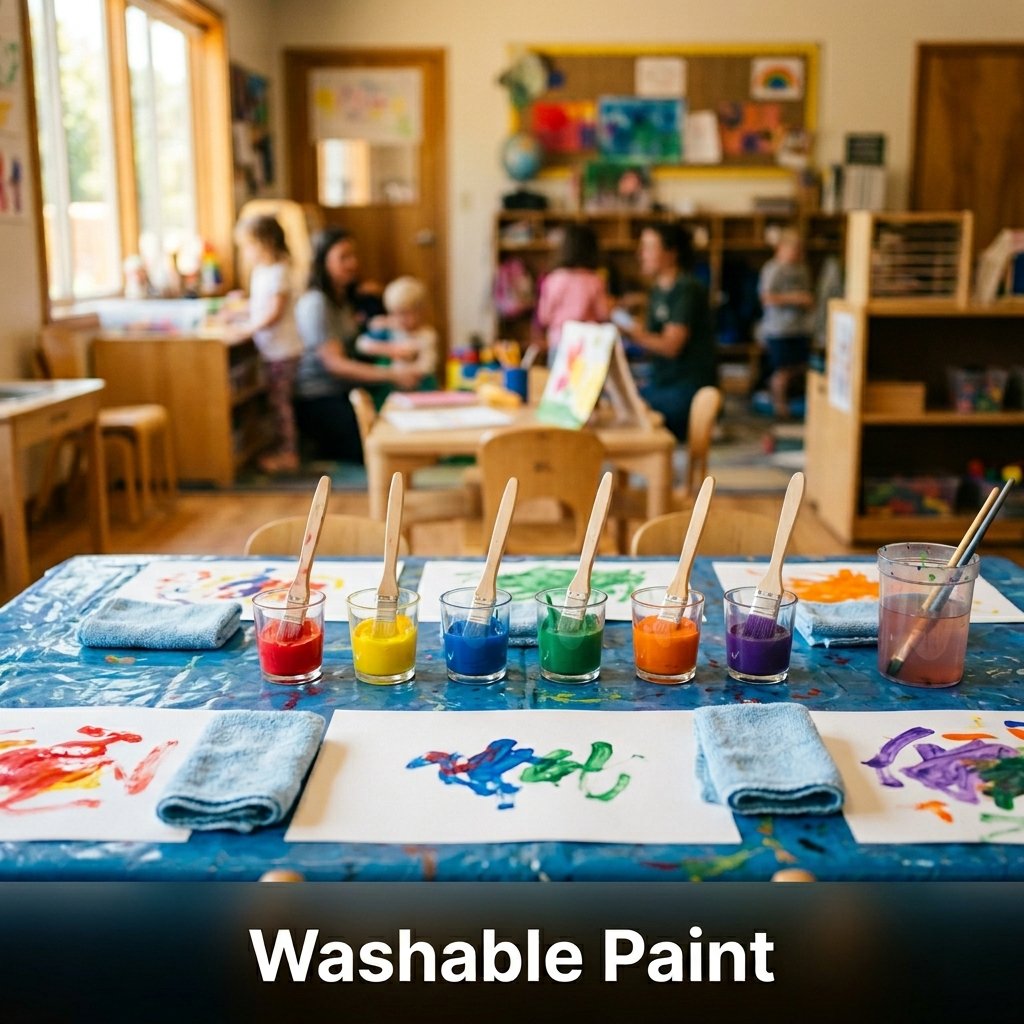
Washable paint is the daycare crafts material that produces the most visible results for children, which is why it generates the highest level of engagement during craft sessions. I have run paint sessions with children as young as eighteen months using finger paint, and the finished pieces always go straight onto the wall display. Washable paint in daycare settings refers specifically to water-based, non-toxic paint that rinses from skin, fabric, and most hard surfaces within 30 seconds of water contact.
Which Washable Paint Formats Work Best for Different Ages
Finger paint in pot format works best for children under three, while bottled washable tempera paint works best for children aged three and above. I use finger paint pots for toddler sessions because they remove the barrier of using a brush, which requires more coordination than most children under three possess. For preschoolers aged three to five, I provide washable tempera paint in small 30ml cups with a flat-ended brush for each color. Children aged six and above manage standard washable acrylic paint in squeeze bottles with round and flat brush options.
How to Set Up a Washable Paint Station in a Daycare Room
A washable paint station requires a vinyl tablecloth, individual paint cups, one brush per color per child, and a water cup for rinsing between colors. I set up paint stations before children arrive so that all materials are in place and each child’s space is ready when the session begins. I place a damp cloth beside each child’s workspace so they can wipe hands between color changes without leaving their seat. Cover all surfaces within 60 centimeters of the painting area because children under five do not reliably keep paint within their own workspace boundaries.
5. Air-Dry Clay
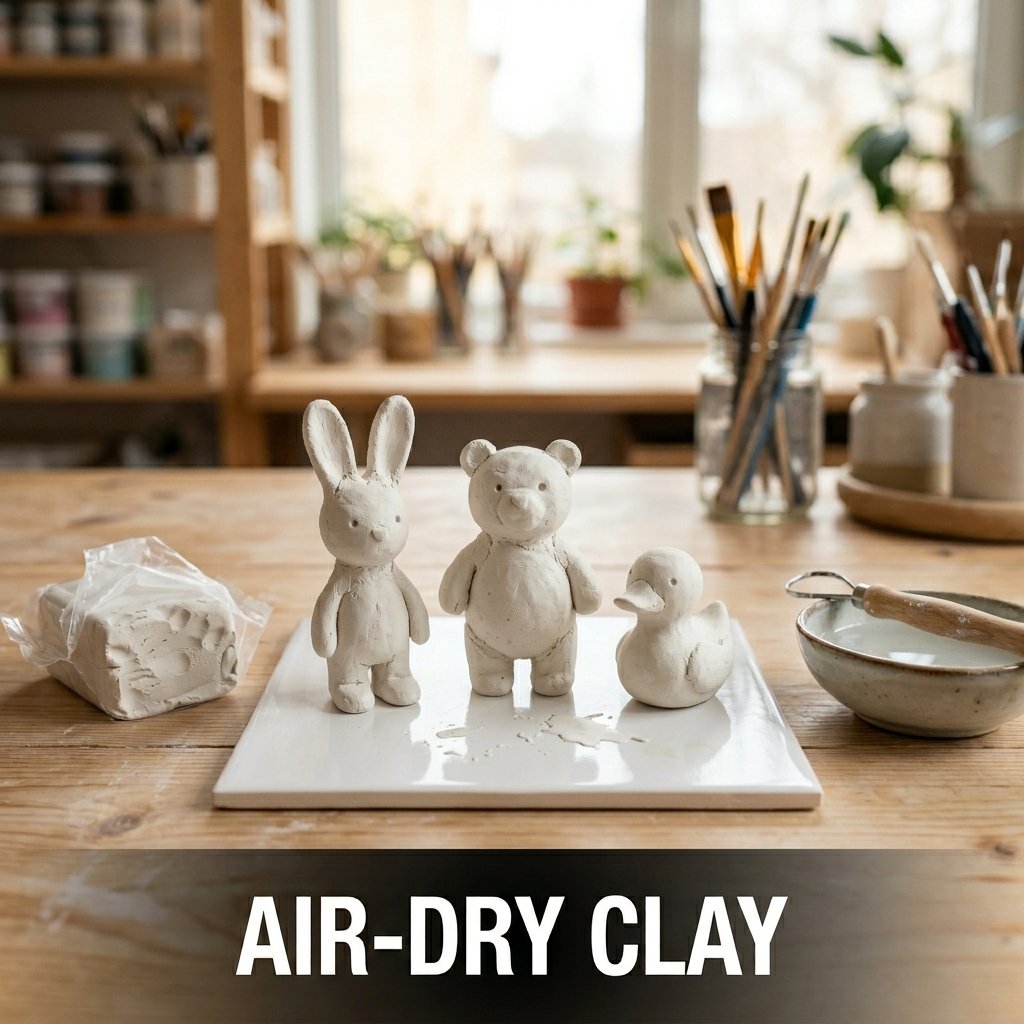
Air-dry clay is one of the most educational daycare crafts materials because it develops hand strength, fine motor control, and three-dimensional thinking simultaneously. I introduced air-dry clay to a group of four-year-olds and watched children who struggled with pencil grip show noticeably stronger finger control after four weekly clay sessions. Air-dry clay hardens at room temperature without a kiln or oven, which makes it fully suitable for daycare and home use with no specialist equipment required.
What Type of Air-Dry Clay Works Best for Young Children
Soft, lightweight air-dry clay with a smooth texture works best for children under six because it requires less hand strength to shape than standard pottery clay. I use a brand of lightweight white air-dry clay that children aged three and above manage without adult assistance during shaping. Standard air-dry clay in grey or terracotta tones suits children aged six and above who have developed sufficient grip strength for firmer materials. Avoid clay with a high sand or grit content for children under five because the texture causes discomfort during extended shaping sessions and discourages continued use.
How Long Air-Dry Clay Takes to Harden at Room Temperature
Air-dry clay hardens fully at room temperature in 24 to 72 hours depending on the thickness of the finished piece and the humidity level of the room. I tell children that their clay piece needs to “sleep” for two nights before it is ready to paint or take home, which sets an accurate expectation without requiring an explanation of drying chemistry. Pieces thicker than 1.5 centimeters take the full 72 hours to harden to the center. I place finished clay pieces on a wire rack rather than a flat surface so air circulates around all sides and the base dries at the same rate as the top.
6. Foam Sheets
Foam sheets are a lightweight, colorful daycare crafts material that cuts cleanly with safety scissors and holds glue without warping or tearing. I use foam sheets for projects that need a slightly stiff base without the weight of cardboard, such as bookmarks, masks, and decorative shapes. A pack of 50 assorted foam sheets costs approximately $5 to $8 and covers multiple craft sessions for a group of ten children. Foam sheets are available in plain colors, glitter finishes, and pre-printed patterns.
Which Foam Sheet Thickness Works Best for Preschool Crafts
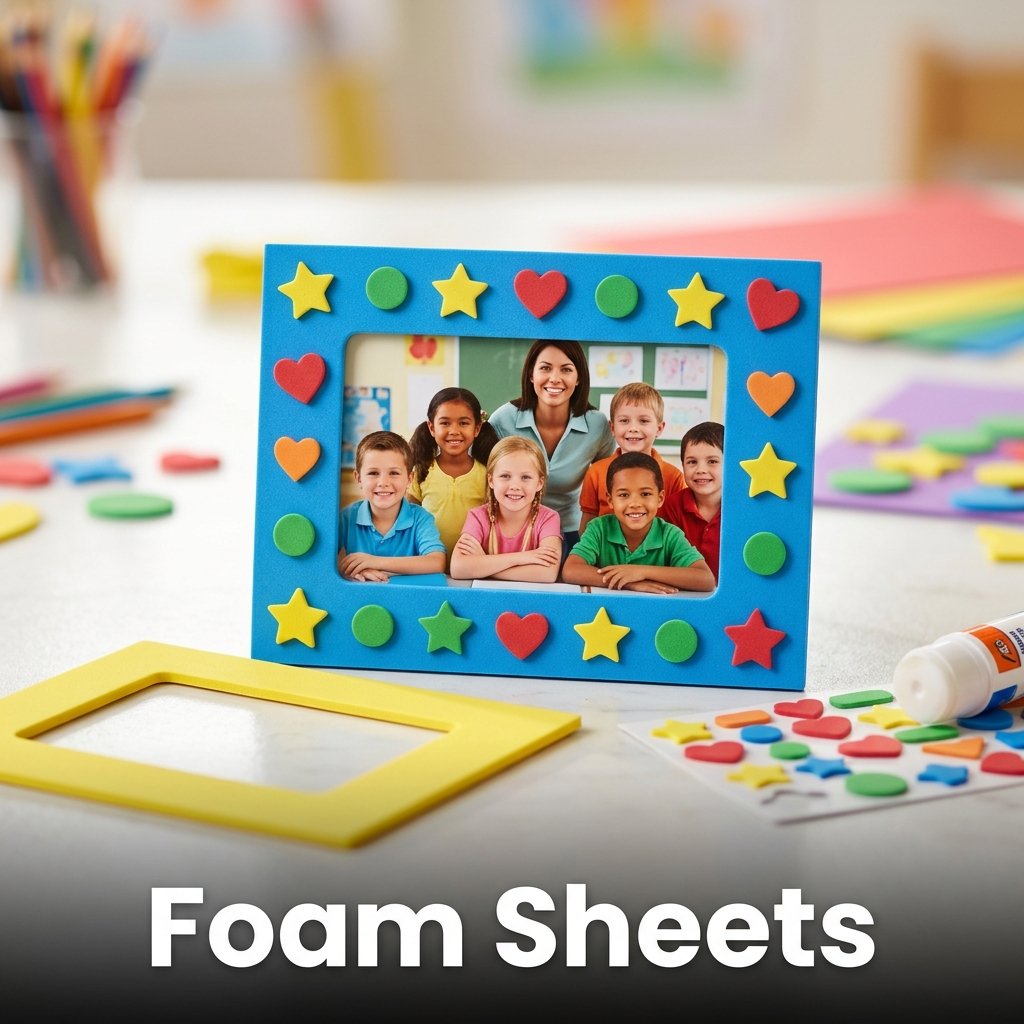
Foam sheets in 2mm thickness work best for preschool craft projects because safety scissors cut through this thickness cleanly in a single pass. I tested 3mm foam sheets with a group of four-year-olds and found that the additional thickness required two or three scissor passes per cut, which frustrated children and slowed the session significantly. For projects requiring a stiffer base, such as standing decorations or wall hangings, I layer two 2mm sheets and glue them together rather than using a single thicker sheet. Pre-cut foam shapes are available as an alternative for children under three who do not yet use scissors.
Best Craft Projects Using Foam Sheets in a Daycare Setting
The best daycare craft projects using foam sheets include animal masks, seasonal decorations, name plaques, picture frames, and handprint art. I made foam sheet picture frames with a group of five-year-olds by cutting a rectangle, removing the center, and decorating the border with foam sticker shapes. Each child took their frame home with a class photo inside, and every parent commented on the quality of the finished piece. Foam sheets also work well for easy crafts for 3-5 year olds because the material does not require drying time after cutting and the colors stay bright without any additional painting.
7. Popsicle Sticks
Popsicle sticks are one of the most versatile and inexpensive daycare crafts materials available, with a pack of 1000 natural wood sticks costing between $4 and $7. I keep a full stock of popsicle sticks in my craft supply area year-round because they work for building, counting, decorating, and labeling projects across all age groups. Popsicle sticks have no sharp points, making them fully safe for children from age two upward without any modification or adult supervision for the sticks themselves.
What Craft Projects Use Popsicle Sticks Most Effectively
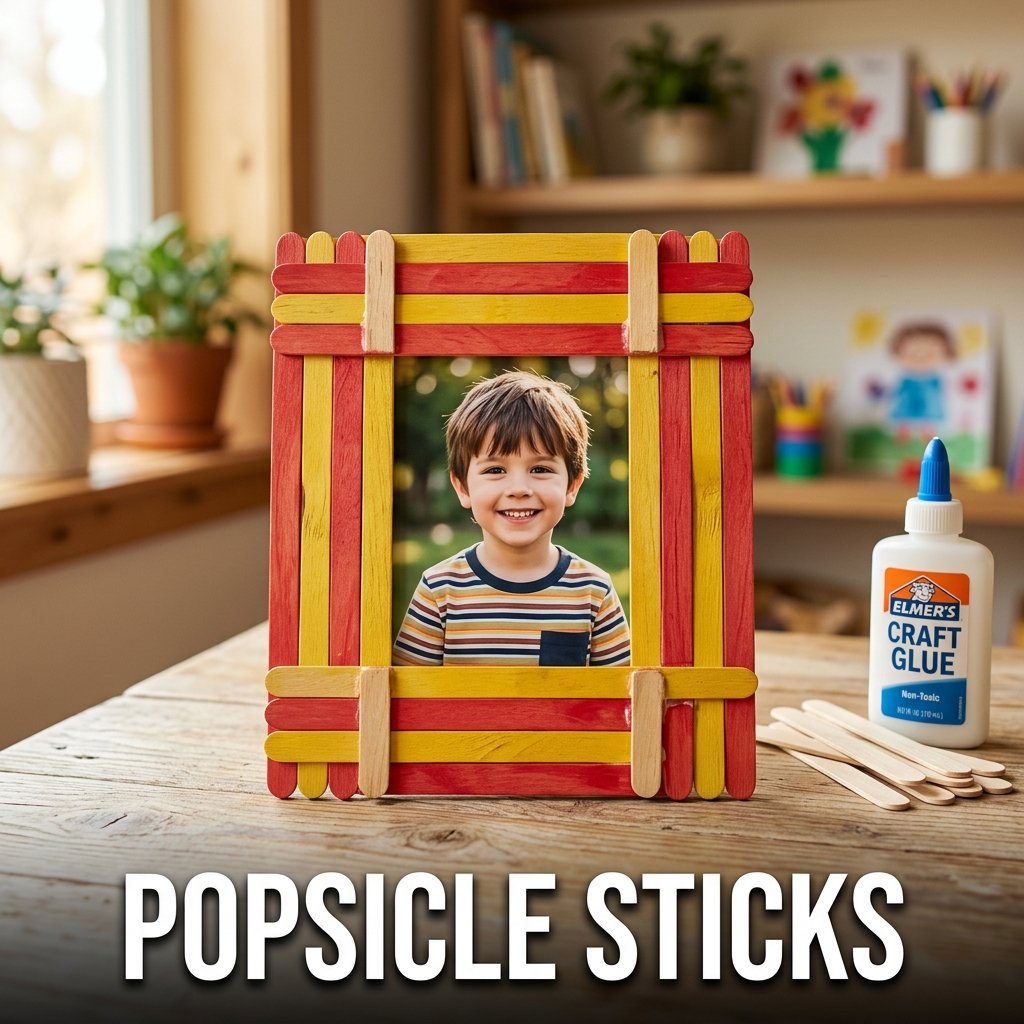
Popsicle sticks work most effectively for building flat-frame projects, such as photo frames, small houses, star shapes, and name plaques, because they stack and glue predictably without warping. I built a small cabin model with a group of six-year-olds using popsicle sticks and non-toxic white glue, and the finished structure supported the weight of a small toy placed on the roof. For younger children aged three to four, I use popsicle sticks as painting tools, gluing surfaces, and counting aids rather than as structural building materials. Colored popsicle sticks add a visual element to sorting and pattern-making activities.
How to Paint Popsicle Sticks Without Warping Them
Popsicle sticks paint without warping when coated with a thin layer of washable paint on one side at a time, with full drying time between each side. I paint one flat side of each stick, lay them on a wire rack, and wait a minimum of 20 minutes before turning them over to paint the reverse side. Applying wet paint to both sides simultaneously causes the wood fibers to absorb moisture unevenly and curl the stick into a curved shape that no longer sits flat. For group projects, I pre-paint all popsicle sticks the day before the session so children receive fully dry, flat sticks ready for building and decoration.
8. Pipe Cleaners
Pipe cleaners, also called chenille stems, are a flexible daycare crafts material that children aged three and above use to shape, twist, and build three-dimensional objects without glue or scissors. I keep a pack of 100 mixed-color pipe cleaners in my craft supply box because they run out faster than almost any other material I stock. A pack of 100 pipe cleaners costs approximately $3 to $5 and provides enough material for a full group session producing individual items per child.
What Children Can Make With Pipe Cleaners in a Daycare Setting
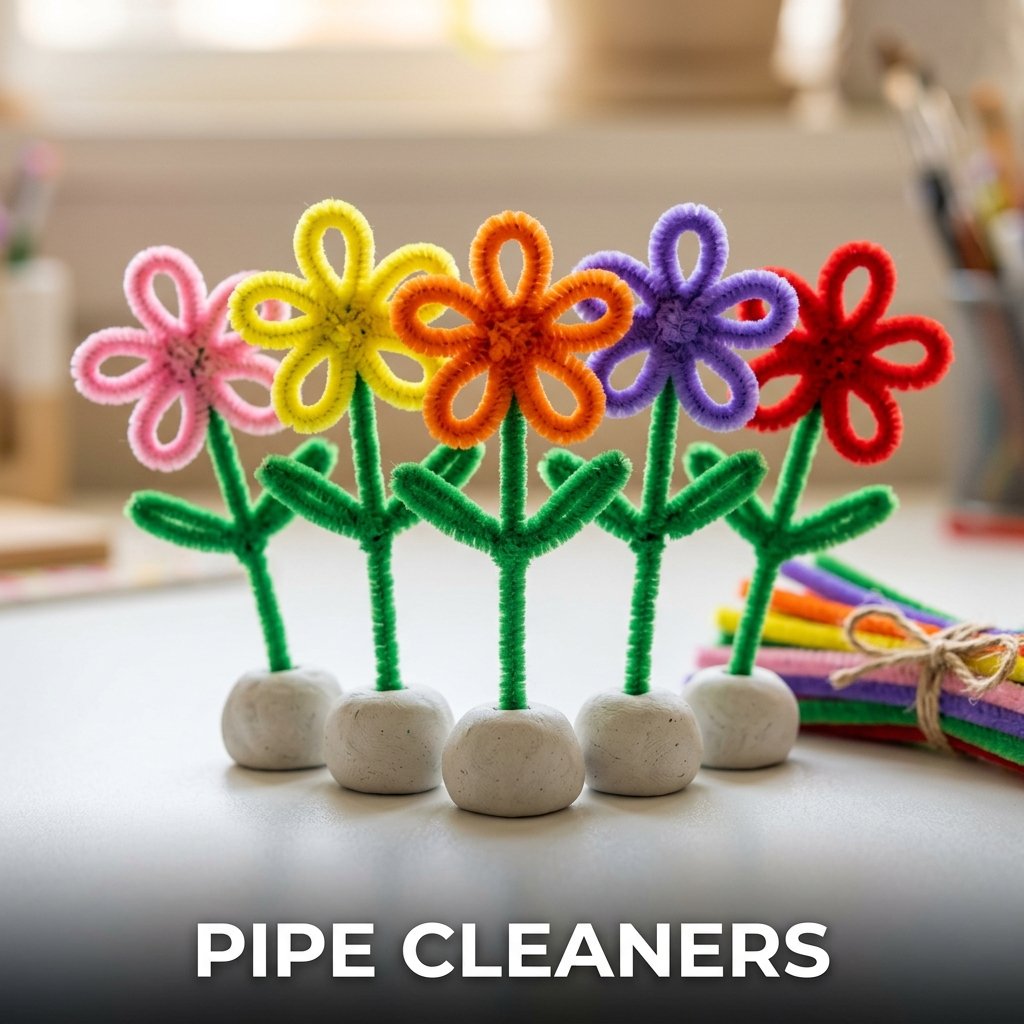
Children in a daycare setting make animals, glasses frames, letters, flowers, bracelets, and small figures using pipe cleaners without any additional tools or adhesive. I showed a group of four-year-olds how to bend a pipe cleaner into a circle and add petal shapes around the outside to produce a flower, and every child completed the project independently within ten minutes. For children aged six and above, I introduce pipe cleaner weaving through cardboard grids, which develops more precise hand control than simple bending. Pipe cleaners also combine well with popsicle sticks and foam sheets for multi-material daycare craft ideas.
Are Pipe Cleaners Safe for Toddlers Under Three Years Old
Pipe cleaners are not safe for children under three years old because the wire inside the chenille stem presents a puncture risk if the fabric covering is torn or the end is exposed. I do not include pipe cleaners in any craft session for children under thirty-six months and keep them stored separately from materials used in toddler sessions. For children aged three and above who use pipe cleaners, I check each stem before the session and discard any with exposed wire at the tip. Replace the full pack when any stem shows wire at the cut ends.
9. Cotton Balls
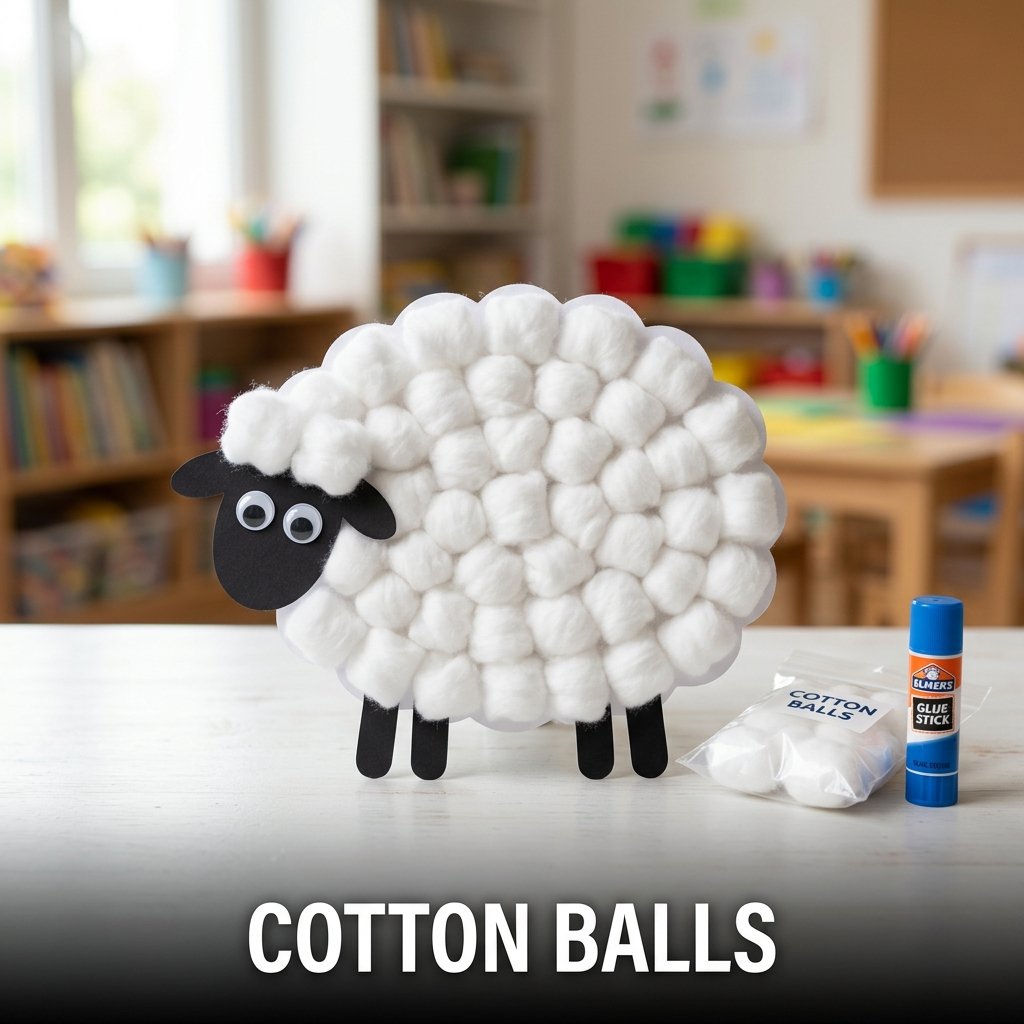
Cotton balls are a soft, inexpensive daycare crafts material that toddlers and preschoolers use for texturing, painting, gluing, and decorating finished craft pieces. I use cotton balls in at least one craft session per month because they introduce a different tactile experience compared to paper and foam, which children at this age respond to strongly. A bag of 200 cotton balls costs under $3 and provides enough material for multiple group sessions without restocking.
How Cotton Balls Are Used in Preschool Craft Projects
Cotton balls are used in preschool craft projects as clouds, snow effects, animal fur, sheep bodies, bunny tails, and paint applicators for dabbing color onto paper. I used cotton balls as the body of a sheep craft with a group of three-year-olds by gluing them onto a pre-cut sheep outline, and every child completed the project without requiring individual assistance. For paint dabbing, I show children how to hold a cotton ball with two fingers and press it lightly onto a paint-loaded sponge before stamping it onto paper. This technique suits free craft ideas for preschoolers because it produces a textured print effect with no brush required.
How to Store Cotton Balls Hygienically in a Daycare Craft Area
Cotton balls store hygienically in a sealed, lidded plastic container placed away from water sources and out of reach of children when not in use. I transfer cotton balls from their original plastic bag into a labeled rectangular container that fits neatly in my supply shelf. Loose cotton balls left in an open bag collect dust, absorb moisture, and develop an off-white discoloration within two weeks in a humid room. I count out the required number of cotton balls per child before each session and place them in individual small cups on each child’s workspace to prevent cross-contact between children during the craft activity.
10. Recycled Materials
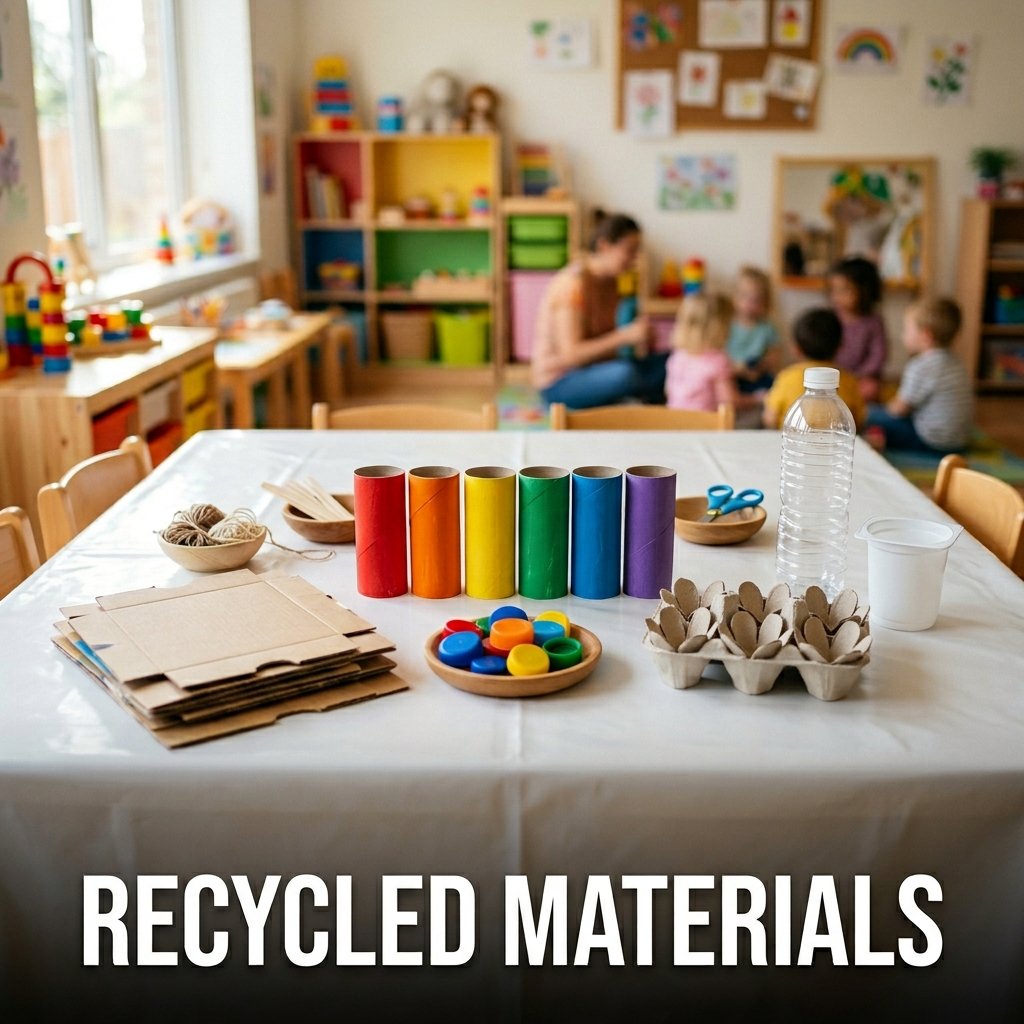
Recycled materials are the most budget-friendly category of daycare crafts materials because they cost nothing when collected from household waste before disposal. I ask parents at the start of each school term to send in clean, dry recycled items such as cardboard tubes, egg cartons, plastic bottles, bottle caps, and cereal boxes. Over four weeks, a group of ten families provides enough recycled material to fill a large storage box, which covers an entire term of craft sessions.
Which Recycled Materials Work Best for Daycare Craft Projects
Cardboard tubes, egg cartons, cereal boxes, plastic bottle caps, and clean yogurt pots work best for daycare craft projects because they are structurally stable, easy to cut, and hold paint and glue reliably. I made a set of cardboard tube binoculars with a group of five-year-olds by taping two tubes together, painting them black, and adding sticker decorations to the outside. Each child spent approximately 25 minutes on the project, and the finished binoculars survived two weeks of daily play use. Cereal boxes provide flat cardboard panels that cut into shapes, backing boards, and building pieces for a wide range of easy preschool craft ideas.
How to Prepare Recycled Materials Safely Before Use in Daycare
Recycled materials require washing with warm soapy water, complete drying, and adult inspection for sharp edges before use in any daycare craft session. I wash all plastic and glass-adjacent items as soon as they arrive and leave them to air-dry on a dish rack for a minimum of 24 hours before placing them in the craft supply box. I check every cardboard tube and box for staples, sharp folds, and any residue from the original product contents. Discard any recycled item that has a sharp edge, a lingering food odor after washing, or a surface that cannot be cleaned to a visually clean standard with standard dish soap and warm water.
Frequently Asked Questions
What are the safest daycare crafts materials for toddlers under three years old?
The safest daycare crafts materials for toddlers under three are finger paint, cotton balls, large crayons, non-toxic glue sticks, and pre-cut foam shapes. I use all five of these in my toddler craft sessions because none of them present choking, puncture, or ingestion risks when used under standard adult supervision. Avoid scissors, pipe cleaners, small beads, and liquid glue bottles for children under three. I also check every material against the ASTM D-4236 safety standard label before introducing it to a toddler group for the first time.
How much do basic daycare craft supplies cost for a group of ten children?
Basic daycare craft supplies for a group of ten children cost between $40 and $80 for a full school term when purchased from a general educational supply retailer. I spend approximately $60 per term on colored paper, non-toxic glue, washable paint, safety scissors, foam sheets, and cotton balls for a group of ten children aged three to five. Recycled materials and popsicle sticks reduce the overall cost further. Buying in bulk packs rather than individual units reduces the per-session cost by approximately 30 percent across all consumable materials.
What craft materials work best for children aged six to twelve years old?
Craft materials that work best for children aged six to twelve include air-dry clay, acrylic paint, standard child scissors, cardstock, popsicle sticks, and pipe cleaners used in more detailed construction projects. I introduce more precise tools and finer materials with this age group because their hand strength and motor control supports accurate cutting, detailed painting, and structured building. Crafts for 6-12 year olds also include weaving, simple sewing with large plastic needles, and model building with cardboard and recycled materials. All paint and adhesive products still require non-toxic certification for this age group.
Can I use daycare craft materials at home with my child?
Yes, all ten materials on this list are suitable for use at home with children of the appropriate age. I use the same materials at home that I use in a daycare setting because they are non-toxic, widely available, and require no specialist storage. Set up a covered workspace at home using a vinyl tablecloth or several layers of newspaper before starting any paint or glue project. Easy daycare craft materials at home require the same adult supervision guidelines as in a professional setting. Store all materials in sealed containers away from direct sunlight and out of reach of children under the minimum age for each material.
How do I organize daycare craft supplies for easy access during sessions?
Daycare craft supplies organize most effectively in a labeled, tiered storage system that places frequently used materials at child-accessible height and less-used or age-restricted materials on higher shelves. I use a three-shelf unit with clear labeled bins for each material type, and I prepare individual supply trays for each child before every session rather than asking children to self-serve from shared containers. Pre-preparing trays reduces material waste by approximately 40 percent and eliminates the disruption of children moving around the room to collect supplies mid-session. Label every bin with both a word label and a picture label for pre-reading children.
What is the best way to introduce a new craft material to preschoolers for the first time?
The best way to introduce a new craft material to preschoolers is through a structured free-exploration session before using the material in a directed project. I give children five to ten minutes to touch, examine, and experiment with a new material before I explain what we will make with it. This approach reduces the tendency for children to focus on the material itself during the directed project, which produces better-quality finished pieces and fewer disruptions. I introduced air-dry clay using this method with a group of four-year-olds, and the directed session that followed produced the most focused craft work I had seen from that group all term.