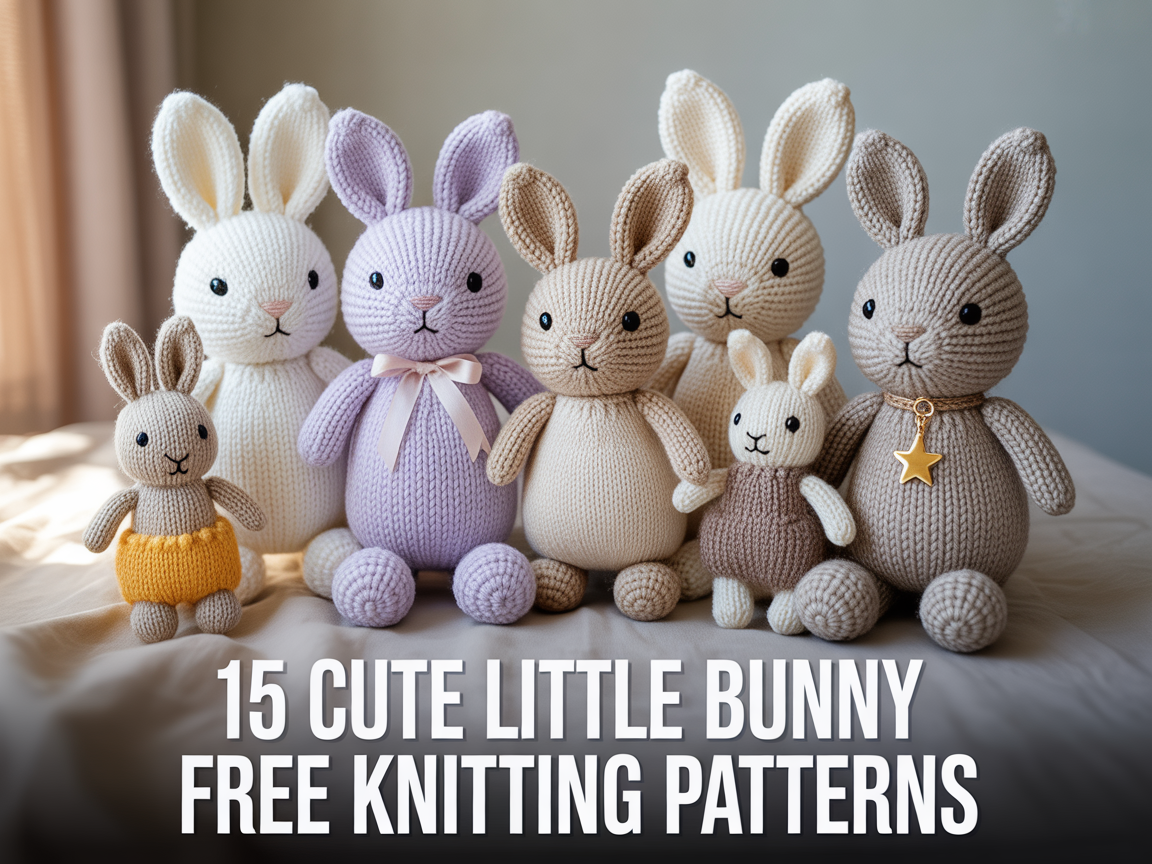
15 Cute Little Bunny Free Knitting Patterns
I knitted my first bunny toy on a Tuesday afternoon with leftover yarn and a pattern I found for free online. It took me three hours, and the result was a small, slightly lopsided rabbit that my daughter carried everywhere for six months. That one project got me searching for every little bunny free knitting pattern I could find.
If you want little bunny free knitting patterns, you have 15 options right here. Each one is available without payment, and most come as a PDF download you can print and keep at your knitting station.
These patterns cover every skill level. Some use straight needles and basic knit and purl stitches. Others use double-pointed needles for knitting in the round. I have tried patterns from beginner level all the way to intermediate, and I picked the ones that gave the clearest instructions and the most satisfying results.
Most of these bunnies finish at 4 to 8 inches tall. They use small amounts of yarn, so leftover skeins from other projects work perfectly. Cotton, wool, and acrylic all produce good results depending on the intended use of the finished toy.
Every pattern on this list is free to download. Several are available on Ravelry, and others come directly from craft blogs and knitting tutorial sites.
1. Classic Knitted Bunny Plush Pattern
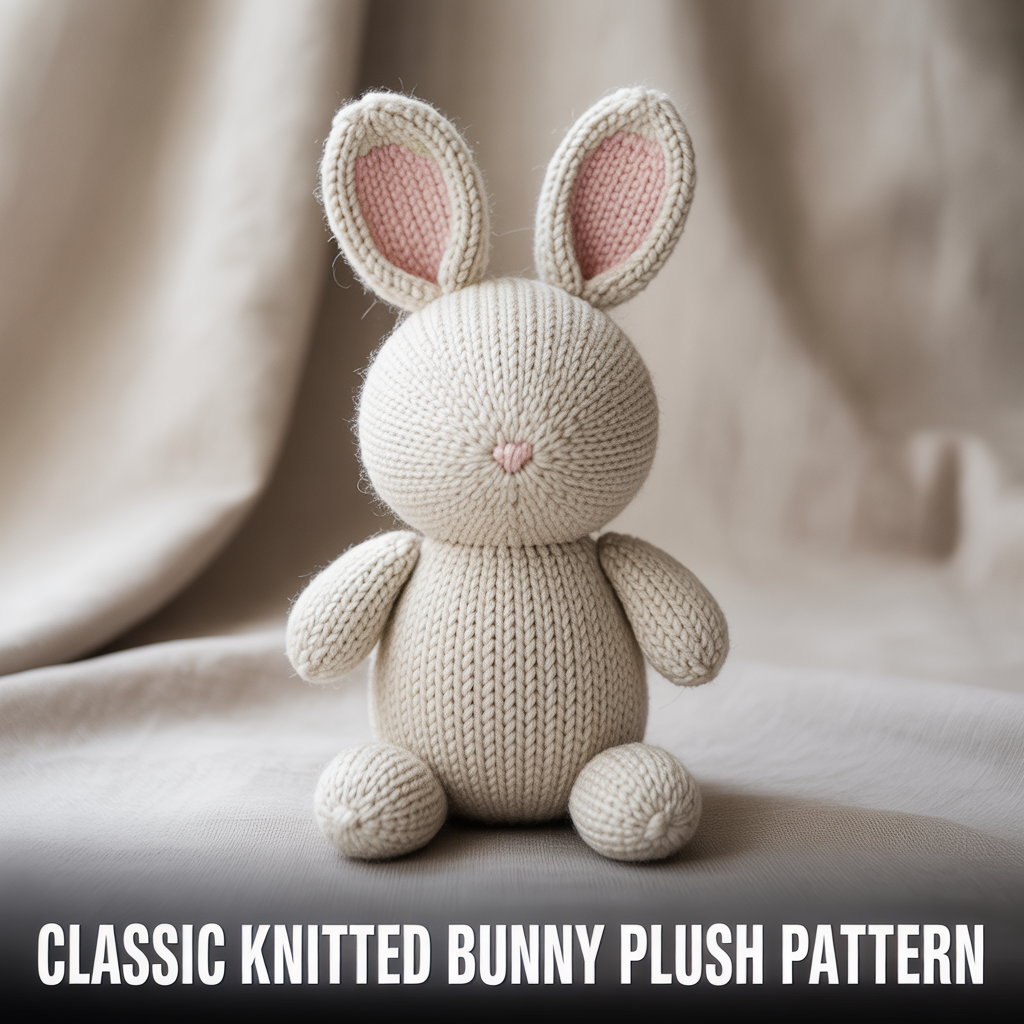
The classic knitted bunny plush is the most searched little bunny free knitting pattern for beginners because it uses only knit and purl stitches across flat panels that are sewn together after stuffing. I made this version first and finished it in one sitting. The finished bunny stands 6 inches tall and uses less than 50 grams of worsted weight yarn.
Yarn and Needle Sizes for a Classic Bunny Plush
Use a size 3.5 mm knitting needle with DK weight yarn for a firm fabric that holds the stuffing without gaps. Acrylic yarn in white, grey, or cream gives the most classic bunny appearance. Cotton yarn produces a slightly stiffer result, which helps the ears stand upright without wire support. Avoid loosely spun yarn because the polyfill stuffing shows through the stitches.
How to Sew the Pieces Together After Knitting
Knit the body, head, ears, and limbs as separate flat pieces. Block each piece lightly before sewing. Use a blunt tapestry needle and matching yarn to seam all pieces using mattress stitch. Stuff the body and head firmly before closing the final seam. Attach the head, ears, and limbs after stuffing is complete to position them accurately before securing.
2. Mini Pocket Bunny Knitting Pattern
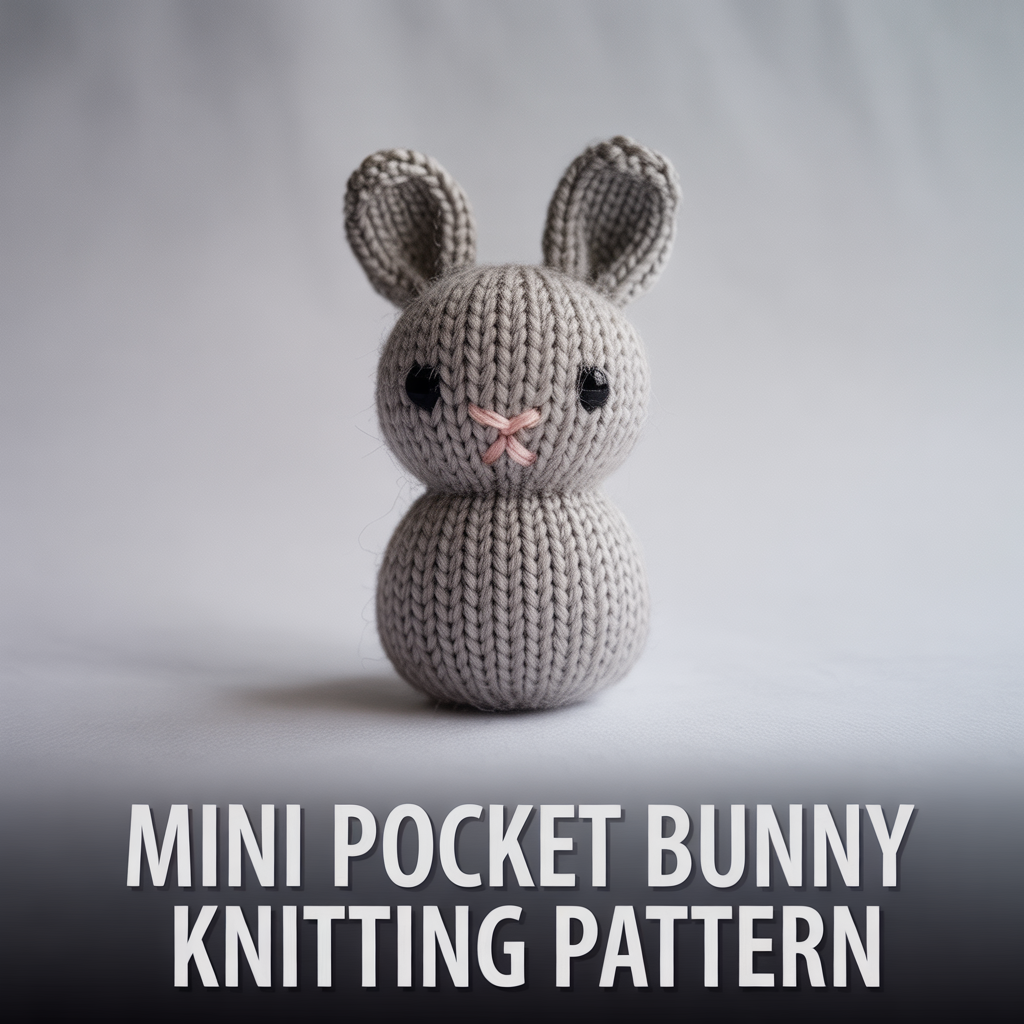
A mini pocket bunny knitting pattern produces a finished toy between 3 and 4 inches tall, small enough to fit inside a coat pocket or attach to a bag as a keychain. I made six of these as gifts last winter and finished each one in under 90 minutes. The pattern uses double-pointed needles and works in the round from the bottom up.
Yarn Weight and Needle Size for a Mini Bunny
Use fingering weight yarn with 2.25 mm double-pointed needles for a dense, firm fabric at this small scale. A looser gauge creates gaps that show the stuffing inside. One 50-gram skein of fingering yarn produces approximately 8 to 10 finished mini bunnies depending on color changes and yarn weight variation between brands.
Finishing a Mini Pocket Bunny Safely
Use 6 mm safety eyes on a mini bunny intended for adults or older children. For babies or children under 3, embroider the eyes using black embroidery thread and a satin stitch instead of inserting plastic safety eyes. Weave in all yarn ends securely on the inside of the toy. Tie a double knot at every end before trimming to prevent unraveling during washing.
3. Easter Bunny Decoration Knitting Pattern
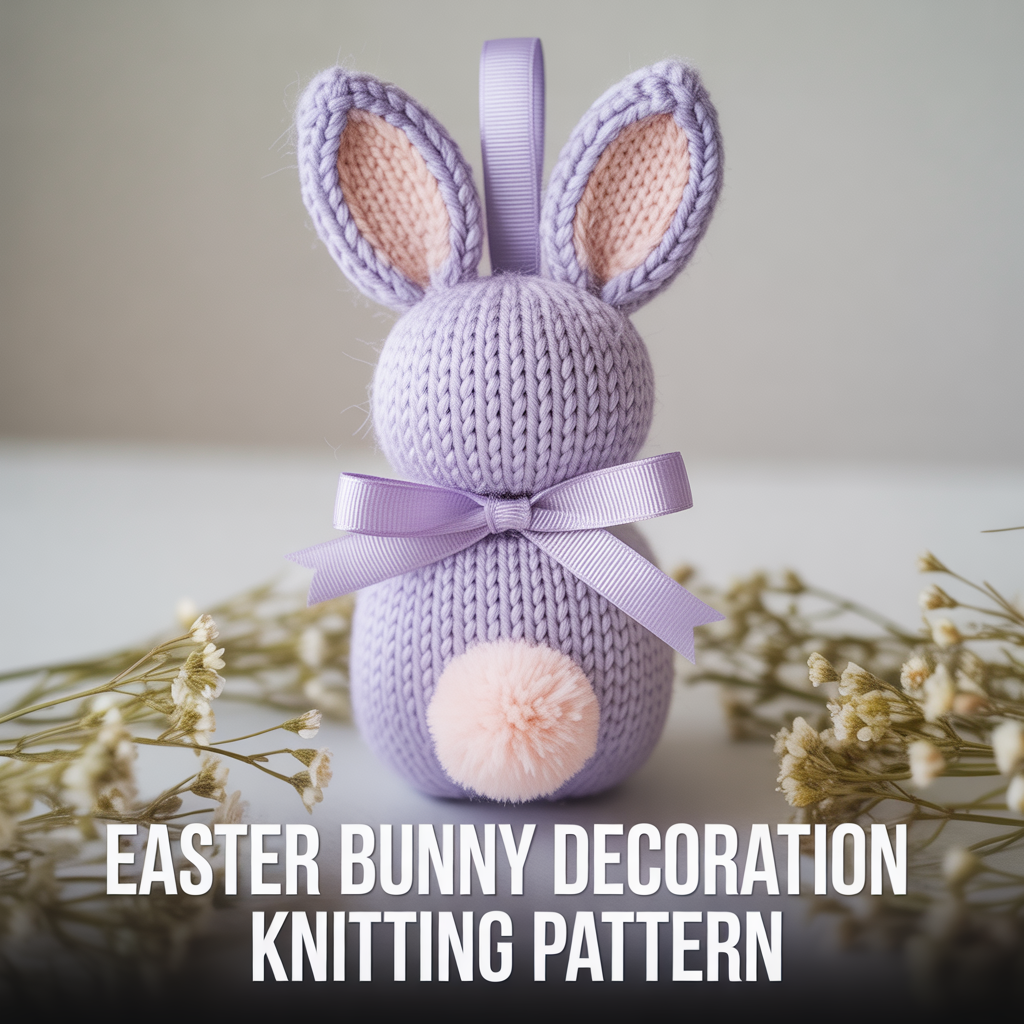
An Easter bunny decoration knitting pattern creates a standing or hanging ornament rather than a play toy. I knitted three of these for a spring table display, and each one took about two hours using worsted weight cotton. The pattern includes a ribbon loop at the top for hanging from an Easter tree or wreath.
Best Yarn Colors for an Easter Bunny Decoration
Pastel colors work best for Easter bunny decorations. Light pink, lavender, sky blue, and mint green are the four most common color choices. Use a solid color for the body and a contrast color for the inner ear detail. Variegated pastel yarn also produces a decorative result without requiring color changes during knitting.
How to Add Decorative Details to an Easter Bunny
Embroider a small nose using pink embroidery thread and three satin stitches. Add a pompom tail using a 1-inch pompom maker and the same yarn as the body. Tie a 6-inch ribbon bow around the bunny’s neck after assembly. These three details add a finished, decorative appearance that distinguishes an ornament bunny from a plain toy bunny.
4. Baby-Safe Bunny Knitting Pattern
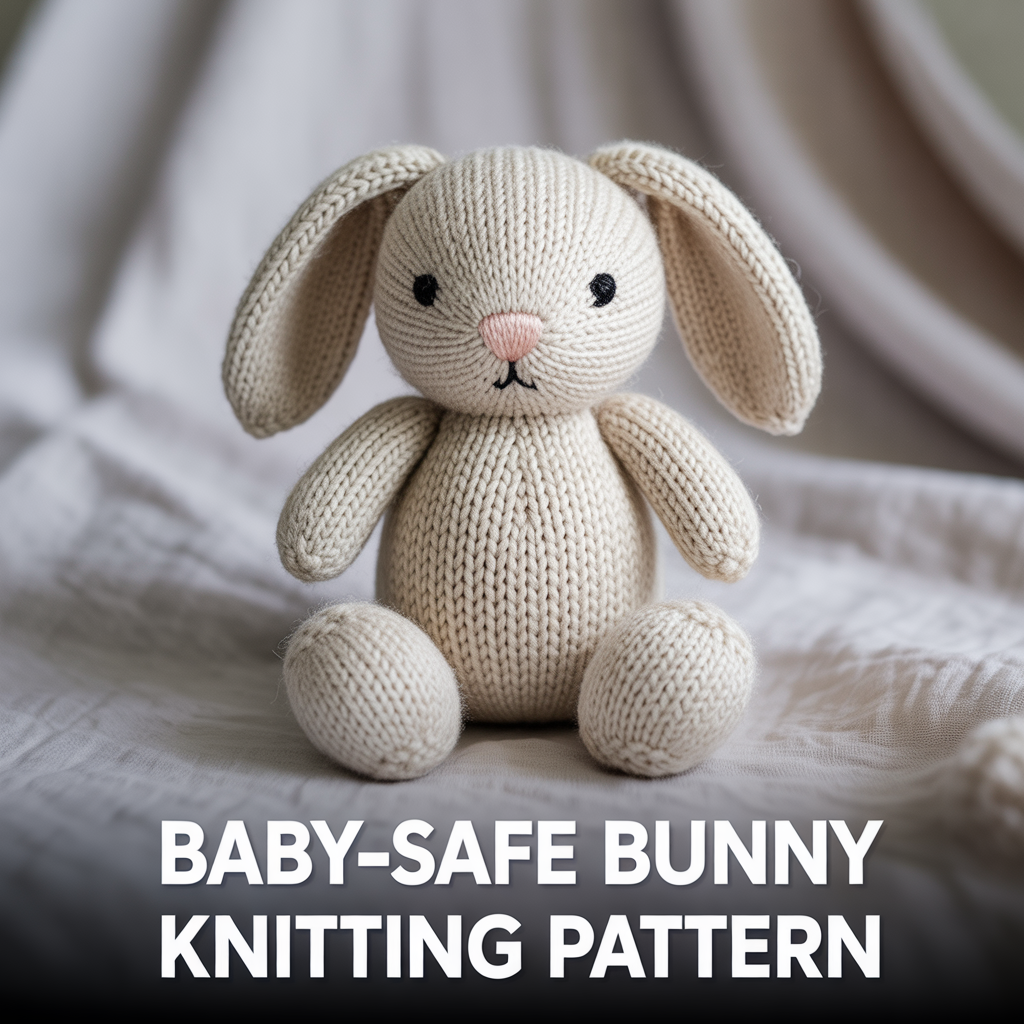
A baby-safe bunny knitting pattern uses no plastic parts, no wire, and no small detachable pieces. I made one for a newborn using organic cotton yarn and embroidered features only. The finished toy passed all the safety checks I could find for infant toys, including a pull test on the ears and limbs.
Materials That Meet Baby Toy Safety Standards
Use 100% cotton or 100% wool yarn for a baby bunny toy because both are natural fibers with lower chemical treatment levels than standard acrylic. Avoid yarn with added metallic thread or novelty fibers. Fill the toy with hypoallergenic polyfill stuffing rated for infant toys. Embroider all facial features using cotton embroidery thread rather than inserting any plastic components.
Knitting a Firm Fabric for a Baby Bunny Toy
Knit at a tighter gauge than the yarn label recommends to prevent stuffing from showing through the stitches. Drop one needle size below the recommended size. For example, use a 3.0 mm needle with yarn rated for 3.5 mm. A firm, dense fabric also makes the toy more durable under repeated washing, which is necessary for any toy used by an infant.
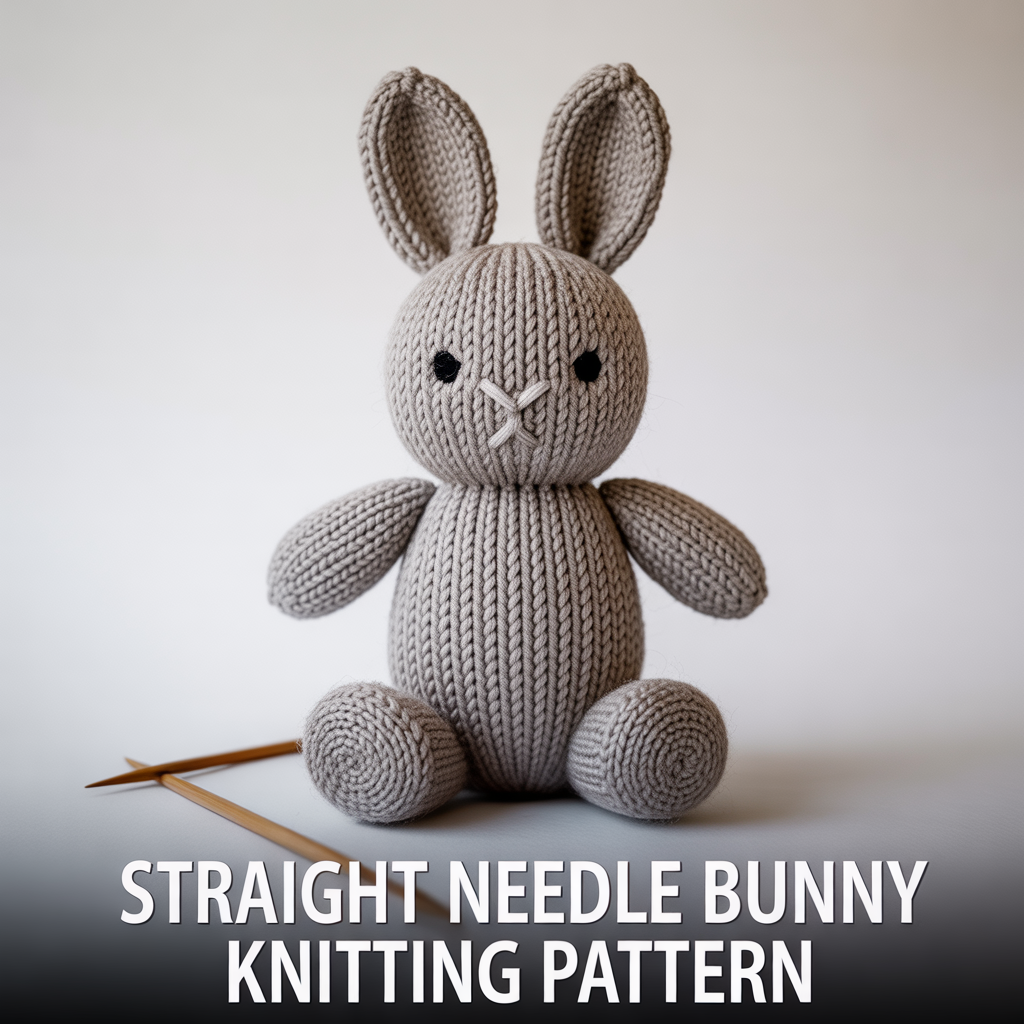
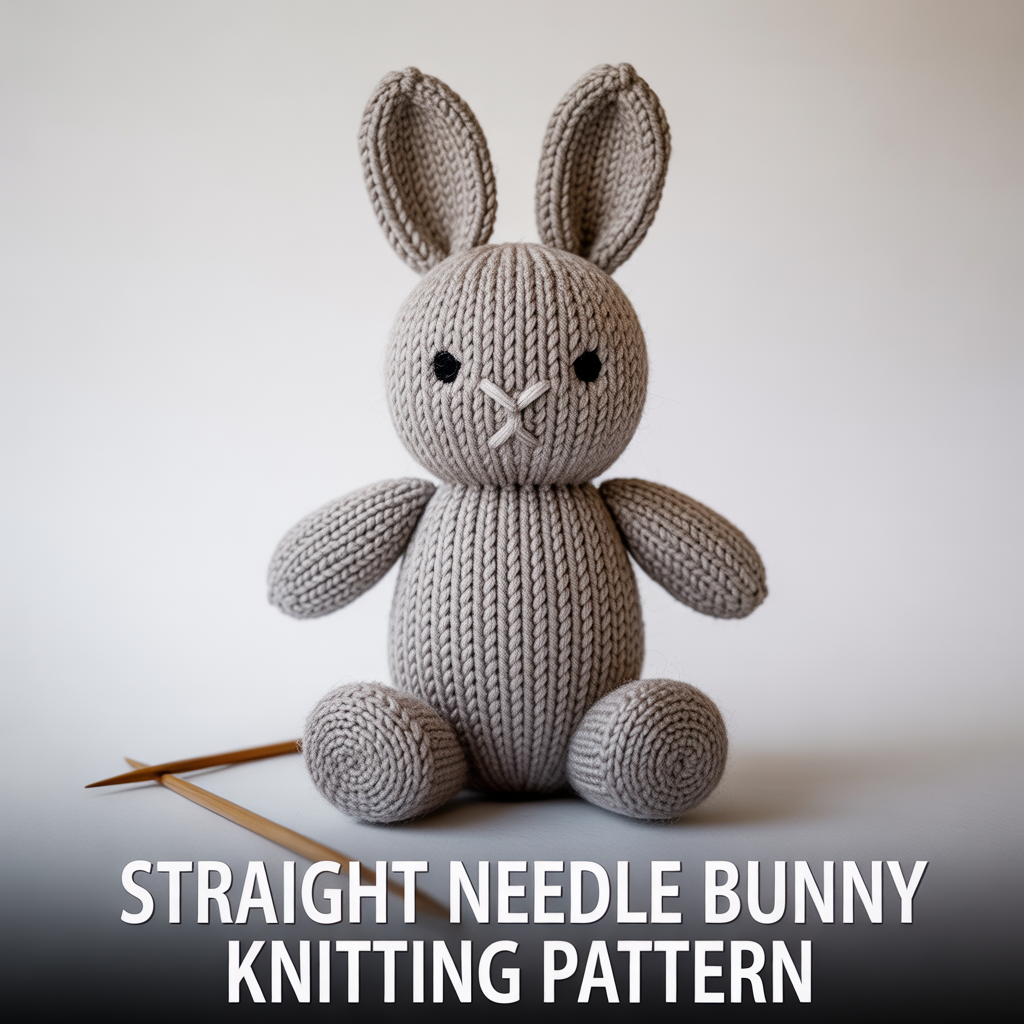
5. Straight Needle Bunny Knitting Pattern
A straight needle bunny knitting pattern uses only flat knitting, which makes it accessible to knitters who have not learned to work in the round. I used this type of pattern when I started knitting toys because I owned only one pair of straight needles. The flat panels are knitted separately and seamed together at the end.
How Straight Needle Patterns Differ From Round Needle Patterns
Straight needle patterns produce flat fabric worked in rows. The knitter turns the work at the end of every row. Double-pointed needle patterns produce a seamless tube worked continuously in rounds. Straight needle bunnies have visible seam lines on the finished toy. Round needle bunnies have no seams on the body but require more technique to execute correctly at small sizes.
Tips for Seaming a Straight Needle Bunny Neatly
Press each knitted panel with a damp cloth before seaming to stabilize the edges. Pin the pieces together before sewing to check alignment. Use mattress stitch on stocking stitch fabric because it produces an almost invisible seam on the right side of the work. Sew with the same yarn used for knitting to match the texture and color exactly at the seam line.
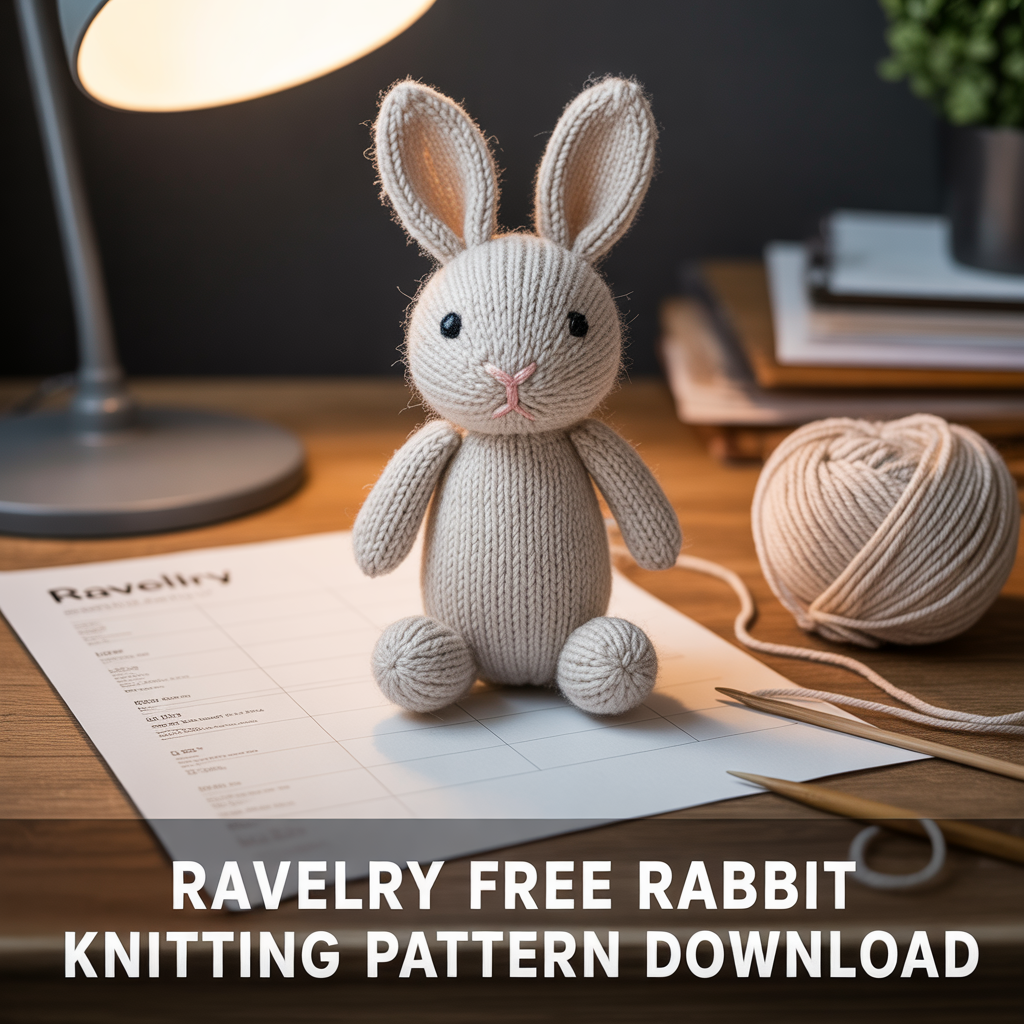
6. Ravelry Free Rabbit Knitting Pattern Download
Ravelry hosts over 200 free rabbit knitting pattern downloads in its database as of the time I searched. I filtered by free patterns, toy category, and beginner difficulty, and found 40 results. The platform allows direct PDF download after creating a free account, and the patterns are organized by difficulty, yarn weight, and needle type.
How to Find and Download a Free Pattern on Ravelry
Create a free Ravelry account at ravelry.com. Use the pattern search bar and type “bunny toy.” Apply the free filter on the left sidebar. Sort results by most favorited to find the highest-rated patterns first. Click any pattern and select the “download” button. The PDF saves directly to your device and prints at standard A4 or letter size without scaling adjustments.
Top-Rated Bunny Patterns Available on Ravelry
The most favorited free bunny patterns on Ravelry include the “Simple Bunny” by Arne and Carlos, the “Naughty Bunny” by Sarah Gasson, and the “Bunny Love” pattern by Jennifer Raymond. Each has over 1,000 project entries logged by knitters who completed them. High project counts indicate that the pattern instructions are clear enough for a wide range of skill levels to follow successfully.
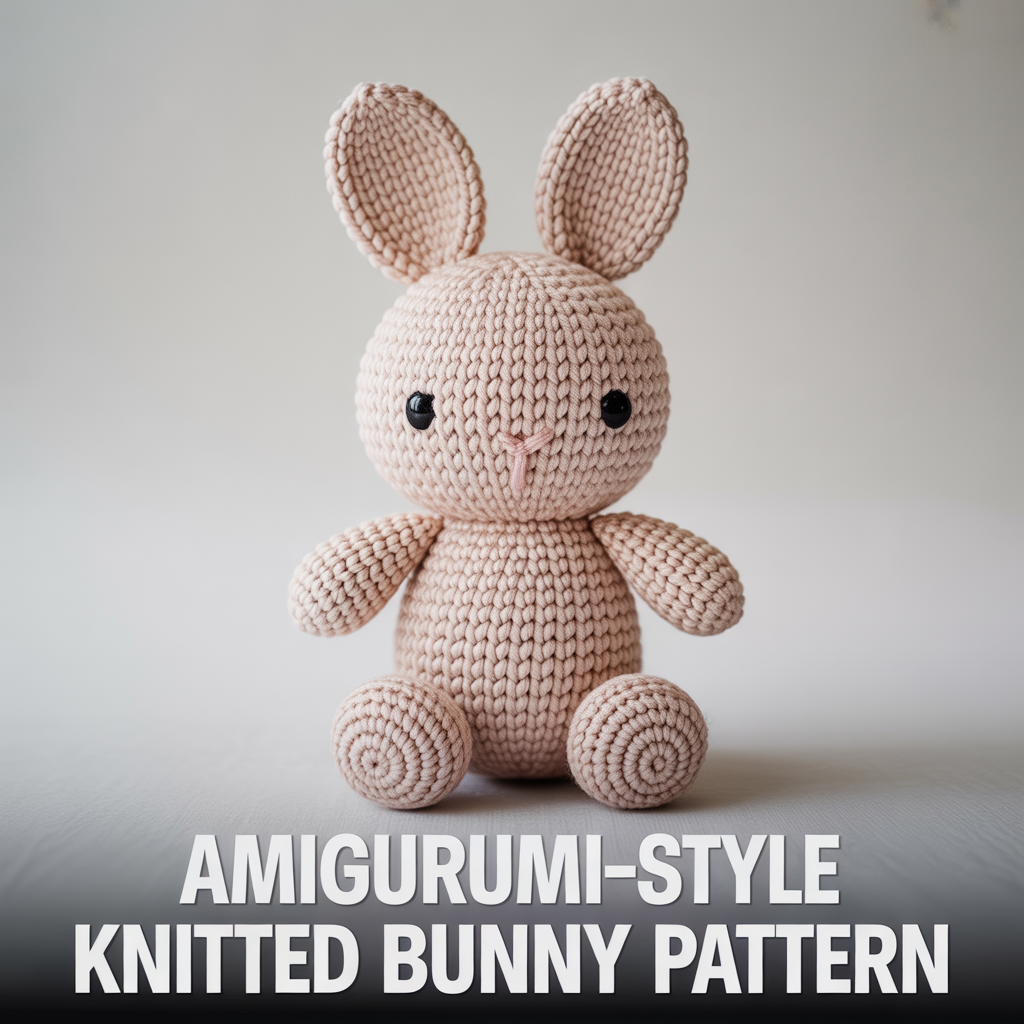
7. Amigurumi-Style Knitted Bunny Pattern
An amigurumi-style knitted bunny uses the same construction method as crocheted amigurumi: working in the round from a magic ring, increasing to shape the body, and decreasing to close each section. I knitted my first amigurumi-style bunny after two years of making flat toy patterns, and the seamless result looked noticeably more polished than my earlier work.
How Amigurumi Construction Works in Knitting
Cast on 6 stitches using the magic cast-on method or Emily Ocker’s cast-on for a closed center. Increase every other stitch in the first round to reach 12 stitches. Continue increasing in set intervals until the widest point of the body is reached. Knit straight rows for the middle section. Decrease in the same intervals used for increasing to close the shape before binding off and stuffing.
Needle Type for Amigurumi-Style Knitting
Use a set of 5 double-pointed needles sized 2.5 to 3.5 mm depending on yarn weight. Magic loop technique with a 40 cm circular needle also works for small circumference knitting. I prefer double-pointed needles for amigurumi-style pieces because the small stitch count per needle makes it easier to count stitches and check gauge at each increase round.
8. Knitted Bunny Doll Pattern With Clothes
A knitted bunny doll pattern with clothes produces a poseable toy dressed in a removable outfit. I made one at 8 inches tall with a small knitted dress, and it took a full weekend to complete. The pattern requires intermediate skills because the doll body and clothing are knitted as separate pieces with precise sizing to fit correctly.
How to Size Clothing for a Knitted Bunny Doll
Measure the finished bunny body at the chest, waist, and length before casting on for any clothing piece. Add 2 stitches to the chest measurement to allow the garment to slide on and off without stretching. Knit clothing in a lighter yarn weight than the body to reduce bulk at the seams where the garment meets the toy’s limbs.
Simple Clothing Pieces to Knit for a Bunny Doll
A rectangle knitted to chest circumference and dress length, seamed at the sides, produces a basic dress in under 30 minutes. A smaller rectangle folded and seamed creates a scarf. Tiny square pieces seamed on three sides form mittens. These three clothing pieces use only knit stitch and require no shaping, which makes them suitable for beginner knitters working on their first dressed bunny doll project.
9. Free Bunny Knitting Pattern PDF Download
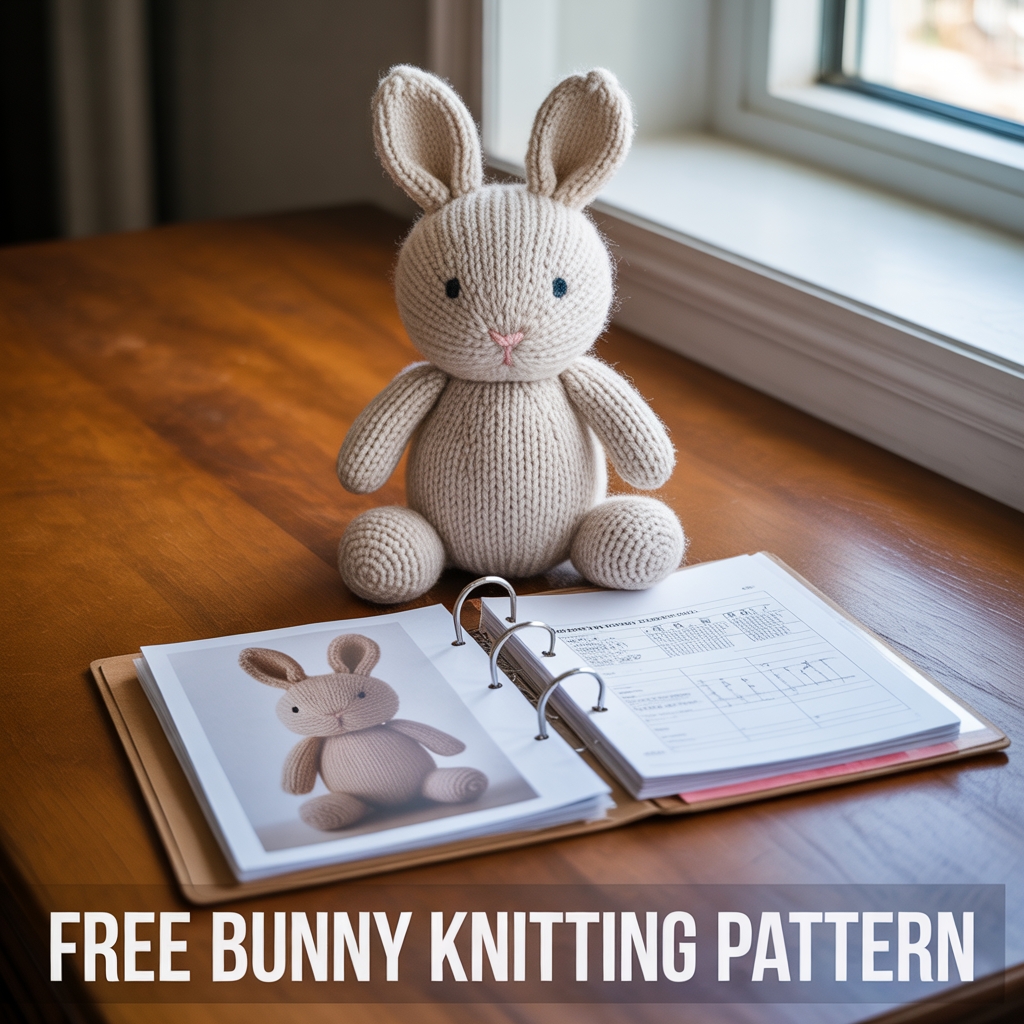
A free bunny knitting pattern PDF download gives the complete pattern in a printable file that knitters keep for repeated use. I have a folder with 23 printed bunny PDFs organized by difficulty level. Most free PDF patterns come from individual knitting bloggers, craft brand websites, and platforms like Ravelry and LoveCrafts.
Where to Find Free Bunny Knitting Pattern PDFs
LoveCrafts.com, Ravelry.com, and Paintbox Yarns offer free toy patterns as PDF downloads. Search “free bunny knitting pattern PDF” on any of these platforms. Paintbox Yarns publishes patterns specifically designed for their own yarn weights, so gauge is pre-tested. Ravelry aggregates patterns from independent designers, giving the widest selection of styles and difficulty levels in one searchable database.
How to Print and Organize a Knitting Pattern PDF
Print on A4 paper at 100% scale without any page scaling applied in the printer settings. Scaling changes the diagram sizes and can make stitch charts unreadable. Store printed patterns in plastic sleeves inside a ring binder. Label each sleeve with the pattern name, yarn weight, and needle size on a small index card clipped to the front for quick reference during knitting sessions.
10. Beginner Bunny Knitting Pattern
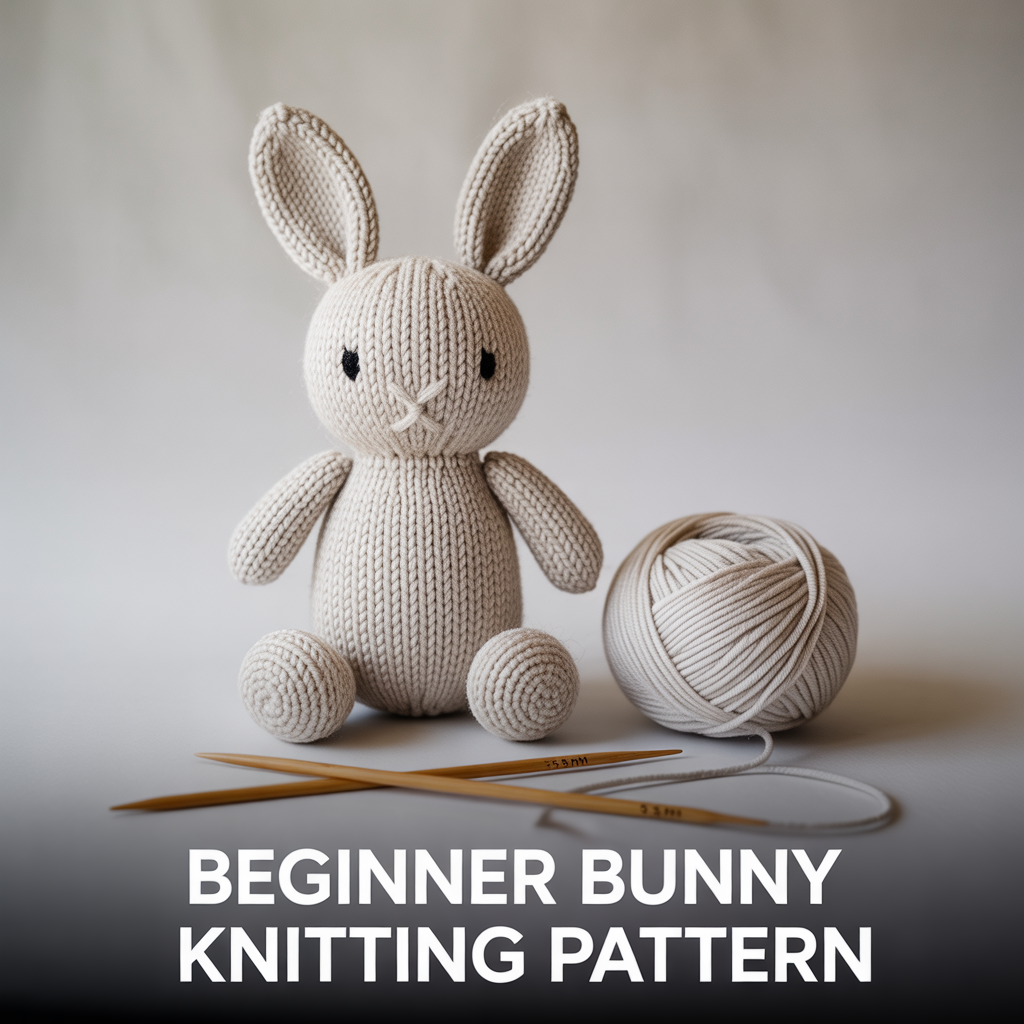
A beginner bunny knitting pattern uses only knit stitch, basic increasing, and basic decreasing across a small stitch count. I recommend this type of pattern to anyone who learned to knit within the last three months. The stitch count stays low throughout, which makes it easy to spot errors before they become difficult to fix.
Skills a Beginner Needs Before Starting a Bunny Pattern
A beginner knitter needs four skills before starting a toy pattern: casting on, the knit stitch, the purl stitch, and binding off. Increasing and decreasing are the next skills to add. Most beginner bunny patterns use knit 2 together (K2tog) for decreasing and knit front and back (KFB) for increasing. Both techniques appear in standard beginner tutorials on YouTube and in most introductory knitting books.
Best Yarn for a First Knitted Bunny Project
Use a smooth, light-colored worsted weight acrylic yarn for a first knitted bunny. Smooth yarn shows stitch definition clearly, which makes it easier to count stitches and identify errors. Light colors are easier to see under standard home lighting than dark colors. Avoid fluffy or mohair-blend yarns for first projects because the halo of fiber obscures the individual stitches.
11. Knitted Bunny Keychain Pattern
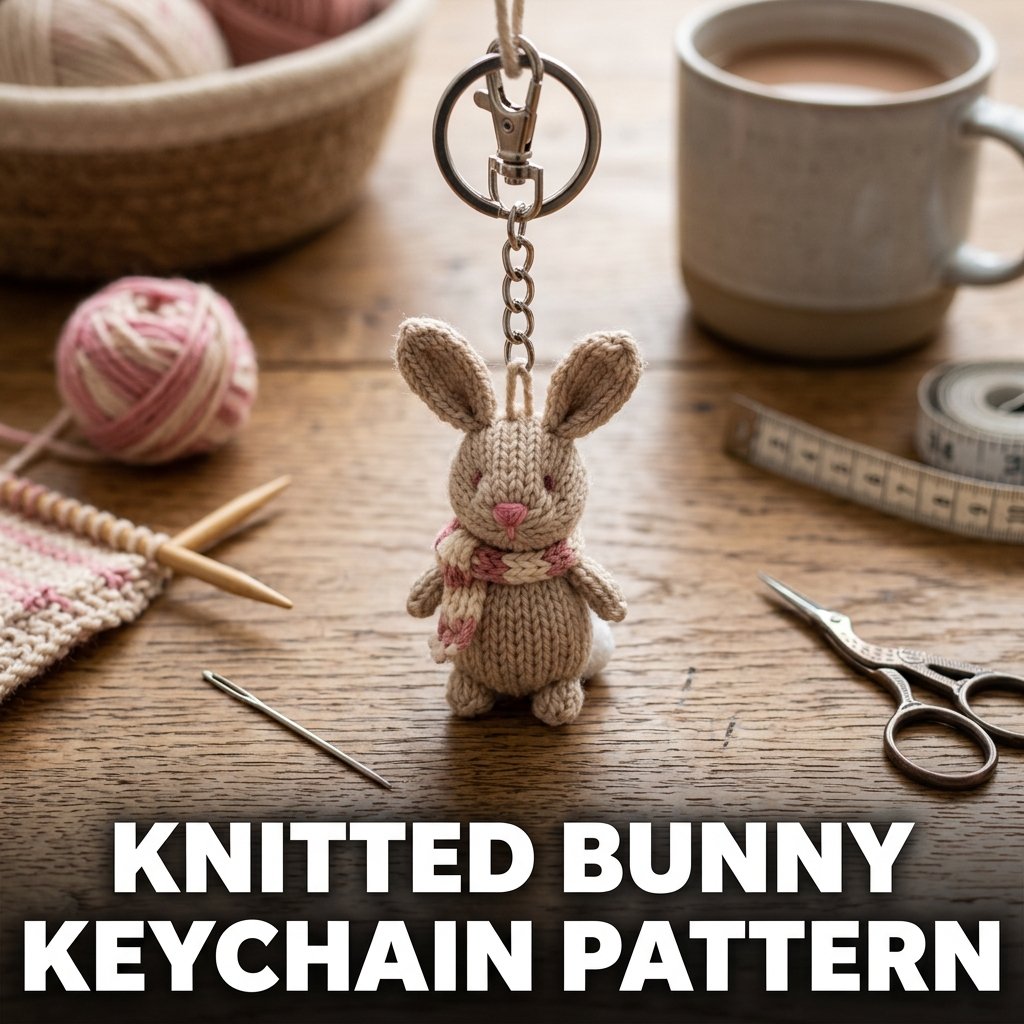
A knitted bunny keychain pattern produces a finished piece under 2.5 inches tall that attaches to keys, bags, or zippers using a small metal ring. I made a set of these for a craft fair and sold every one within the first hour. The pattern uses fingering weight yarn and 2.0 mm needles for a tight, dense fabric that holds its shape at this small scale.
How to Attach a Key Ring to a Knitted Bunny
Sew a small fabric loop from a 2 x 1 inch rectangle of cotton ribbon folded in half lengthwise and stitched. Thread the metal key ring onto the loop before stitching the loop to the top of the bunny’s head. The ribbon loop distributes the weight of the keys across several stitches rather than pulling on a single yarn strand, which prevents the attachment point from stretching or tearing.
Stuffing a Keychain-Sized Bunny
Use a small amount of polyfill stuffing, approximately half a teaspoon per bunny. Overstuffing at this scale distorts the shape and stretches the stitches apart. Insert stuffing with a toothpick or the blunt end of a pencil to distribute it evenly without tearing the fabric. A lightly stuffed keychain bunny holds its shape better than a firmly stuffed one at sizes under 2.5 inches.
12. Knitted Bunny Pattern for Gifts
A knitted bunny pattern for gifts uses a size between 5 and 7 inches, clean finishing, and a simple design that suits recipients of any age. I have given knitted bunnies as baby shower gifts, birthday presents, and holiday gifts. A well-finished 6-inch bunny in a neutral color takes approximately 3 hours to knit and assemble at an intermediate pace.
How to Package a Knitted Bunny as a Gift
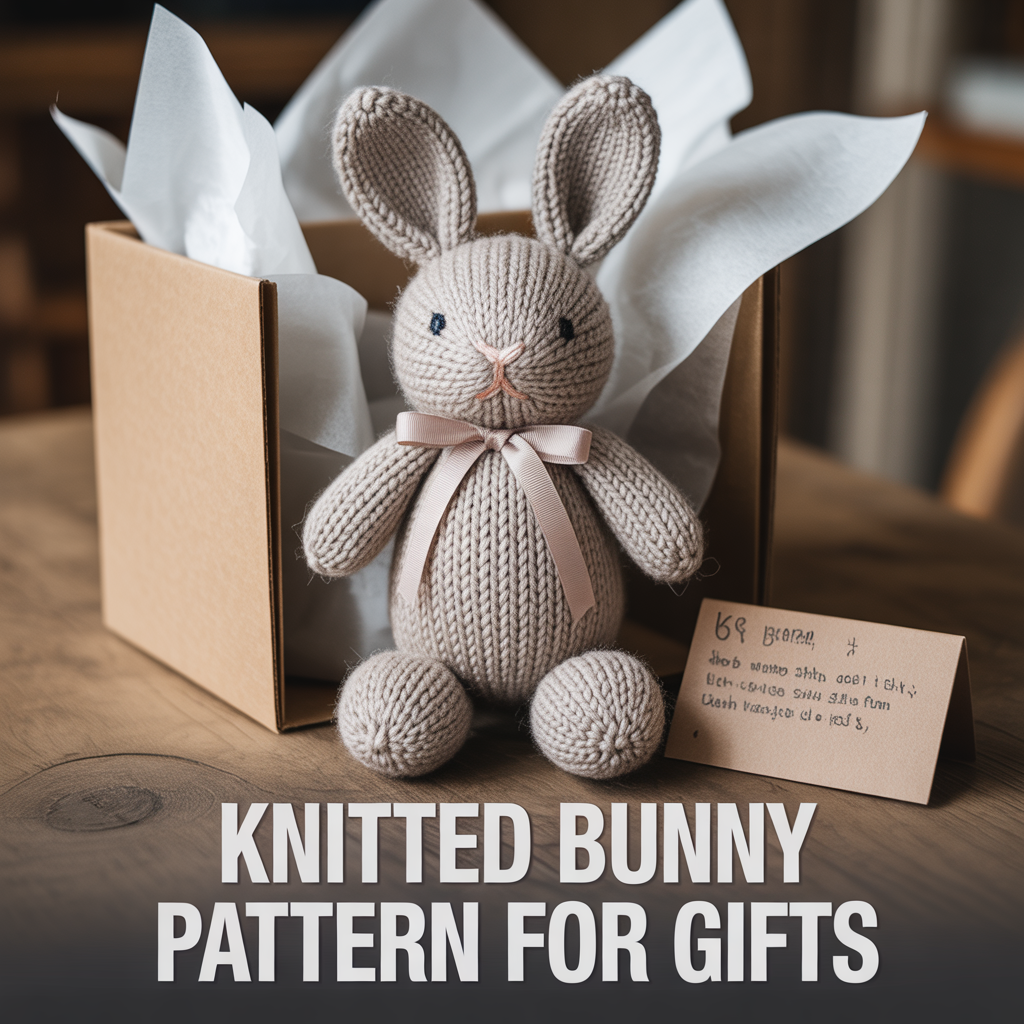
Place the finished bunny in a small kraft paper box lined with tissue paper. Tie a narrow ribbon around the box rather than using adhesive tape, which can damage the knitted fabric if the toy shifts inside. Attach a small card with the yarn fiber content and washing instructions, because recipients of handmade toys often want to know how to clean them safely.
Yarn Colors That Work for a Gift Bunny
Neutral colors including oatmeal, stone grey, cream, and white work for recipients of any gender and age group. Pastel pink and blue suit baby gifts specifically. Variegated yarn in earth tones produces a more adult-appropriate finished toy. I avoid neon or very bright colors for gift bunnies because they limit the range of people who find the finished toy appealing.
13. Realistic Knitted Rabbit Pattern
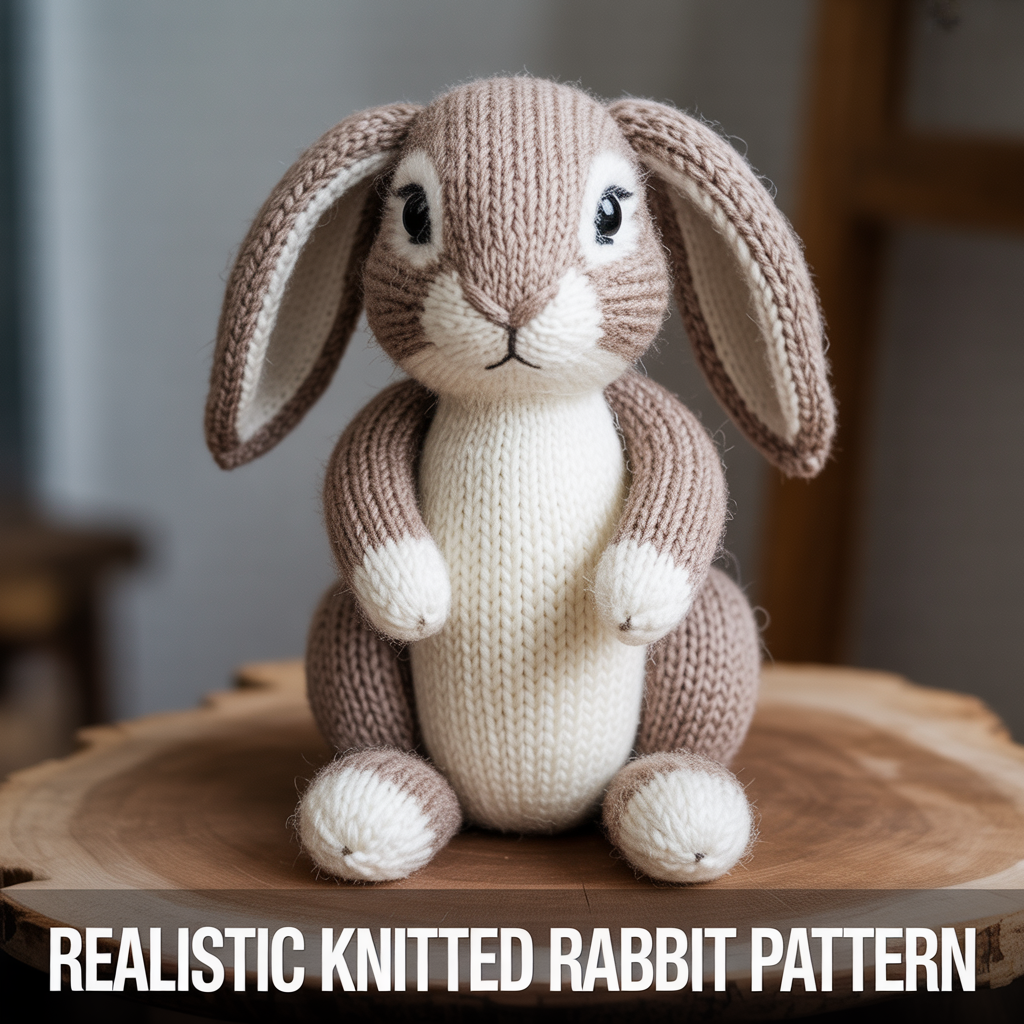
A realistic knitted rabbit pattern uses shaped limbs, a defined muzzle, and proportional ear lengths to produce a toy that resembles an actual rabbit rather than a cartoon character. I knitted one using a brown and white marled yarn, and the result looked like a miniature lop-eared rabbit. The pattern requires intermediate skills and takes approximately 5 hours to complete.
Shaping Techniques Used in a Realistic Rabbit Pattern
Short rows create the three-dimensional muzzle shape. Paired increases and decreases shape the hindquarters and haunches. The ears use a specific decrease sequence to produce a rounded tip rather than a pointed one. Each of these techniques appears in the pattern row by row, so a knitter who can read a standard pattern chart follows them without prior experience with the specific techniques.
Yarn Types for a Realistic Rabbit Appearance
Marled or heathered yarn in brown, grey, or white produces a natural coat texture that solid-color yarn does not replicate. A DK weight wool blend gives slight halo that softens the toy’s surface and adds visual depth. I used a 60% merino wool and 40% acrylic blend for the best combination of softness, durability, and washability in the finished realistic rabbit toy.
14. Knitted Bunny Pattern Using Leftover Yarn
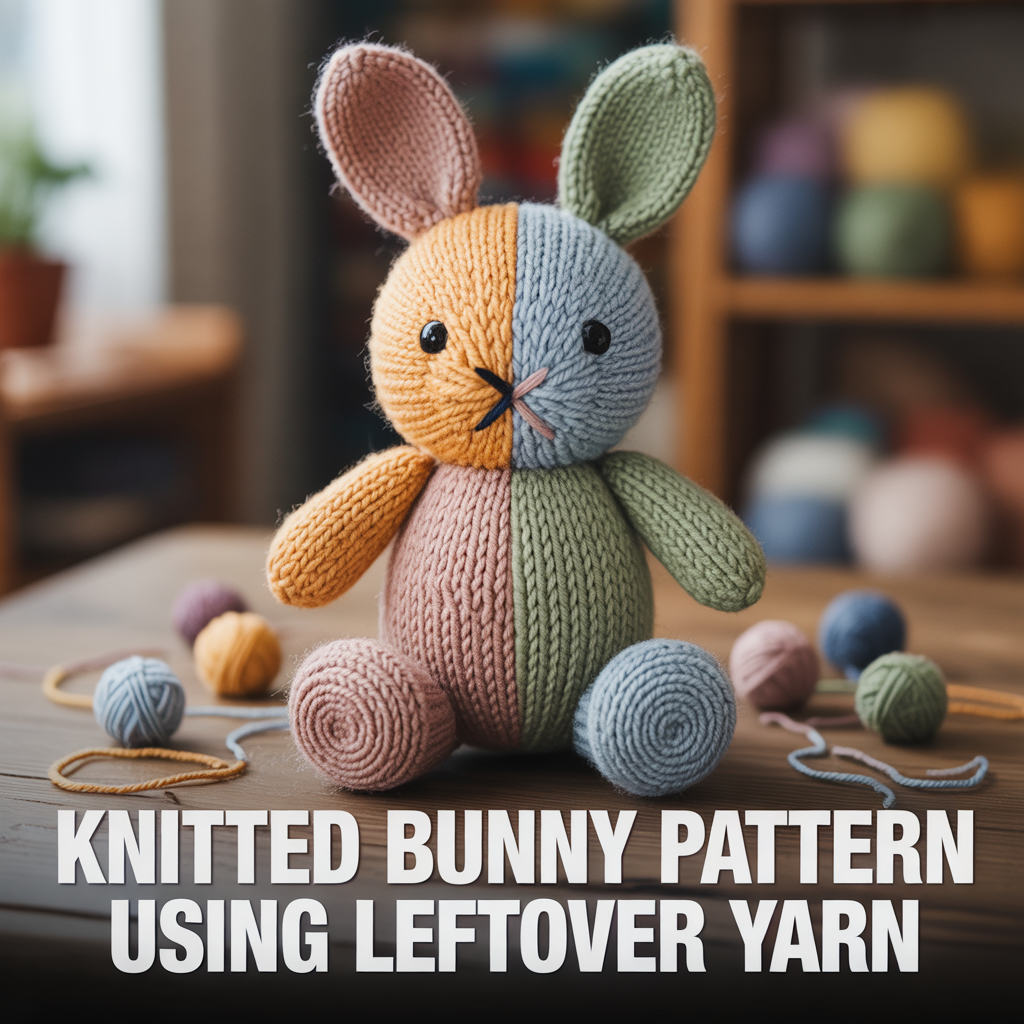
A knitted bunny pattern using leftover yarn produces a finished toy from yarn scraps that would otherwise go unused. I made 11 bunnies last year entirely from yarn ends, and each one used between 20 and 40 grams of yarn depending on size. The pattern works with any yarn weight as long as the needle size adjusts to match.
How to Match Gauge When Using Mixed Yarn Scraps
Knit a 10-stitch swatch with each yarn scrap before starting. Measure the stitch width across 10 stitches. Group yarns by stitch width rather than by labeled weight. Use each yarn group for a separate body part, keeping the gauge consistent within each piece. This method produces a finished toy where each section has a consistent fabric density even when the yarns are different brands or weights.
Combining Colors in a Scrap Yarn Bunny
Use one color for the body and head, a second color for the ears, and a third for the limbs. This three-color structure uses the scraps efficiently and produces a finished bunny with deliberate color blocking rather than a random appearance. I keep a small box of yarn ends sorted by approximate weight for quick access when starting a scrap bunny project.
15. Knitted Bunny Pattern for Etsy Sellers
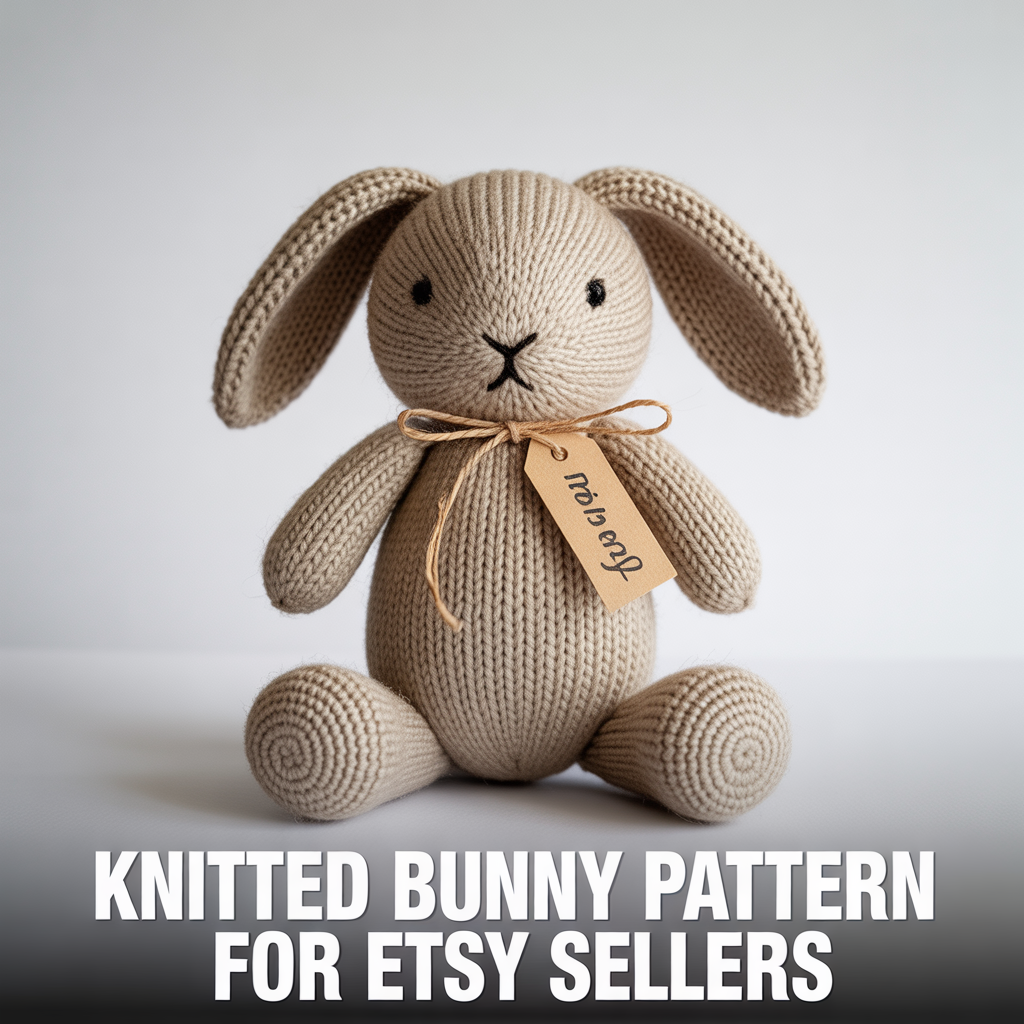
A knitted bunny pattern for Etsy sellers requires a design that is fast to produce, visually distinctive, and sized correctly for photographing in a product listing. I sold knitted bunnies on Etsy for 18 months and found that patterns finishing in under 2 hours at an intermediate pace gave the best return on time invested per unit sold.
Design Features That Sell Well on Etsy
Bunnies with long floppy ears photograph better than upright-eared versions because the ears add visual height to the product image. Neutral colors in the oatmeal and stone palette generate more saves and clicks than bright colors in Etsy’s search results based on my own shop analytics. A consistent size of 6 inches across all listings makes photography easier and shipping costs predictable.
Pricing a Knitted Bunny for an Etsy Listing
Calculate yarn cost per bunny first. A 6-inch bunny uses approximately 30 grams of DK yarn. Add the cost of stuffing, safety eyes or embroidery thread, and packaging materials. Multiply total material cost by 3 for a standard handmade pricing formula. Add your hourly rate multiplied by production time. A 6-inch bunny typically lists between 18 and 35 dollars depending on yarn quality and finishing detail.
FAQ
Where can I find little bunny free knitting patterns to download as a PDF?
Little bunny free knitting patterns are available as PDF downloads on Ravelry, LoveCrafts, and Paintbox Yarns. Ravelry requires a free account to download patterns. LoveCrafts and Paintbox Yarns allow downloads without registration on most free patterns. Search “little bunny free knitting patterns PDF” on any of these platforms and apply the free filter. The PDF downloads directly to your device and prints at full size on A4 or letter paper without scaling. Most free patterns include a materials list, gauge information, and step-by-step row instructions.
What yarn works best for little bunny free knitting patterns?
DK weight acrylic or cotton yarn works best for most little bunny free knitting patterns. Acrylic is machine washable, widely available, and produces a consistent gauge. Cotton gives a slightly firmer result, which helps ears hold their shape without wire. Wool is softer but requires hand washing, which limits its use for toys handled by children. Use a smooth yarn rather than a textured or fluffy one so the stitches remain visible during knitting and errors are easier to identify and correct before the piece is finished.
Can a beginner knit a little bunny free knitting pattern?
A beginner knitter can complete a little bunny free knitting pattern that uses only knit stitch and basic shaping. The four skills required are casting on, knit stitch, K2tog for decreasing, and binding off. Patterns rated as beginner on Ravelry use these four techniques and no others. A first bunny project takes between 3 and 5 hours at a beginner pace. Most beginner-rated bunny patterns include written row-by-row instructions rather than chart format, which reduces the reading skill required to follow the pattern correctly.
What needle size do I need for a little bunny knitting pattern?
Most little bunny free knitting patterns use needles between 2.5 mm and 4.0 mm depending on yarn weight. DK weight yarn works on 3.5 mm needles for a standard bunny toy fabric. Fingering weight yarn for mini bunnies uses 2.0 to 2.5 mm needles. Always knit one size smaller than the yarn label recommends for toy knitting. A tighter gauge produces a denser fabric that prevents stuffing from showing through the stitches and holds the toy’s shape more firmly over repeated handling and washing.
How long does it take to knit a little bunny toy?
A basic 5-inch knitted bunny takes 2 to 3 hours at a beginner pace and 60 to 90 minutes at an intermediate pace. A more detailed bunny with shaped limbs, a muzzle, and removable clothing takes 4 to 6 hours total including assembly and finishing. Mini keychain bunnies under 2.5 inches take approximately 45 minutes. The assembly and finishing stage, including seaming, stuffing, and adding facial features, adds 20 to 30 minutes to any bunny pattern regardless of the knitting time required for the individual pieces.