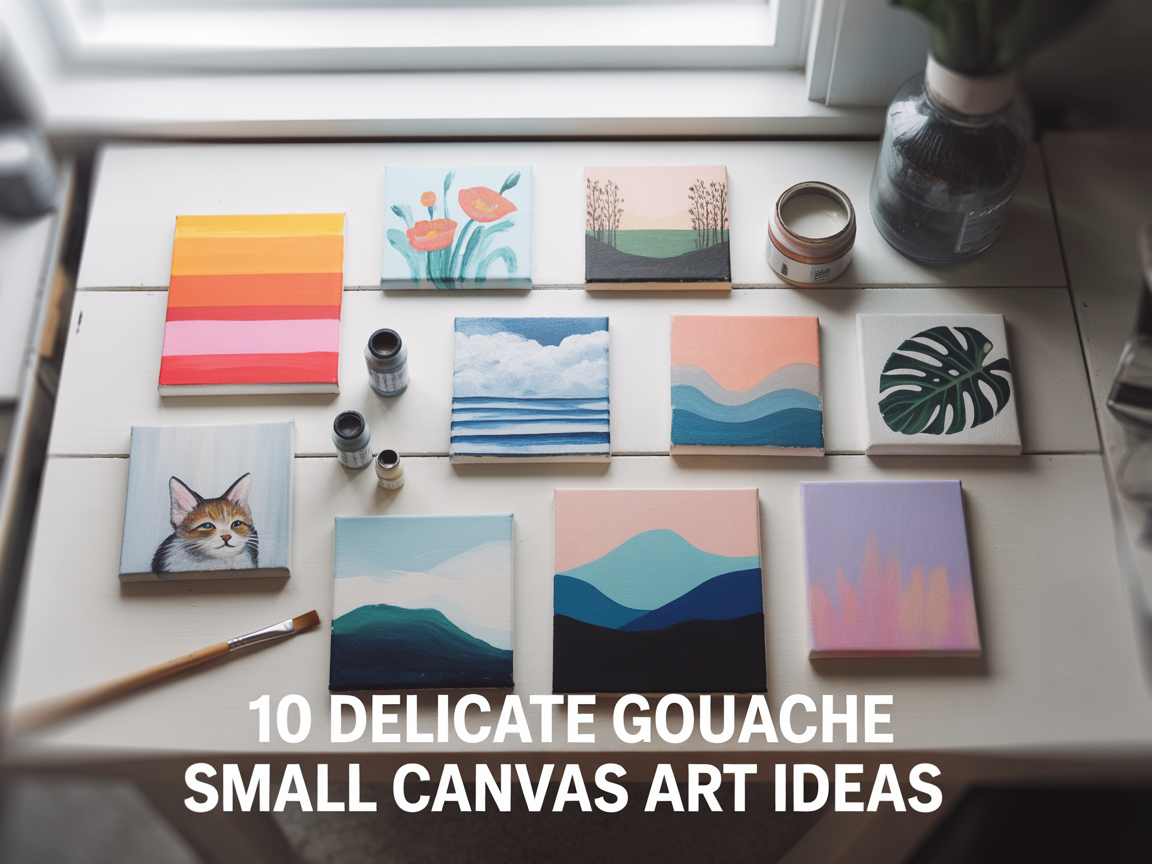
10 Delicate Gouache Small Canvas Art Ideas for Compact Spaces
I bought my first tube of gouache paint two years ago on a complete guess. I had a 4 x 4 inch canvas board sitting on my desk and no idea what to put on it. I mixed a soft peach color, added a pale sky, and painted the simplest little sunset I could manage. It dried in 10 minutes and looked better than anything I had made with acrylic in months.
If you want gouache small canvas art ideas, all 10 options here work on canvases between 4 x 4 and 8 x 10 inches. Every idea suits beginner artists and fits into a compact display space.
Gouache paint dries quickly, covers evenly, and corrects easily because dried layers reactivate with water. That combination makes it the most forgiving paint medium for small canvas work. I have painted over mistakes on a gouache canvas at least 50 times across different projects without the surface degrading.
A basic gouache paint set, a small canvas board, a round brush, a flat brush, a palette, and a water container cover every project on this list. No specialist equipment is needed.
Each idea here takes between 30 minutes and 2 hours to complete.
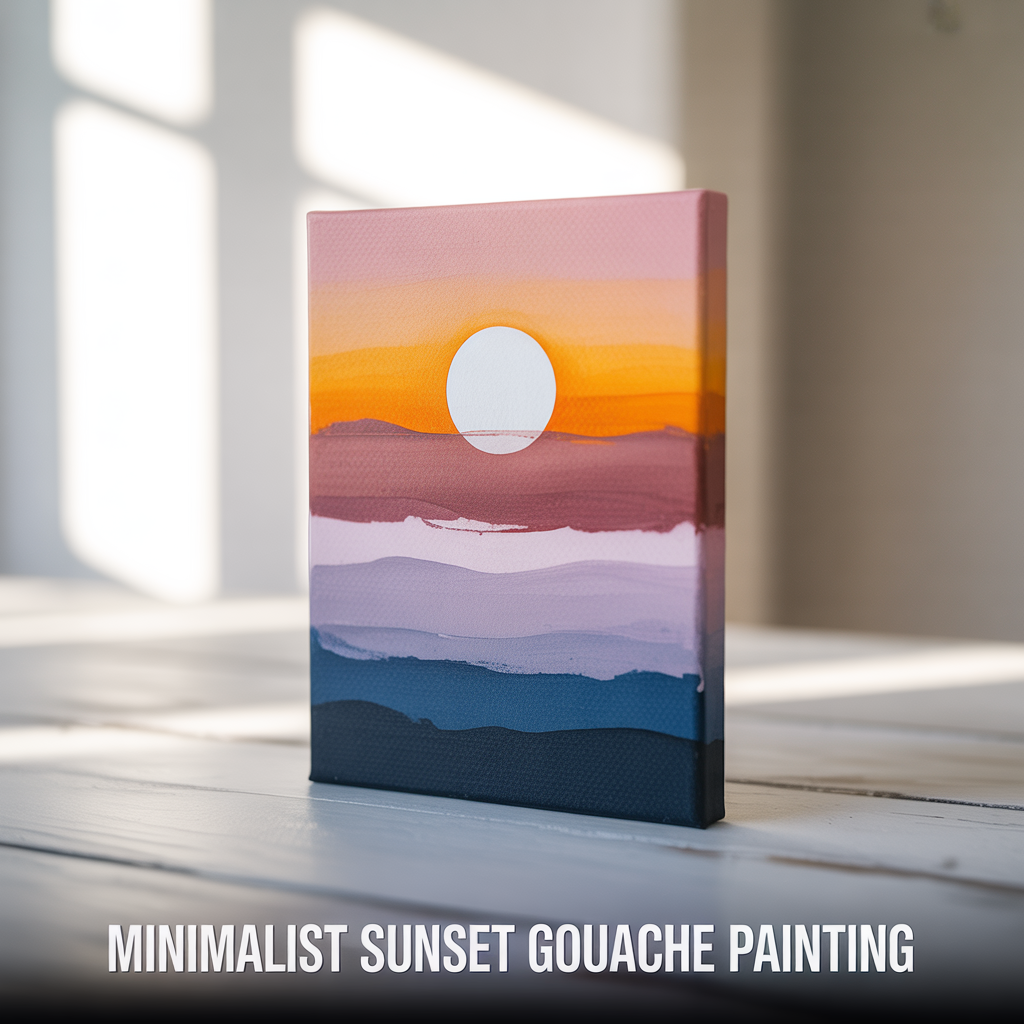
1. Minimalist Sunset Gouache Painting
A minimalist sunset is the most searched gouache small canvas art idea for beginners because it uses only 3 to 5 colors, horizontal brushstrokes, and no fine detail work. I painted my first one on a 5 x 7 inch canvas board in 35 minutes. The finished piece used cadmium orange, soft pink, pale lavender, and a deep navy for the horizon strip at the base.
The composition divides the canvas into 4 to 6 horizontal bands of color. Each band blends slightly into the one above it while the paint is still wet. The sun is a single circle masked with a coin or round sticker before painting begins and revealed after the background dries.
Colors and Brush Size for a Sunset Painting
Use a flat brush sized 10 to 12 mm for the background bands and a size 4 round brush for the sun circle edge. Mix colors on a palette before applying to the canvas. Cadmium orange, quinacridone pink, dioxazine purple, and Payne’s grey produce a natural sunset progression from horizon to upper sky across a small canvas surface.
How to Blend Gouache Bands Without Streaks
Apply the first color band across the full canvas width. While still wet, load the brush with the second color and stroke directly below the first band. Pull the brush back through the join line once with light pressure. Repeat this single-pass blending technique at every color join. Multiple passes at the join line lift the dried lower layer and create uneven streaking rather than a smooth transition.
2. Simple Floral Gouache Canvas Painting
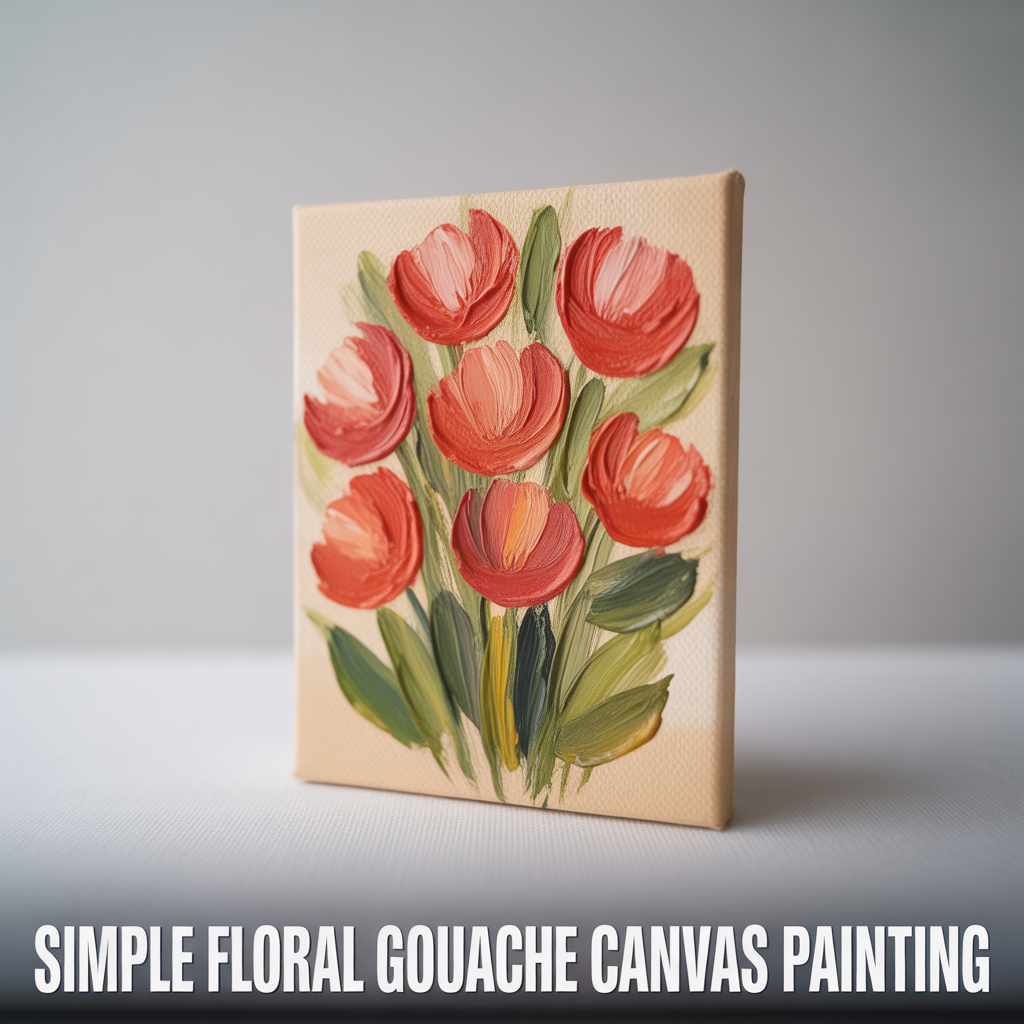
A simple floral gouache painting uses loose round brushstrokes to build flower shapes on a small canvas without requiring precise drawing skills. I painted a cluster of five poppies on a 6 x 6 inch canvas in 45 minutes using only a size 6 round brush and four colors. The loose petal shapes required 2 to 3 brushstrokes each and no preliminary pencil sketch.
Floral designs work well on small canvases because the compact scale reduces the number of flower heads needed to fill the composition. Three to five flowers with leaf stems fill a 5 x 7 inch canvas without overcrowding the surface.
How to Paint Loose Flower Petals With Gouache
Load a size 6 round brush with paint mixed to a thick cream consistency. Press the brush tip to the canvas at the outer edge of a petal. Push the brush down and pull toward the flower center in a single curved stroke. Repeat 4 to 5 times around a center point to complete one flower head. Each petal takes one stroke. Do not go back over a stroke once it is placed.
Choosing a Color Palette for Floral Gouache Art
A 3-color palette produces the most cohesive floral result on a small canvas. Use one flower color, one leaf color, and one background color. White added to the flower color produces a highlight tone for a second petal layer applied after the first dries. I used coral red, sap green, and a warm cream background on my first floral canvas, and the three colors balanced without any one overpowering the others.
3. Mini Landscape Gouache Painting
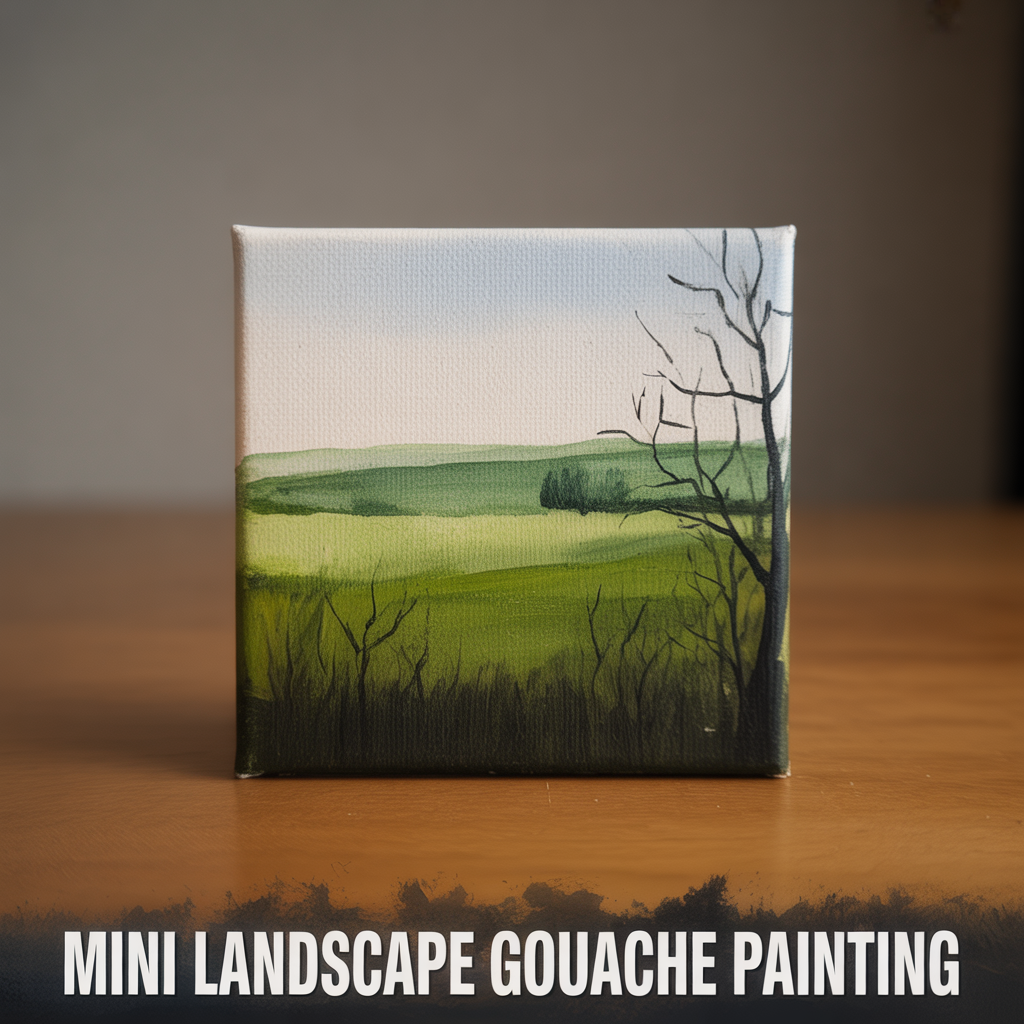
A mini landscape gouache painting divides the small canvas into a foreground, midground, and background using 3 distinct value ranges: dark at the front, medium in the middle, and light at the back. I painted a simple field with tree silhouettes on a 4 x 6 inch canvas board in under an hour. The three-value structure gave the finished piece depth that looked more advanced than the technique required.
Mini landscapes suit small canvases specifically because the reduced scale simplifies the detail level needed in each zone. A 4 x 6 inch landscape requires no fine texture work to read as a convincing scene at viewing distance.
How to Build Depth in a Mini Landscape
Paint the background sky and far distance first using the lightest values. Allow it to dry for 5 minutes. Add the midground hills or fields in medium values over the dry background. Paint the foreground last in the darkest values. This back-to-front layering sequence places each new layer over a dry surface, which prevents colors from muddying together at the value boundaries.
Tree Silhouettes as a Foreground Element
Paint tree silhouettes in the foreground using Payne’s grey or a dark brown mixed with black. Use a size 2 round brush for trunk and branch lines. Apply silhouettes as the final layer after all background and midground areas are fully dry. Silhouettes require no color mixing or blending and add strong visual structure to a mini landscape composition on any canvas size between 4 x 4 and 8 x 10 inches.
4. Abstract Shapes Gouache Canvas Art
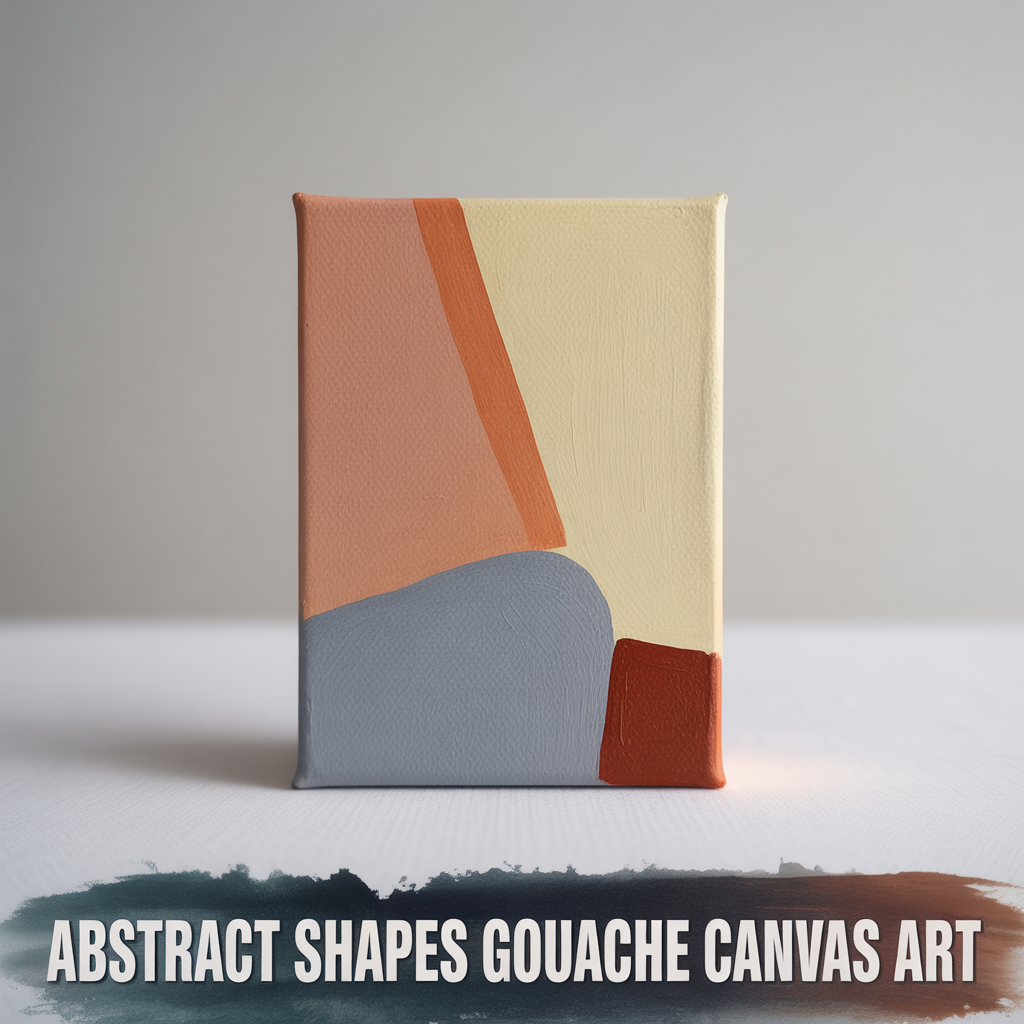
An abstract shapes gouache painting uses geometric forms, color blocking, and flat paint application to produce a modern composition that requires no drawing ability. I made three abstract small canvas pieces in one afternoon as a set for a shelf display. Each one used the same 4-color palette in different arrangements so the set read as coordinated without being identical.
Abstract gouache work suits small canvases because the flat, opaque nature of gouache paint fills geometric shapes cleanly without visible brushstroke texture showing through the color blocks.
How to Plan an Abstract Gouache Composition
Divide the canvas into sections using light pencil lines before painting. Use a ruler for straight edges or freehand curves for organic shapes. Each section fills with a single flat color applied in 2 coats. The first coat covers the canvas texture. The second coat, applied after the first dries completely, produces a smooth, even surface with no streaking or canvas grain showing through the color.
Color Combinations for Abstract Gouache Art
Three-color abstract compositions produce the most balanced result on a small canvas. Use two neutral colors and one accent color. Neutral combinations include warm white with stone grey, cream with terracotta, and pale blue with off-white. The accent color, applied to the smallest section of the composition, draws visual focus without overwhelming the overall balance of the finished piece.
5. Ocean Scene Gouache Painting
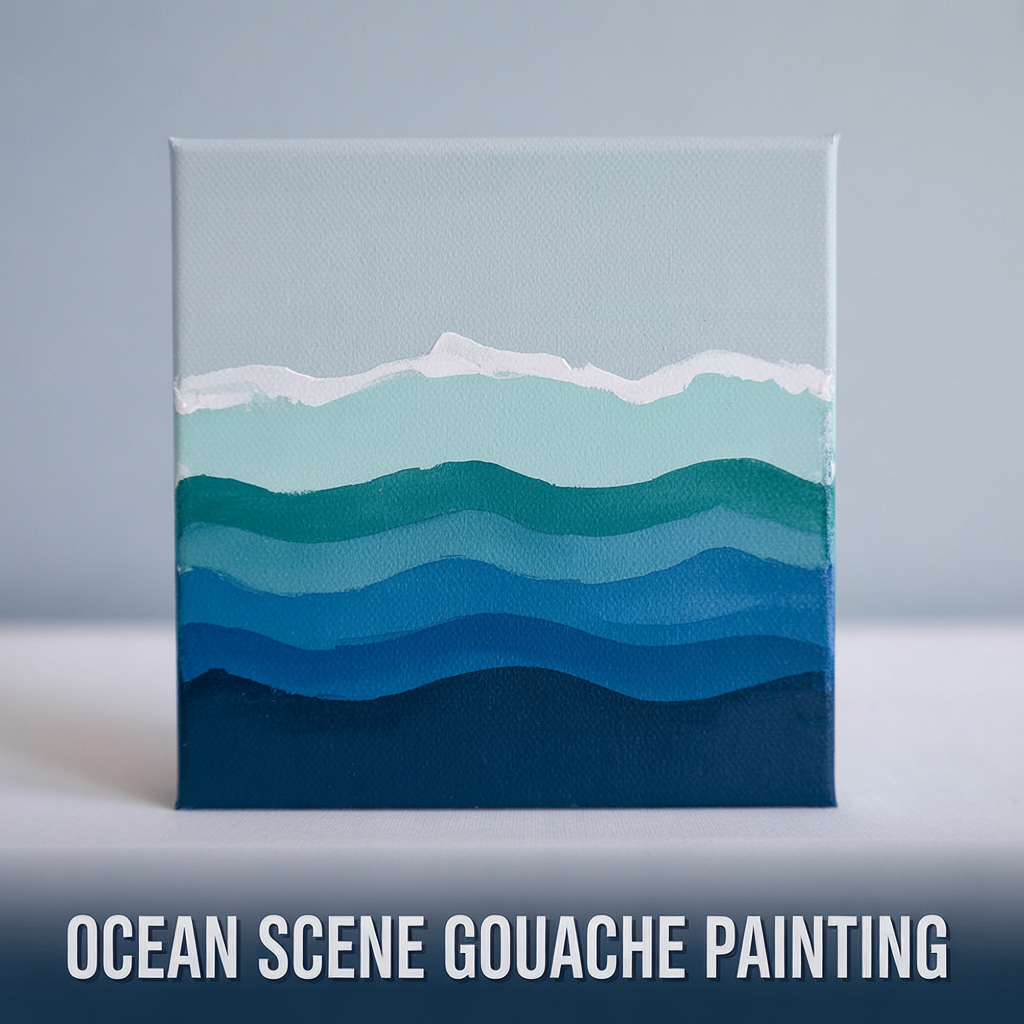
An ocean scene gouache painting uses layered blues and greens to build wave shapes on a small canvas with a pale sky above the waterline. I painted a simple wave study on a 5 x 5 inch canvas in 50 minutes. The finished piece used 5 blue-green values from deep navy at the wave base to pale aqua at the foam edge and light grey-white for the sky.
Ocean scenes produce strong results on small canvases because the horizontal composition fills the canvas naturally without requiring complex perspective or figure work.
How to Mix Ocean Colors With Gouache
Start with cerulean blue as the base color. Add phthalo green in small increments to shift the mix toward teal for the mid-wave color. Add white to lighten the mix for the shallow water color near the foam line. Mix Payne’s grey into the cerulean base for the deep water color at the bottom of the wave. These 4 mixes cover the full value range of a standard small canvas ocean scene.
Painting the Foam Line on a Wave
Paint the foam line using titanium white mixed to a thick consistency slightly drier than standard gouache working consistency. Apply with a size 4 flat brush using short horizontal strokes along the top edge of the wave shape. A drier consistency produces a broken, textured edge that reads as foam. A wetter consistency produces a solid line that reads as a hard edge rather than water movement.
6. Sky and Clouds Gouache Painting
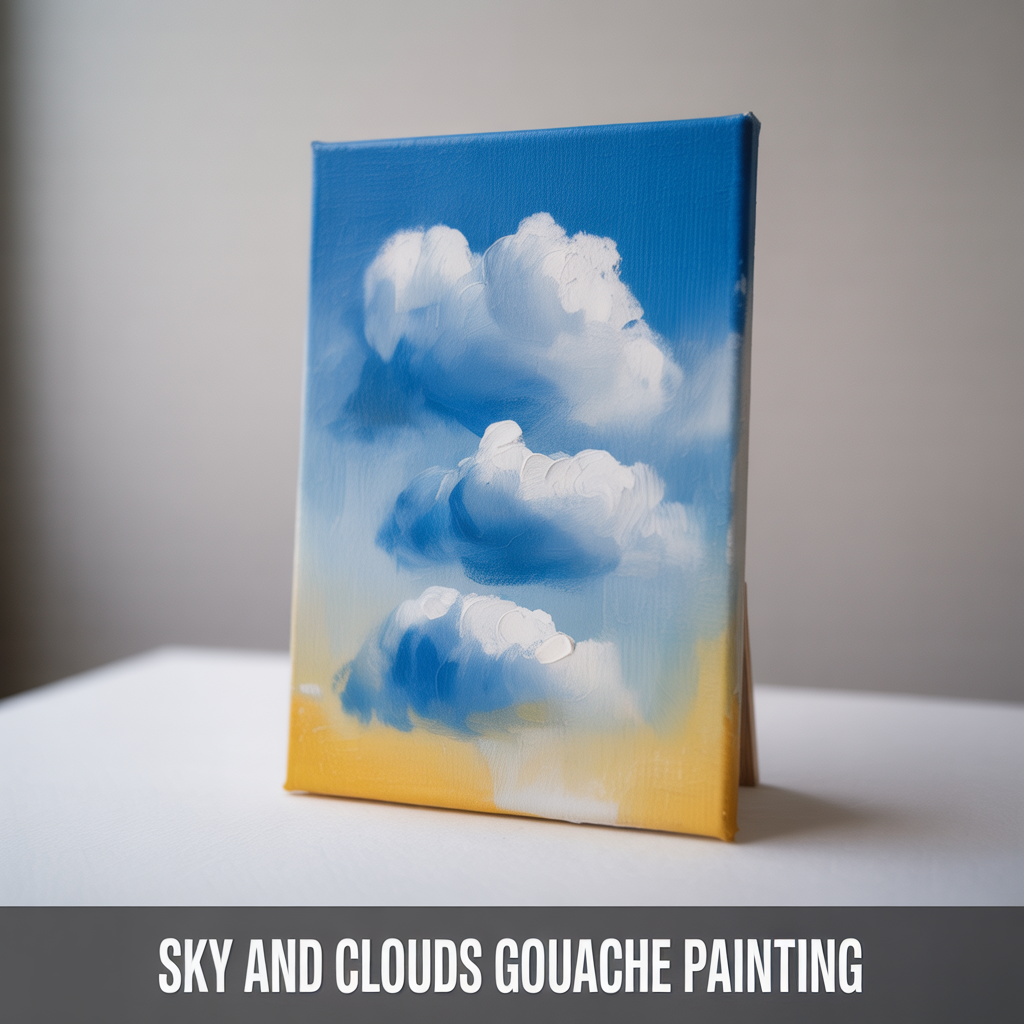
A sky and clouds gouache painting uses soft wet-into-wet blending for the sky area and dry brushing for the cloud edges to produce a naturalistic result on a small canvas. I painted a simple cloud study on a 6 x 8 inch canvas as a practice exercise and ended up framing it. The whole piece took 40 minutes and used only 3 colors: cerulean blue, titanium white, and a small amount of yellow ochre for the lower sky warmth.
Sky paintings work well as beginner gouache small canvas art ideas because the subject requires color mixing and blending skills but no complex drawing or perspective.
How to Paint Soft Clouds With Gouache
Apply a wet cerulean blue wash across the upper two-thirds of the canvas. While the background is still wet, load a clean round brush with thick titanium white. Press the brush onto the wet background in rounded shapes for cloud forms. The wet background softens the cloud edges automatically. Add a second white layer after the first dries to build cloud density at the brightest highlight points only.
Adding Warmth to a Sky Painting
Mix a small amount of yellow ochre into titanium white to produce a warm cream color. Apply this warm cream to the lower quarter of the sky area where the horizon sits. This color shift from warm at the horizon to cool blue at the top of the canvas replicates the natural atmospheric color gradient visible in clear sky conditions and adds visual depth to the finished small canvas piece.
7. Leaf and Plant Gouache Canvas Art
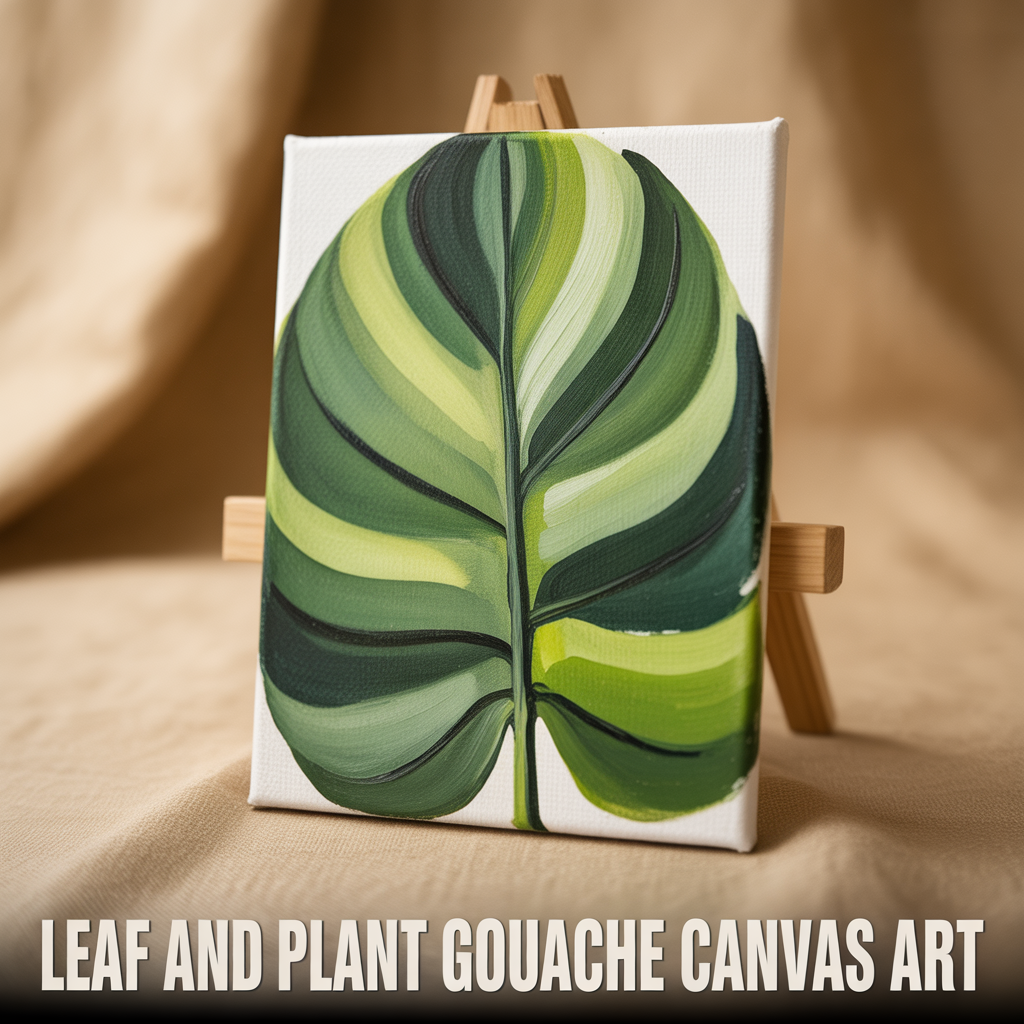
A leaf and plant gouache canvas painting uses botanical shapes in flat color or layered green values to produce a nature-inspired composition on a small canvas. I painted a single large monstera leaf on a 5 x 7 inch canvas using 4 green values and a warm cream background. The finished piece took 55 minutes and required only a size 8 round brush and a size 2 detail brush for the leaf veins.
Botanical subjects suit small canvases because a single leaf or small plant cluster fills the composition without requiring background detail or perspective work.
How to Paint a Single Botanical Leaf
Sketch the leaf outline lightly in pencil before painting. Fill the leaf shape with a mid-green base coat and allow it to dry for 5 minutes. Add a darker green mix to the shadow areas on one side of the central vein. Apply a lighter green highlight mix to the opposite side. Paint the central vein and secondary veins last using a size 2 round brush and a color 2 values darker than the base coat.
Background Options for a Botanical Gouache Painting
A warm cream or pale terracotta background produces the strongest contrast with green leaf colors on a small canvas. A white background reduces the perceived saturation of the green paint. A deep navy or forest green background creates a dramatic, high-contrast result but requires 3 coats of background paint to cover the canvas texture completely before the leaf layer begins.
8. Cute Character Gouache Mini Canvas
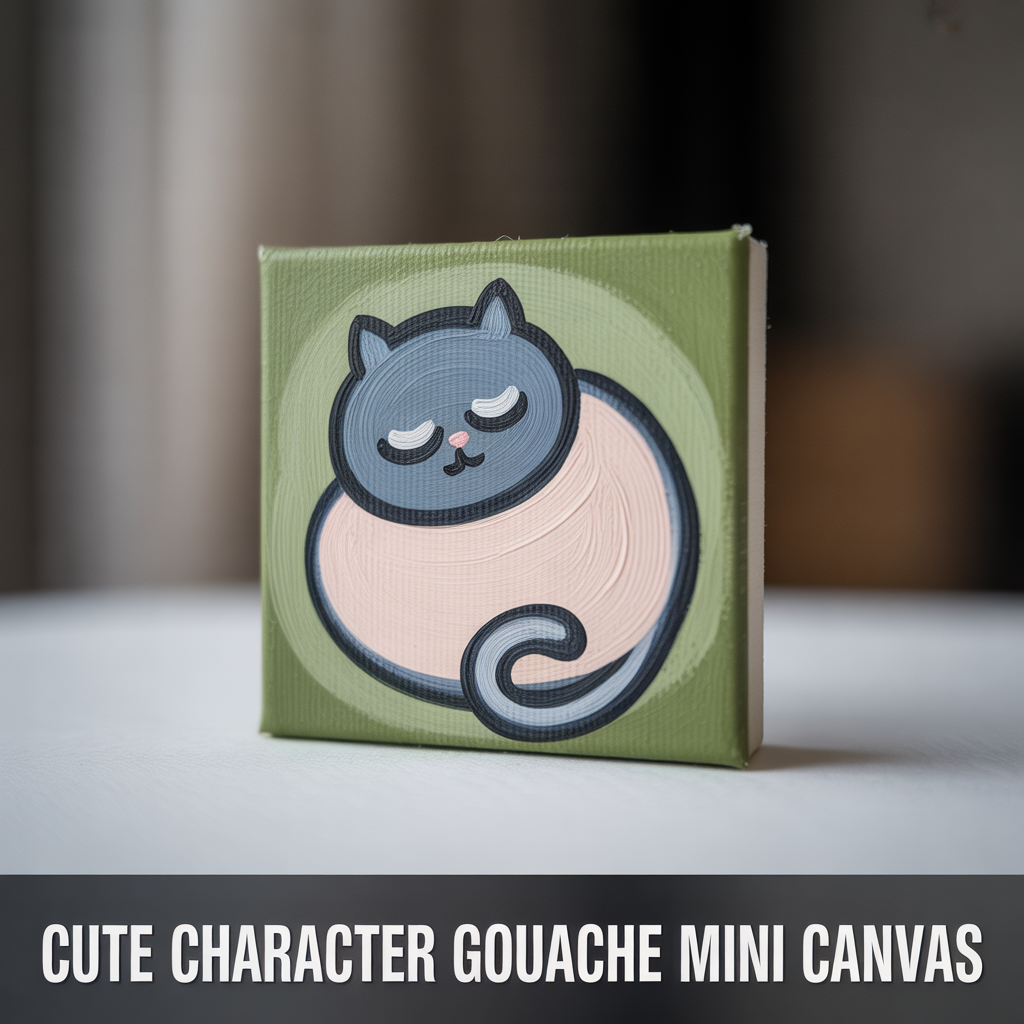
A cute character gouache mini canvas uses simplified cartoon-style shapes to paint animals, food items, or small figures on a 4 x 4 or 4 x 6 inch canvas board. I painted a small sleeping cat on a 4 x 4 inch canvas as a desk decoration and it took exactly 30 minutes from sketch to finished seal. The subject required only basic circle and oval shapes with 3 colors.
Cute character paintings sell consistently on Etsy as mini original artworks and printable references, making this one of the most commercially useful gouache small canvas art ideas on this list.
How to Simplify a Character Into Basic Shapes
Break any character down into its largest shapes first: a circle for the head, an oval for the body, small ovals for limbs. Sketch these shapes in pencil before mixing any paint. Paint each shape as a flat color block first. Add details including eyes, nose, and outlines as the final layer after all base color blocks are fully dry. This sequence prevents detail lines from lifting when adjacent color blocks are applied beside them.
Outlining a Cute Character With Gouache
Mix black gouache to a fluid but not watery consistency. Load a size 0 or size 1 round brush. Pull slow, deliberate strokes along the pencil sketch lines for each outline. Do not rush outline strokes on small canvases because the reduced scale makes shaky lines more visible than on a larger surface. A steady hand rest on the canvas edge reduces line wobble during fine detail work.
9. Mountain View Gouache Painting
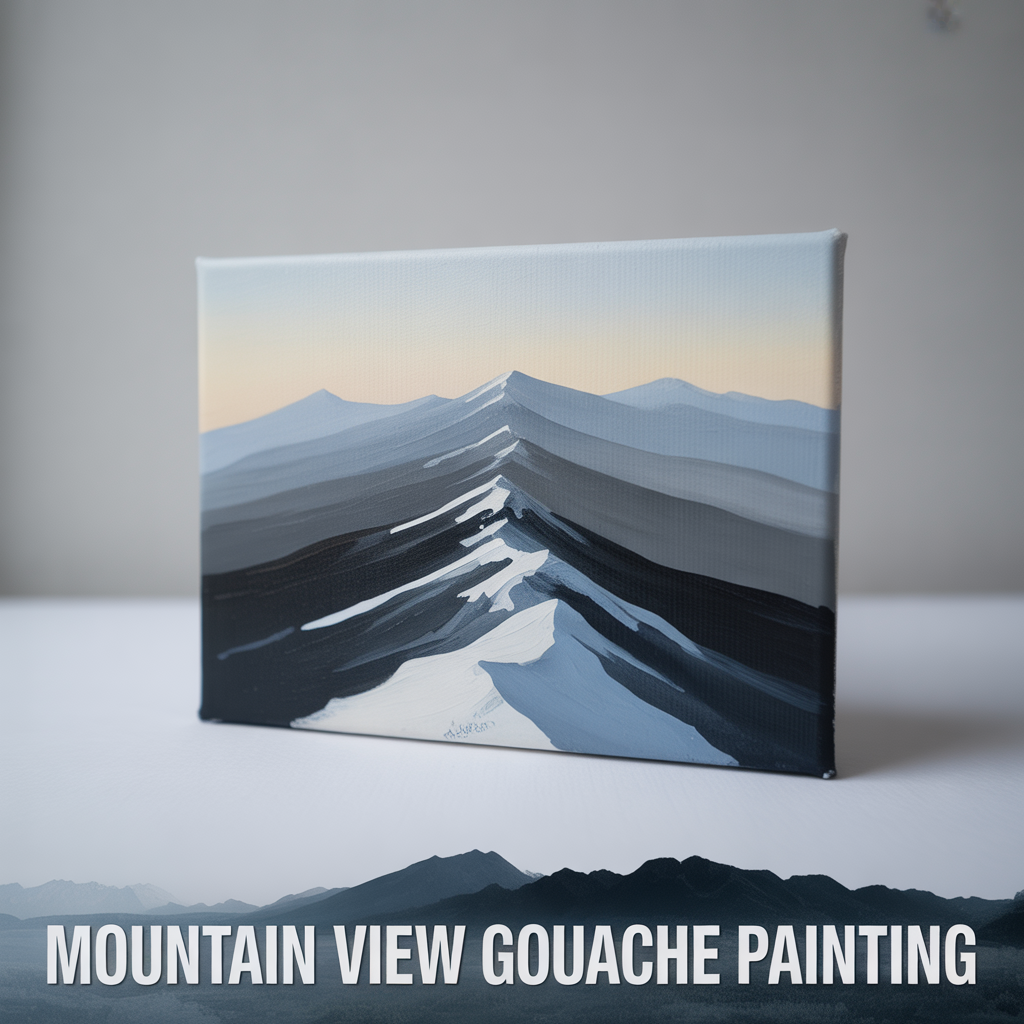
A mountain view gouache painting uses an atmospheric perspective technique to build a receding range of peaks across a small canvas, with each successive mountain range lighter and cooler in color than the one in front of it. I painted a 3-range mountain scene on a 6 x 8 inch canvas and finished in 70 minutes. The atmospheric color shift across 3 ranges gave the 6 x 8 inch surface a sense of distance far greater than its physical size.
Mountain compositions divide naturally into sky, far range, mid range, and near range, which fills a small canvas efficiently without requiring foreground detail.
How to Paint Atmospheric Mountain Ranges
Paint the sky first and allow it to dry. Mix the far mountain color using white with a small amount of blue and grey added. Apply the far range as a silhouette shape against the dry sky. Allow it to dry. Mix the mid range color using more grey and slightly less white than the far range. Apply the mid range silhouette overlapping the lower portion of the far range. Repeat with the darkest mix for the near range.
Adding Snow to Mountain Peaks With Gouache
Apply snow highlights to mountain peaks using titanium white mixed to a thick paste consistency. Use a size 2 flat brush and apply short downward strokes from the peak tip. The thick consistency prevents the white from becoming transparent over the darker mountain color beneath. Apply snow as the final detail layer after all mountain silhouette layers are fully dry to keep the white clean and bright at the peak edges.
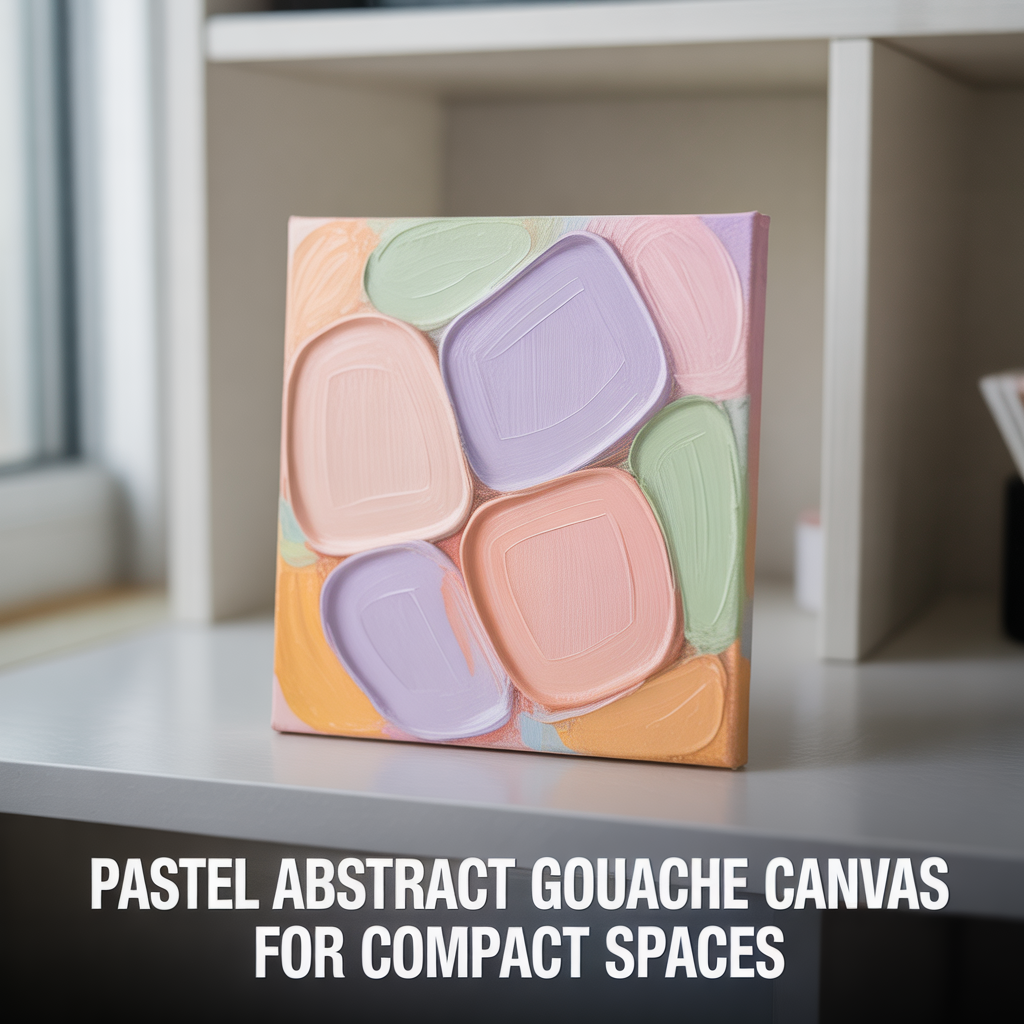
10. Pastel Abstract Gouache Canvas for Compact Spaces
A pastel abstract gouache canvas uses soft pink, lavender, mint, and peach tones in an overlapping shape composition to produce a decorative piece specifically suited for small wall spaces, shelves, and desk displays. I made a set of 3 pastel abstract canvases on 4 x 4 inch boards for a bathroom shelf display. Each one used the same 4 pastel colors arranged differently, and the set cost under 5 dollars in materials total.
Pastel gouache paintings dry lighter than they appear when wet, so mixing colors slightly more saturated than the intended final result produces the correct finished tone after drying.
How to Mix Accurate Pastel Colors With Gouache
Start with titanium white as the base for every pastel mix. Add the tint color in very small increments: one brushload of pink into a full palette well of white produces a soft blush. Two brushloads produce a mid pink. Test each mix on a scrap piece of paper and allow it to dry for 2 minutes before applying to the canvas. Gouache dries 15 to 20% lighter than the wet mix on the palette.
Displaying Pastel Gouache Canvases in Compact Spaces
A set of 3 square canvases in matching sizes displays most effectively when arranged in a horizontal row with 2 to 3 cm of wall space between each canvas. Alternatively, stacking 3 canvases vertically suits a narrow wall section beside a door or window. Command adhesive strips rated for the canvas weight attach small canvases to walls without nails, which makes repositioning easy during the arrangement process.
FAQ
What gouache paint set works best for small canvas art ideas?
A set of 12 to 24 gouache colors covers every subject on this list without requiring additional purchases. Brands including Holbein, Winsor and Newton, and Turner produce student-grade and professional-grade gouache suitable for small canvas work. A set needs these 8 colors at minimum: titanium white, ivory black, cadmium yellow, cadmium red, cerulean blue, sap green, yellow ochre, and Payne’s grey. These 8 colors mix to produce every secondary and tertiary color needed for landscapes, florals, abstracts, and character paintings on small canvases.
How do I seal a finished gouache small canvas painting?
Seal a finished gouache canvas using an isolation coat of clear acrylic medium applied with a soft flat brush before applying any varnish layer. Gouache reactivates with water, so applying varnish directly onto an unsealed gouache surface dissolves the paint. Apply the isolation coat in a single pass without going back over a wet area. Allow it to dry for 30 minutes. Apply a matte or gloss acrylic varnish spray from 30 cm distance after the isolation coat is fully dry and hard to the touch.
Can a beginner use gouache for small canvas art ideas?
A beginner painter uses gouache on small canvases more successfully than most other paint mediums because gouache dries quickly, covers in one or two coats, and corrects by painting over dried layers. The four techniques needed for every project on this list are flat color application, wet-into-wet blending, dry brushing, and fine detail work with a small round brush. All four techniques appear in free video tutorials on YouTube. A beginner produces a finished small canvas gouache painting within their first 3 practice sessions.
What canvas size works best for gouache small canvas art ideas?
Canvas sizes between 4 x 4 inches and 8 x 10 inches work best for gouache small canvas art. A 5 x 7 inch canvas board is the most versatile size because it fits standard photo frames available at most home stores, which reduces framing cost significantly. Canvas boards work better than stretched canvas for gouache because the rigid surface prevents the paint from cracking as the canvas flexes. A canvas board also sits flat on a desk or shelf without requiring a frame or wall mounting hardware.
How much do gouache small canvas paintings sell for on Etsy?
Original gouache small canvas paintings sell between 15 and 60 dollars on Etsy depending on canvas size, subject detail, and the seller’s established shop reputation. A 4 x 4 inch abstract or minimal design lists at the lower end of this range. A 6 x 8 inch detailed landscape or botanical painting lists at the higher end. Listings with multiple photos showing the painting from different angles and in a styled display setting generate more views and sales than listings with a single plain background product photo.